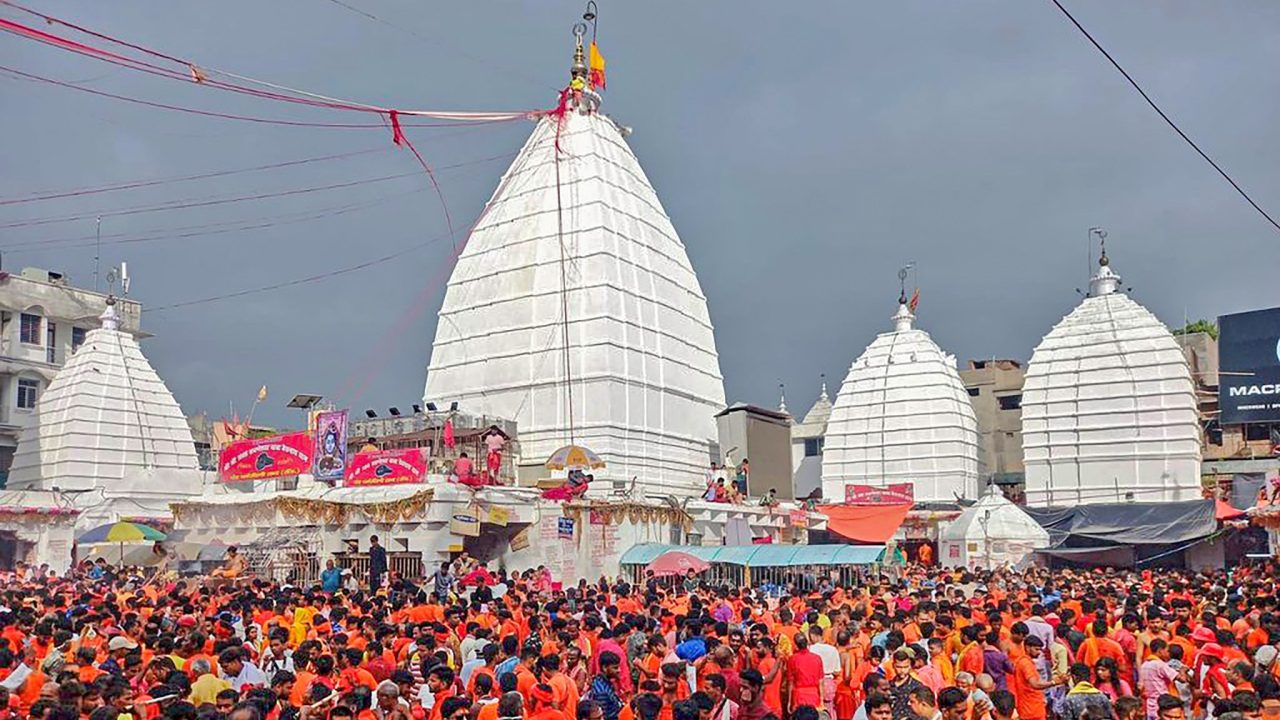
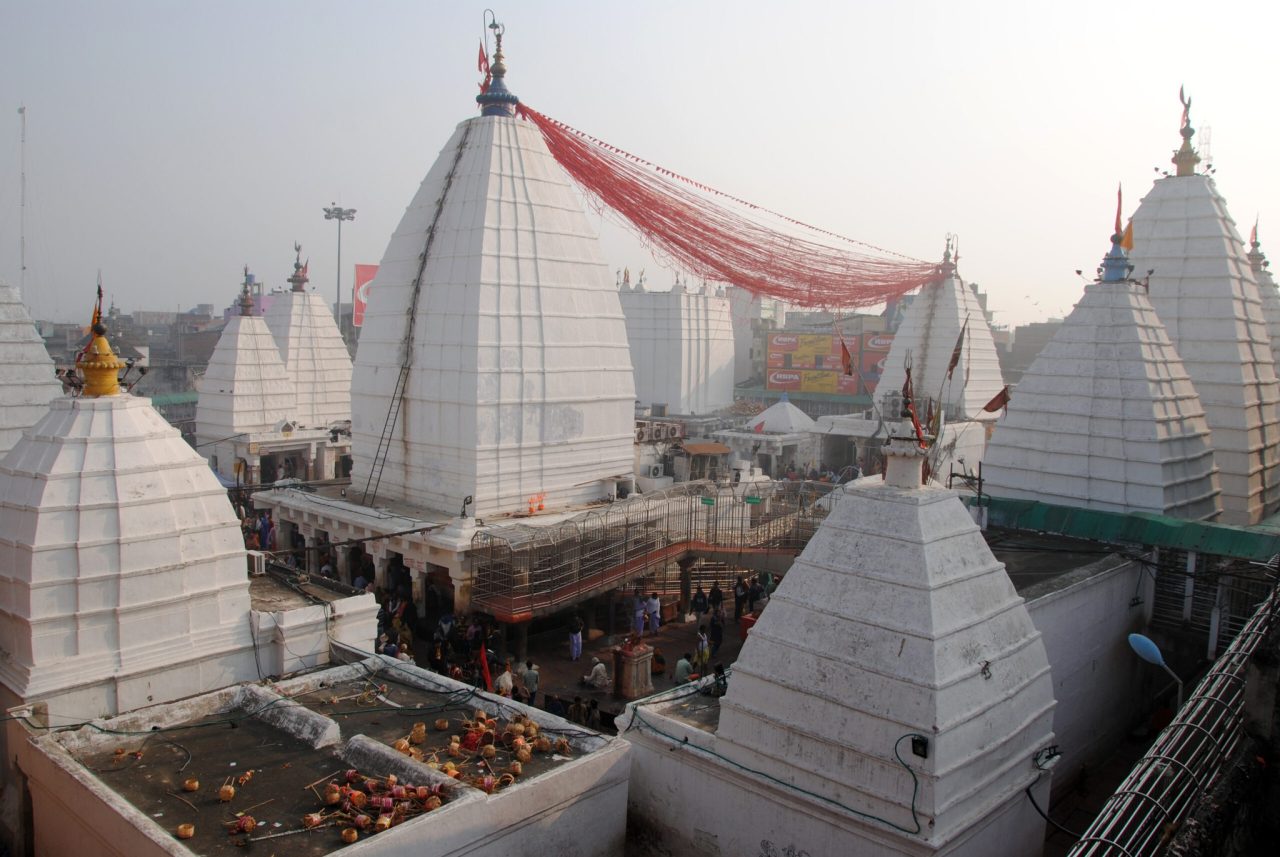
Throughout India there are twelve Jyotirlingas, which are very special temples dedicated to Lord Shiva, where he manifested as pillars of light. One of these temples is located at Deoghar in Jharkhand, and is known as the Baidyanath Jyotirlinga.
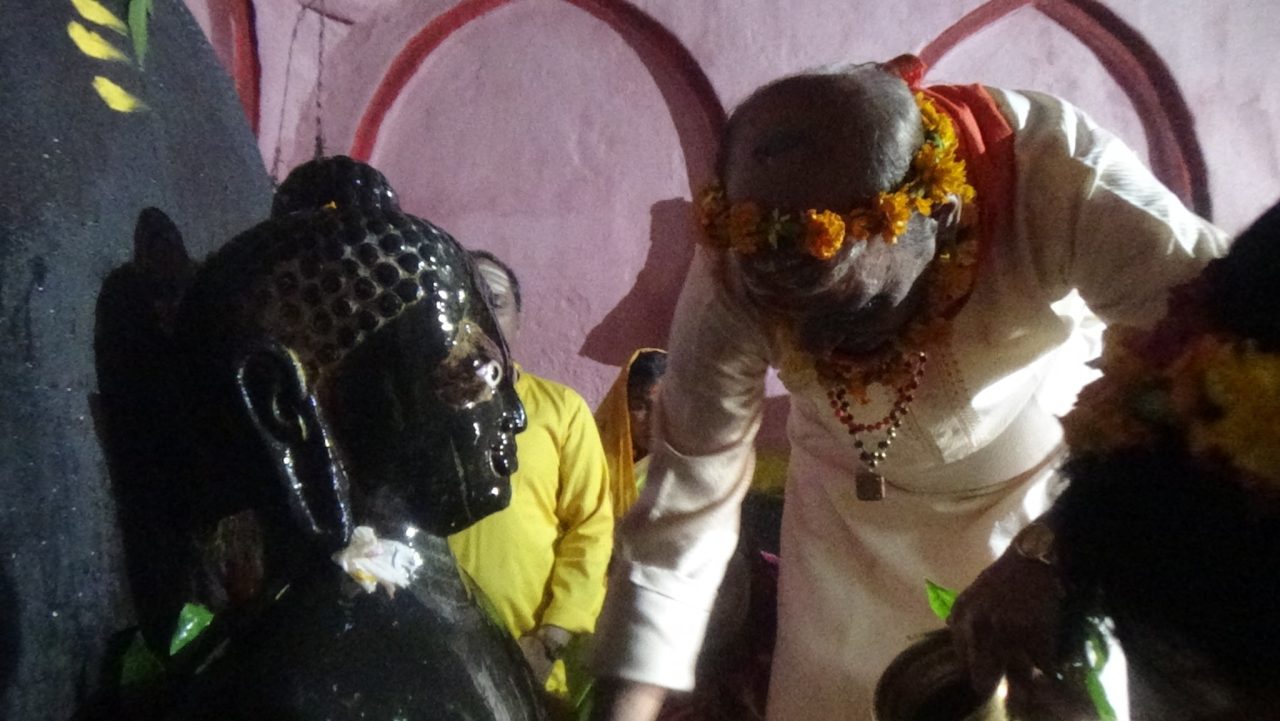
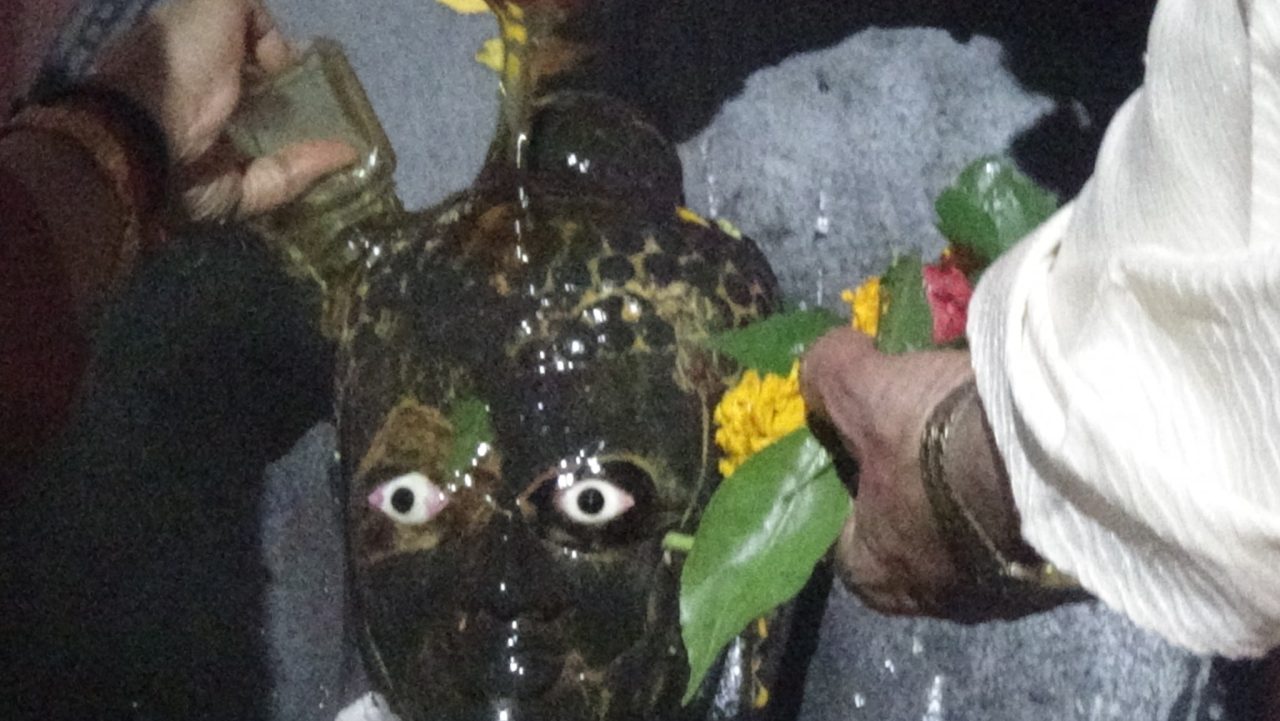
As with all temples, this temple compound has several subsidiary chambers with other deities. The one that we want to look at today is the Kala Bhairava temple which is located on the southern side of the temple compound. What is unique about this Kala Bhairava is that he is actually a left over deity of Lord Buddha who somehow survived the destruction of various invaders throughout history.
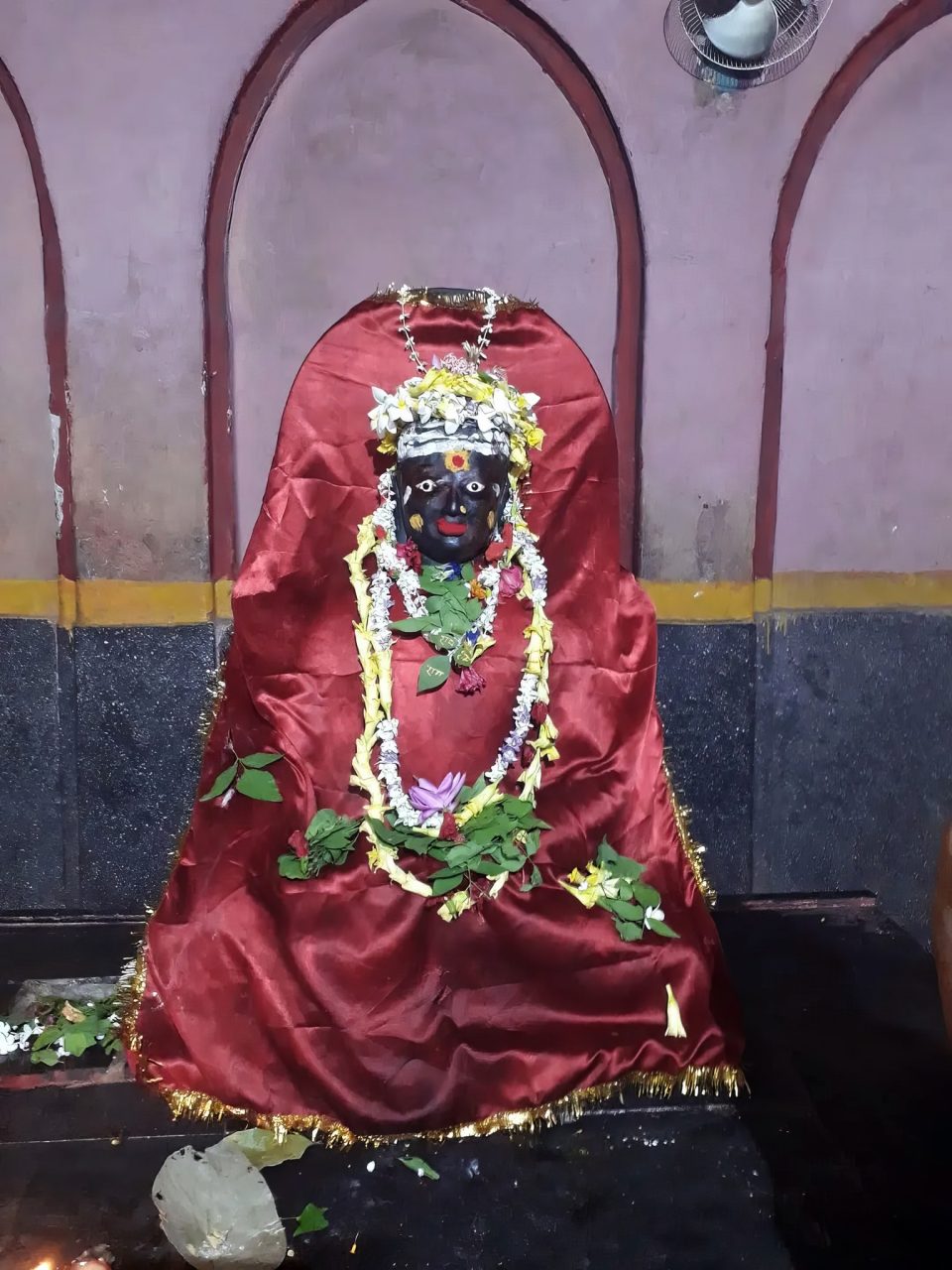
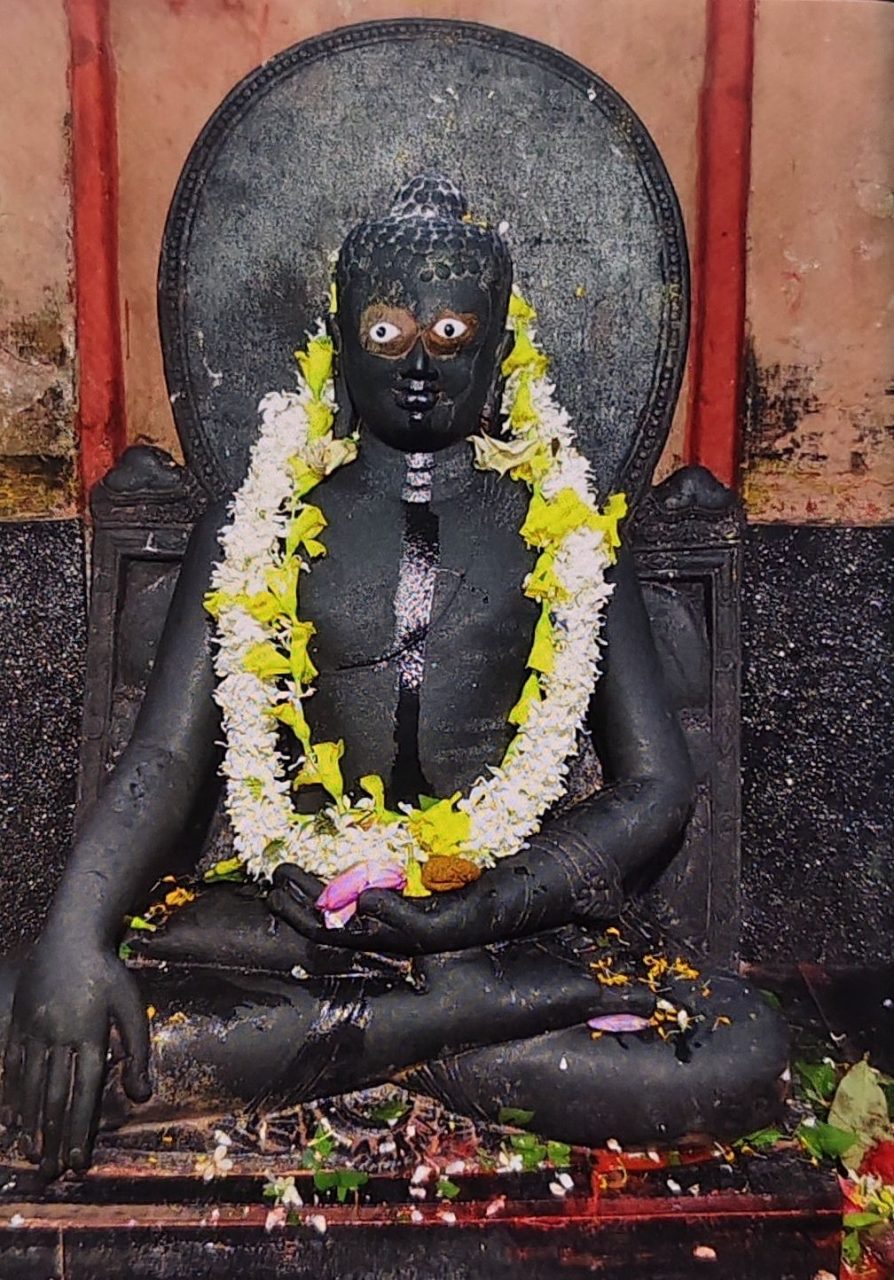
The Kala Bhairava deity with alankara covering.
Jharkhand, Bihar and Odisha were centers of Buddhism and Jain culture during different periods in history. At certain points in time, nearly all of the temples in these regions had been converted to either Buddha viharas or Jain temples. Later after waves of destruction caused by invaders, some of the temple ruins were restored by Hindus and in many places the Buddhist and Jain deities that were recovered were worshipped by the Hindus as Hindu Gods in the restored temples. We find these Buddhist and Jain deities in all of the old temples throughout Odisha. Some are fully intact and some are damaged, but all are being worshipped today as Hindu gods without any neglect.

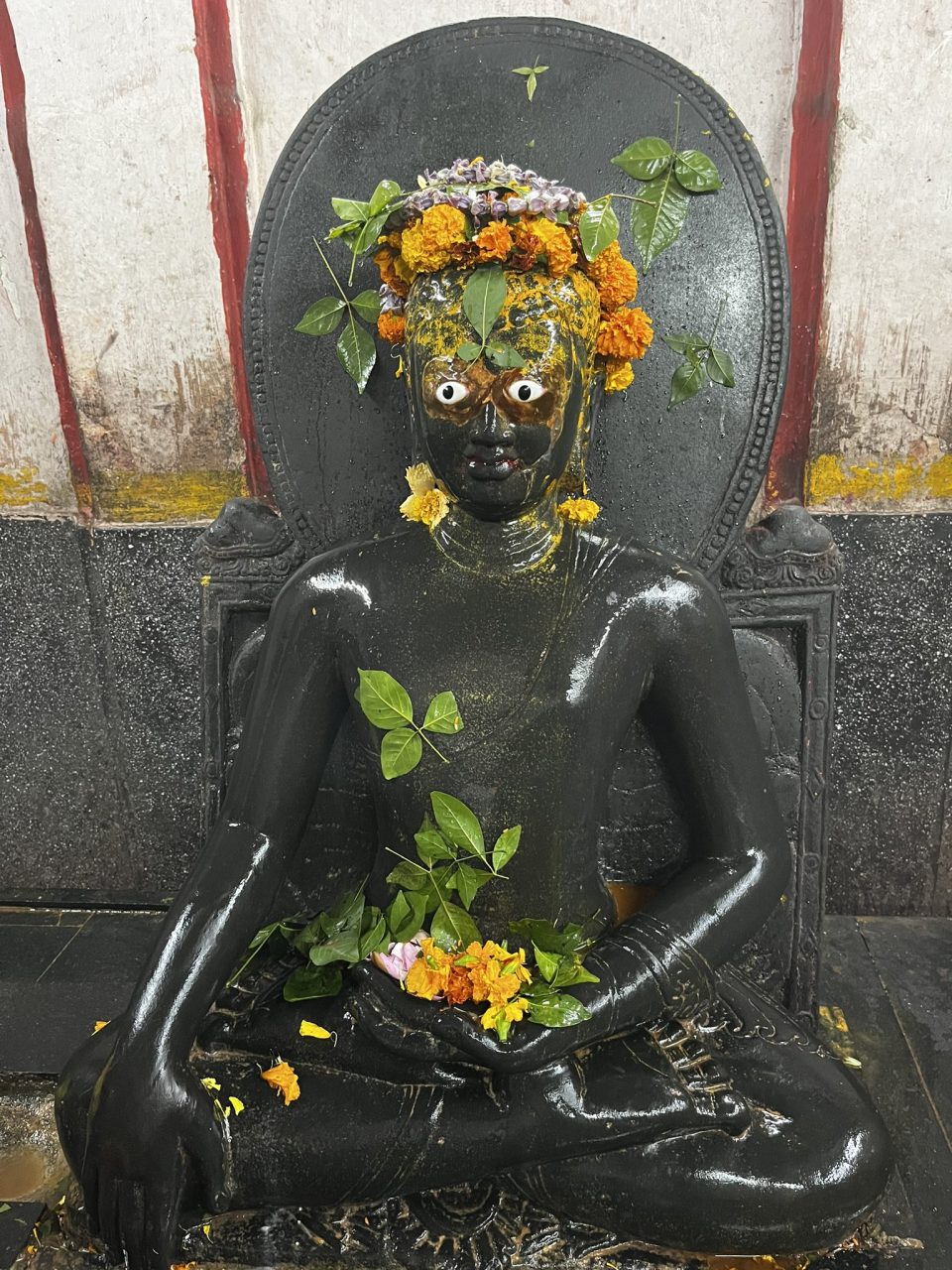
The Kala Bhairava deity without any covering.
With that in mind, we can understand more about this deity of Kala Bhairava who is being worshipped at Baidyanath Jyotirlinga in Jharkhand. The reality is he is literally a deity of Lord Buddha, not Kala Bhairava. Of this there is no doubt. Sometimes Jain followers will claim he is one of their Tirthankara deities, but from the iconographic details it is clearly Lord Buddha. Jain Tirthankaras do not keep one hand on their knee, whereas statues of Lord Buddha from that time period were often depicted in this pose (called as the Bhumisparsha Mudra), and we can show other examples of this in Jharkhand and Odisha.
What should be done in these situations? Buddhism for all practical purposes no longer exists in India in its original domestic form. There may be small pockets of Tibetans or Nepalis who have immigrated here, but that is not the same as the Buddhism of ancient India which was practiced locally in all of these places. After Buddhism was lost in India, the sanatanis adopted the remaining deities and continued their worship according their own devotion and belief. After hundreds of years of such devotion and protection, the deities are where they should be, being worshipped by whoever had faith in them, by whatever name they chose to call them.
The divine is beyond mundane limitations of space and sound. If someone will worship Kala Bhairava in a deity of Lord Buddha, Kala Bhairava will manifest there to bless the devotee, and if someone worships Lord Buddha in the same deity, Lord Buddha’s presence will be there to bless those devotees. This is because Lord Krishna, the Paramatma situated in the heart of every living entity, is the one who is making their faith steady, and he is the one who bestows the result of their devotion:
yo yo yāṁ yāṁ tanuṁ bhaktaḥ
śraddhayārcitum icchati
tasya tasyācalāṁ śraddhāṁ
tām eva vidadhāmy aham
“I am in everyone’s heart as the Supersoul. As soon as one desires to worship some demigod, I make his faith steady so that he can devote himself to that particular deity.” – Bhagavad Gita 7.21
sa tayā śraddhayā yuktas
tasyārādhanam īhate
labhate ca tataḥ kāmān
mayaiva vihitān hi tān
“Endowed with such a faith, he endeavors to worship a particular demigod and obtains his desires. But in actuality these benefits are bestowed by Me alone.” – Bhagavad Gita 7.22
Having said that, we should never try to hide or cover up the past by denying the historical identity of the deities. Some Hindus want to deny that this deity was ever related to Lord Buddha, and there are similar cases with many other temples throughout India. Even temples like Badrinath, Tirupati and Udupi Sri Krishna temple have had historical disputes.

An example of a Buddha statue with the same posture at Ratnagiri, Odisha.
Throughout history, many temples have passed through the hands of different traditions – at times under Jain, Buddhist, Shaiva, or Vaishnava stewardship – only to later be reclaimed as circumstances changed. This is not a truth to be concealed or denied. It is part of our living history and stands as testimony to the enduring strength of Sanatana Dharma, which continues to survive, absorb, protect, and evolve even amid the trials of Kali Yuga.
Every cow and calf at our sanctuary has a story of rescue, healing, and hope. Your generous support provides them with food, shelter, medical care, and a lifetime of protection. Together, we can give these sacred animals the love and safety they deserve.
0 Comments