
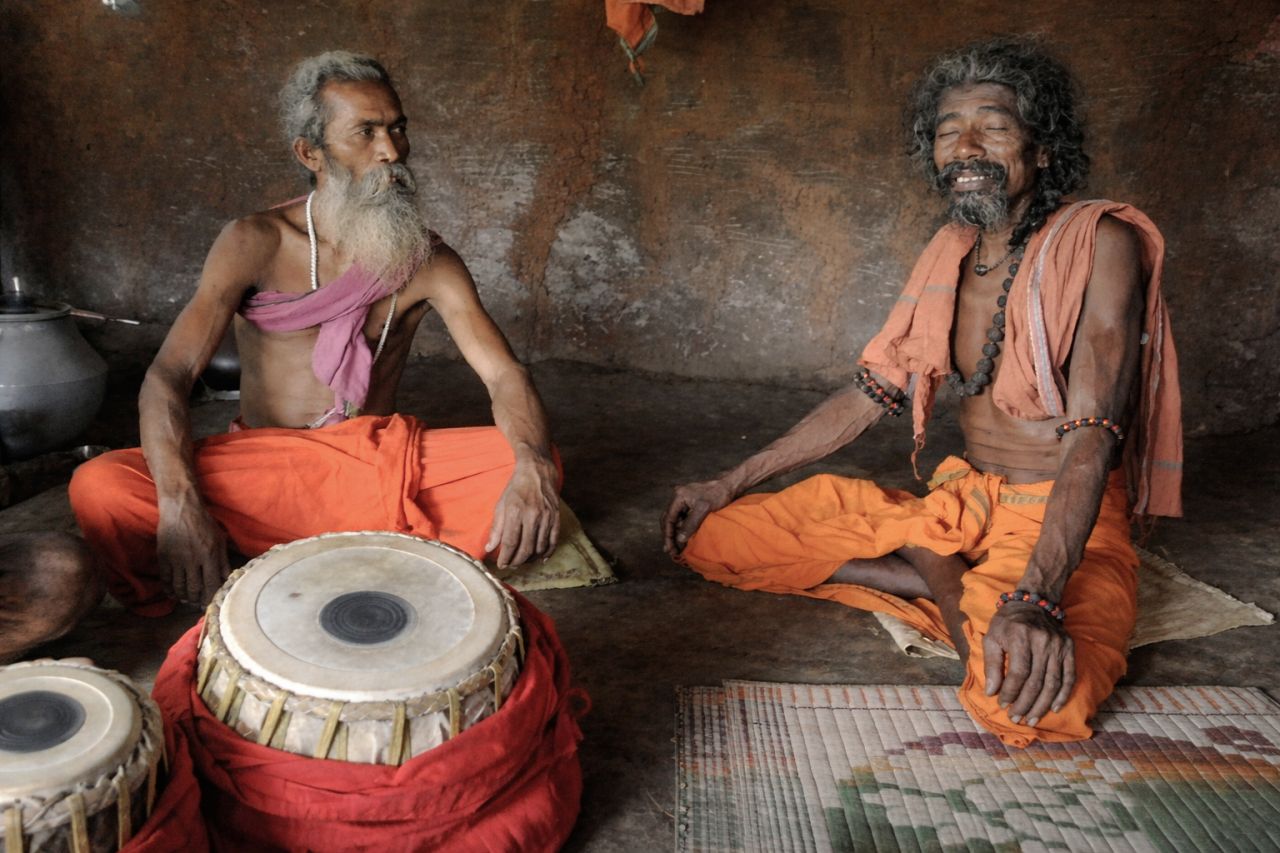
Vishwanatha Baba lived in the most remote area along the Salandi river. No vehicles could reach his small mud hut, and you had to walk for many hours through the forest to reach his ashram. He went to this remote area to be away from all the materialistic people who had started flooding into the holy places on the edges of the forest, like at Chakratirtha where he stayed before this.
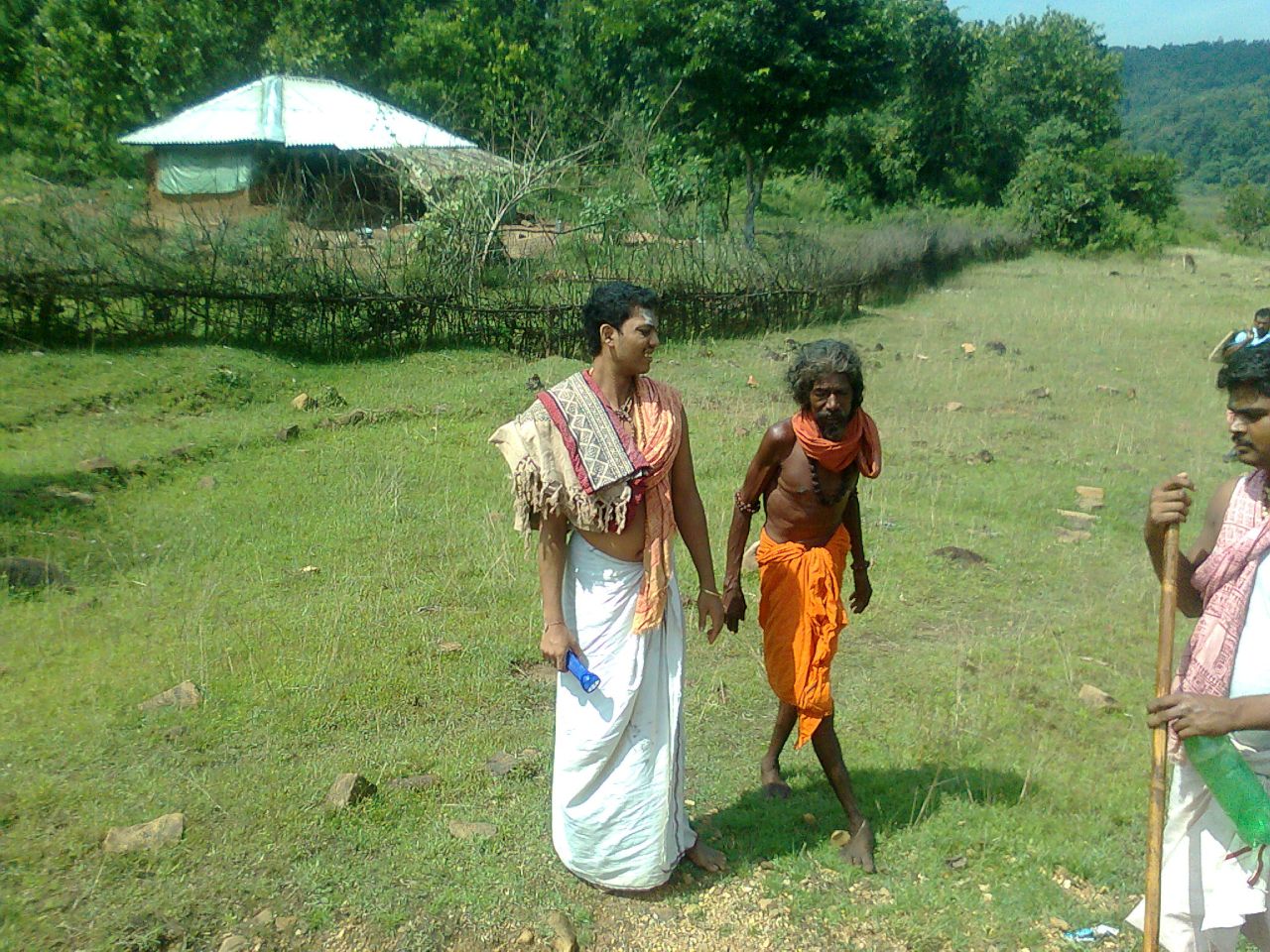
Bhagavat Das with Vishwanatha Baba.
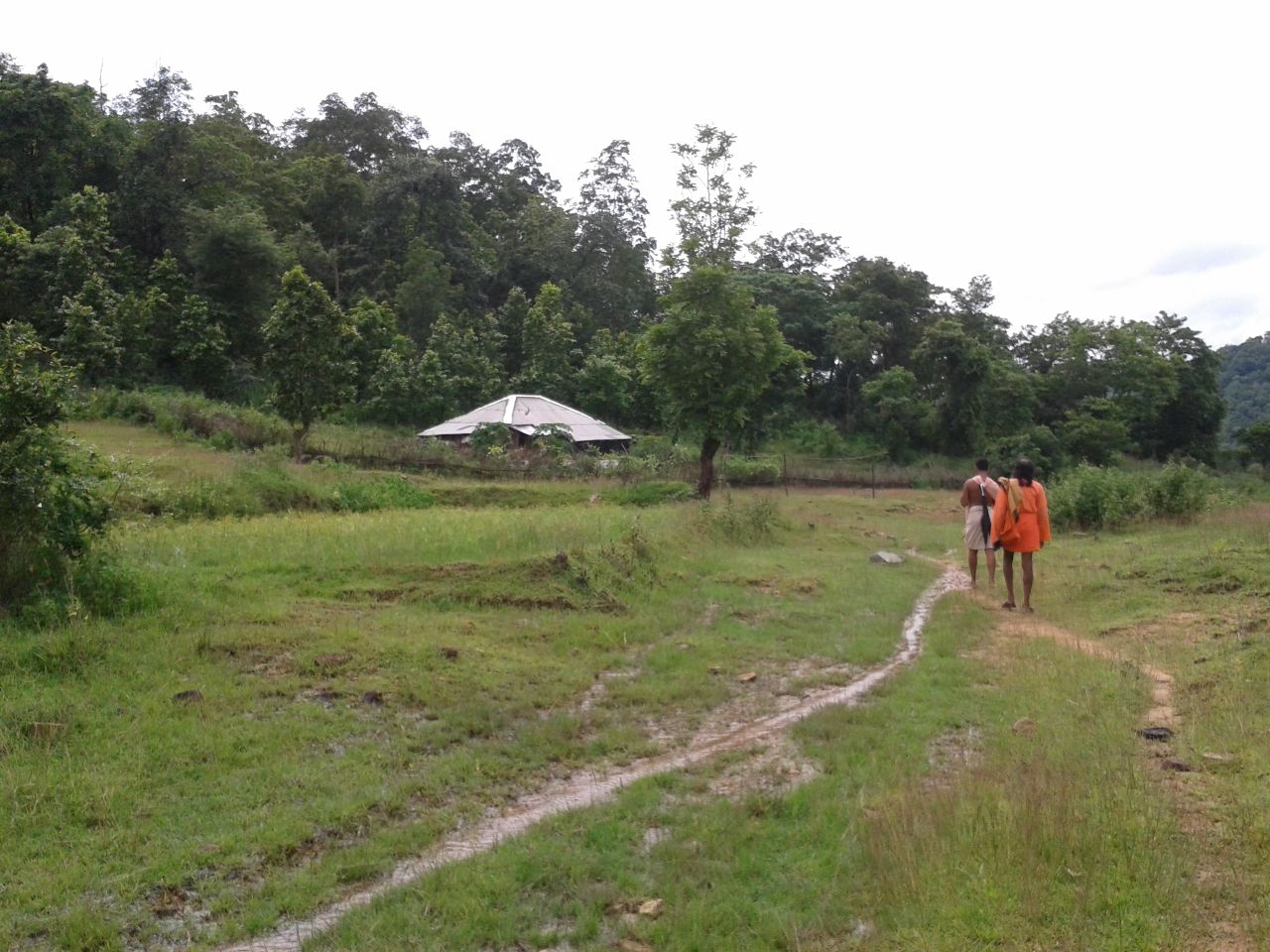
He had chosen to make his hut on the floodplain of the Salandi Reservoir. In the summer there would be a beautiful vast grassland where the water receded, but in the rainy season it would all be submerged by a giant ocean of flood water. Outside of the floodplain was a perimeter surrounding of thick forests.
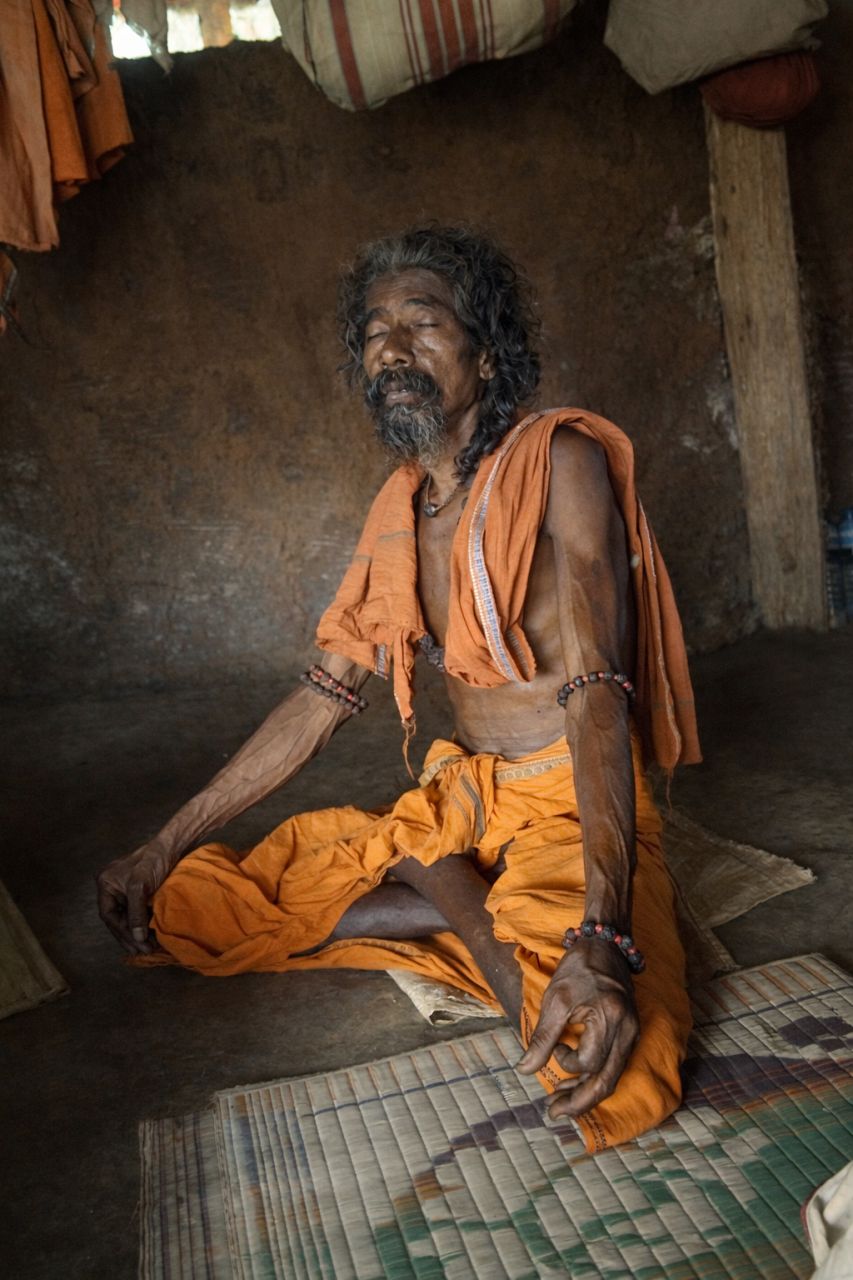
When he first arrived at this spot, he lived under a tree with no shelter. After sometime his disciple helped to make the mud hut for him, and we also participated in that service. It was very difficult to arrange materials up there, as all construction materials had to be brought by walk through the forest. You had to hire teams of laborers who would carry everything up through the forest. Vehicles could reach some distance, and then another 6 hours or so you had to walk carrying the heavy loads of cement, asbestos sheets, etc.
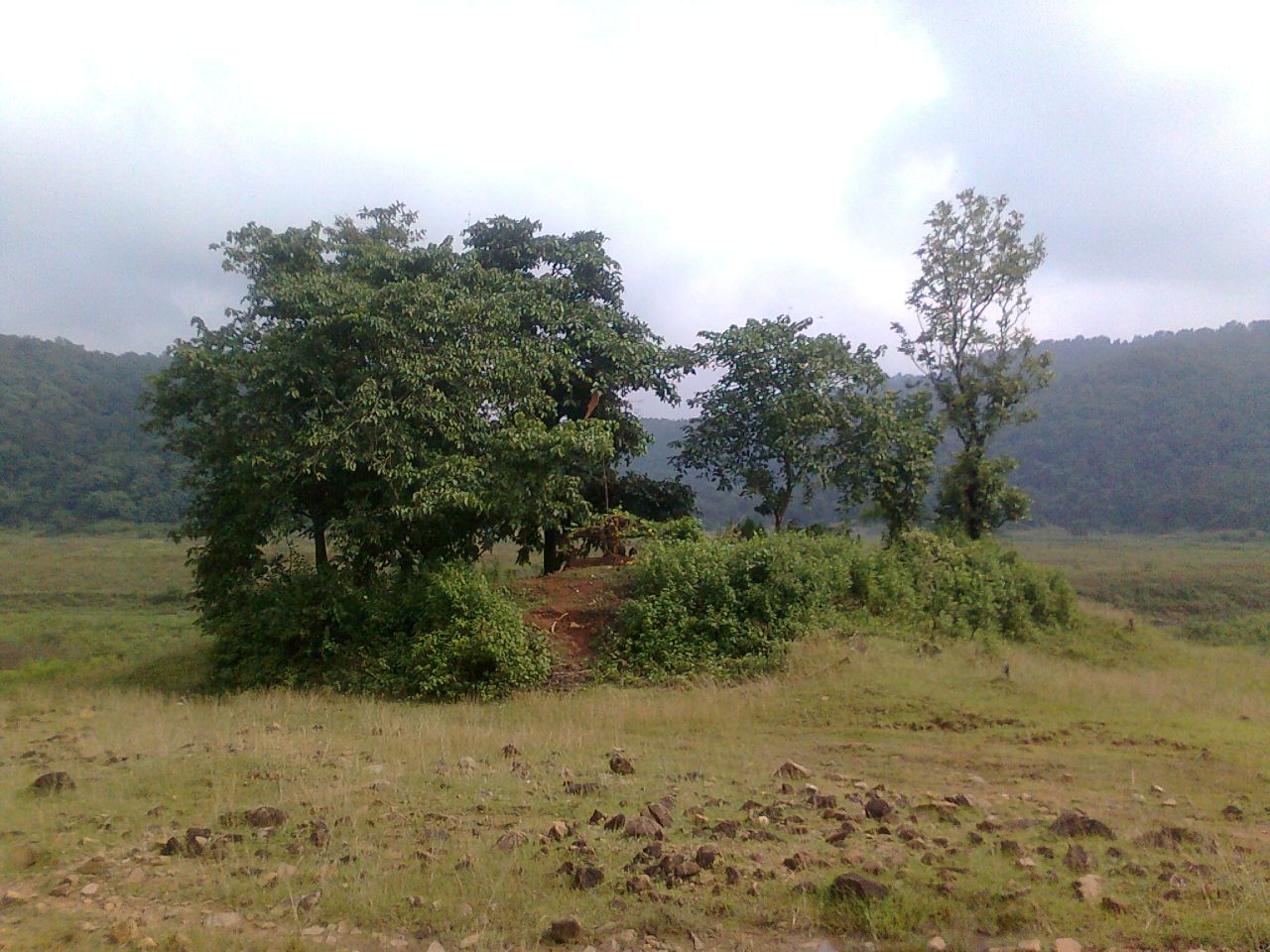
This is the tree Vishwanatha Baba lived under before he had a hut to live in.
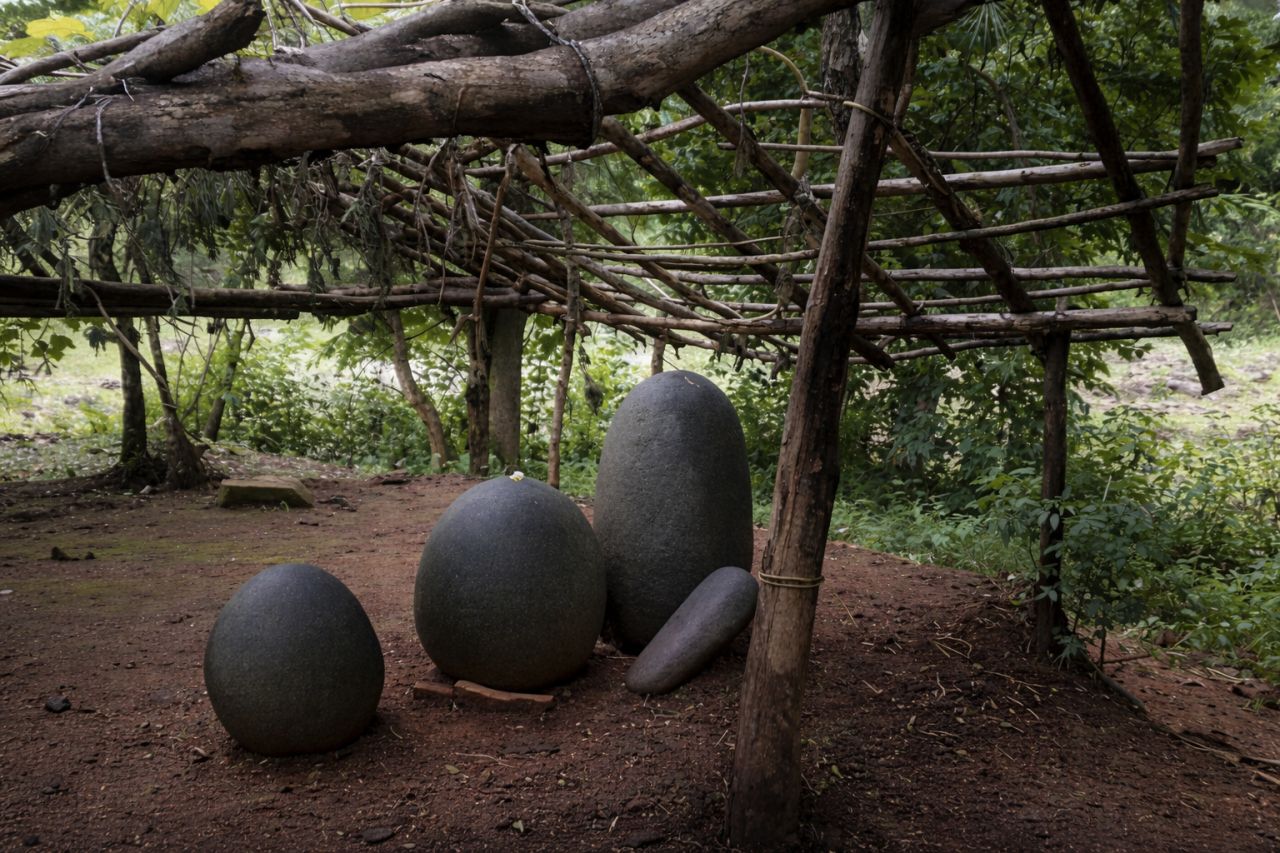
Under the tree Vishwanatha Baba kept his deities who were in the form of Lingas. One was Lord Shiva, one was Devi, and one was Ganesha.
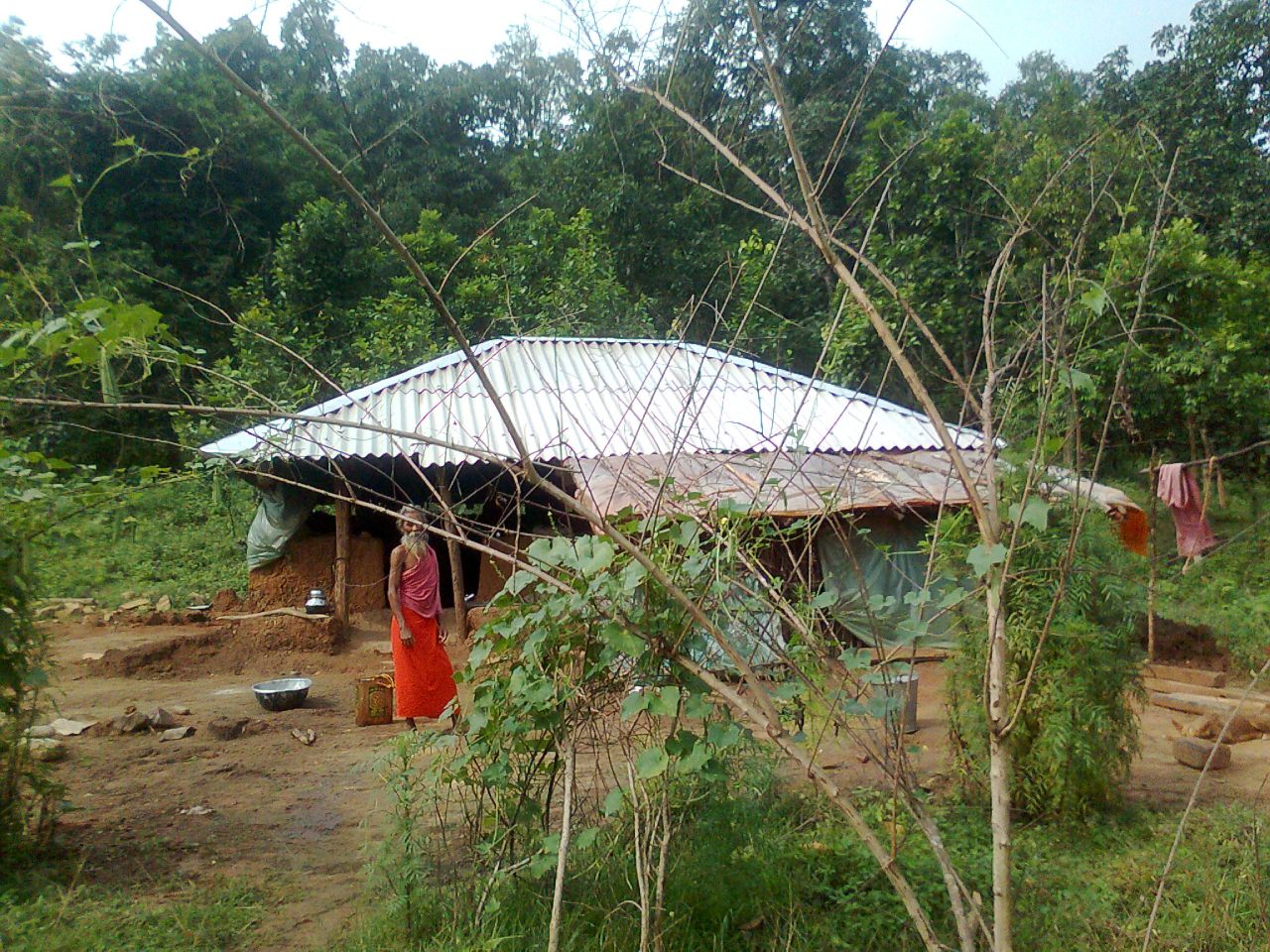
Dayalu Baba standing in front of Vishwanatha Baba’s hut.
Even in this remote location he kept a mother cow with him, who he named Ganga, as he wanted to perform daily “goseva”. He used to say goseva (serving cows) was the most important duty of a sadhu. He personally served her for many years till he was no longer healthy enough to take care of her himself, then he placed her in the care of his disciple. He also gave us two of her children, one named Yamuna (a female) and the other named Vasu (a bull). Vasu still resides in our goshala and is around 14 years old. Mother Yamuna passed away some years ago due to complications from child birth.
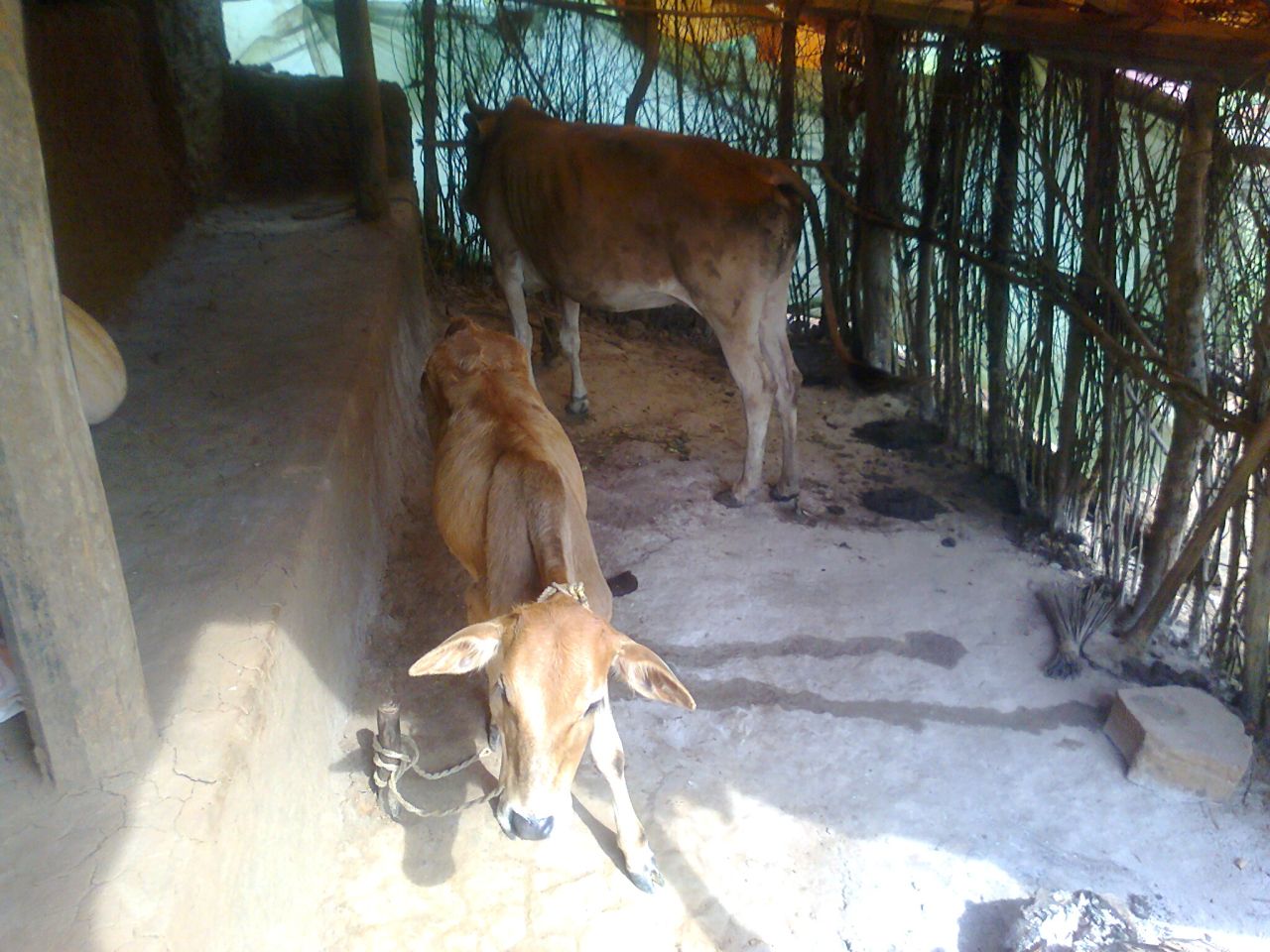
Mother Ganga and her calf Vasu, who Vishwanatha Baba served every day.
Despite being a sadhu, the forest department would come and harass him saying humans are not allowed to live in that area. They would often threaten to break his simple mud hut. These forests are sacred areas where sadhus have resided for millions of years going back to prior yugas. Both Lord Rama and Lord Krishna, as well as the Pandavas and many rishis have traversed this forest and spent time residing in these areas, thus sadhus have always been residing in these areas. He would tell us that in the present Kali yuga sadhus who go even to the most remote places are still harassed by evil people.
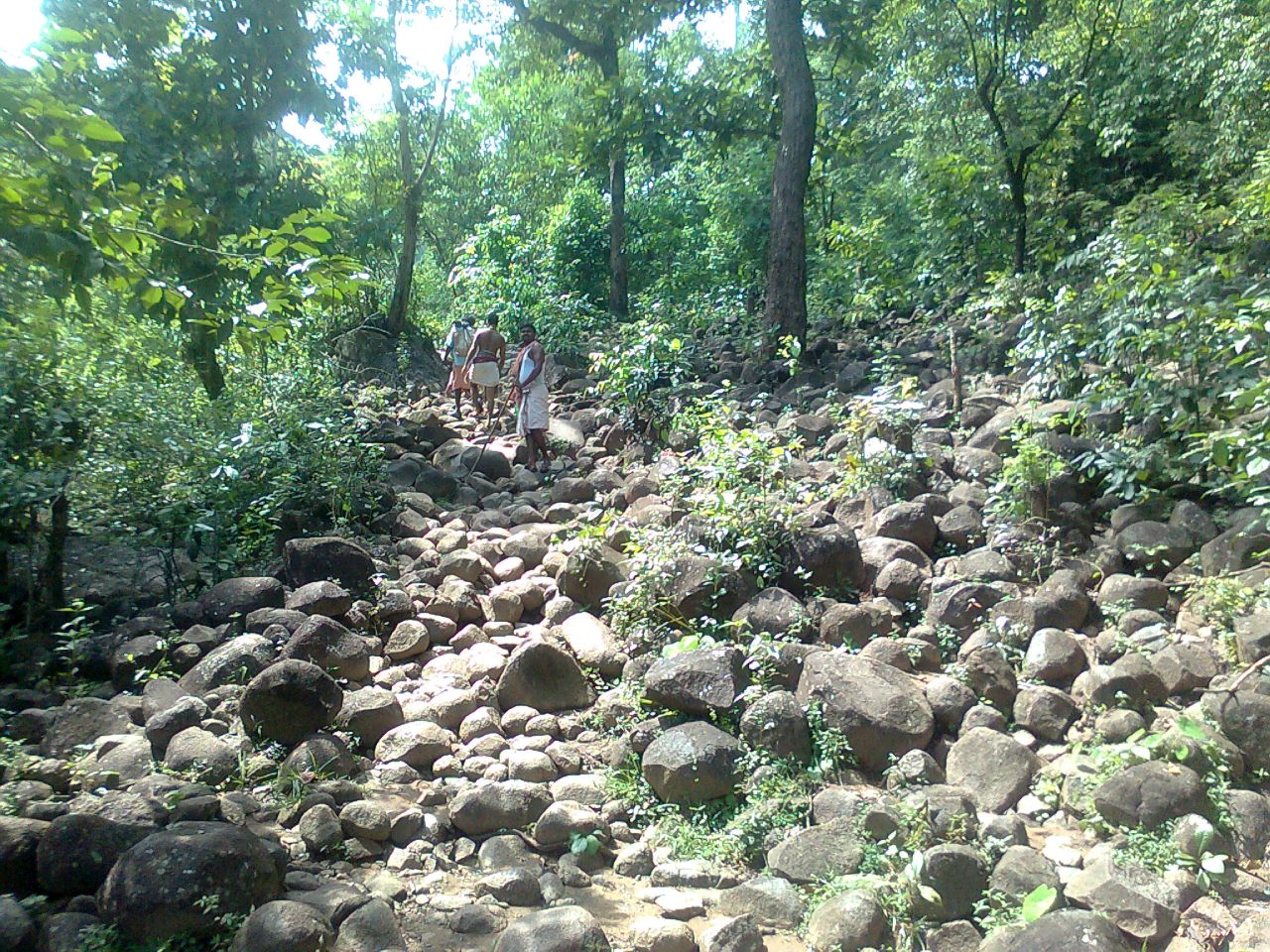
Part of the long journey to visit Vishwanath Baba’s hut.
On this particular occasion we were sent along with other sadhus such as Dayalu Baba (and Aditya Baba on the second trip) to try to convince Vishwanath Baba to come back to Chakratirtha Ashram. We eventually convinced Vishwanatha Baba to return to Chakratirtha Ashram, but it took us around a year and several visits before he gave in.
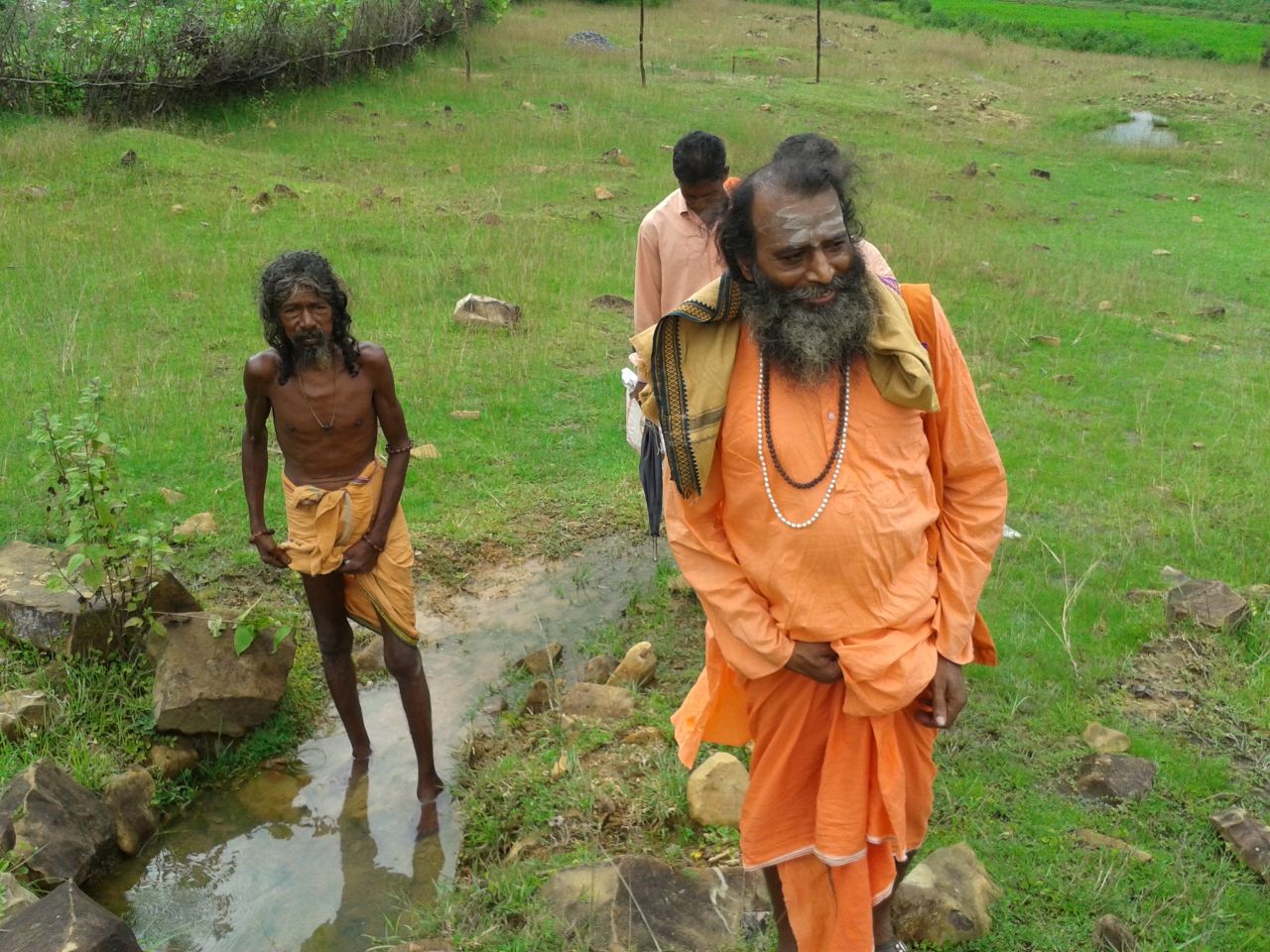
Vishwanatha Baba with Aditya Baba on our second trip to visit him.
There was no electricity in this area, nor any humans around, so in the evening you had the beautiful darkness and silence of nature. It was located on the banks of the Salandi river, so in the morning you could go outside and take your morning bath in the pristine waters. The waters flowed direct from the mountains past you, with no human settlements polluting it. At the particular spot of his ashram the Salandi River branched into a unique formation of two parallel rivers, running side by side, with water levels up to your chest, before merging into the Salandi Reservoir.
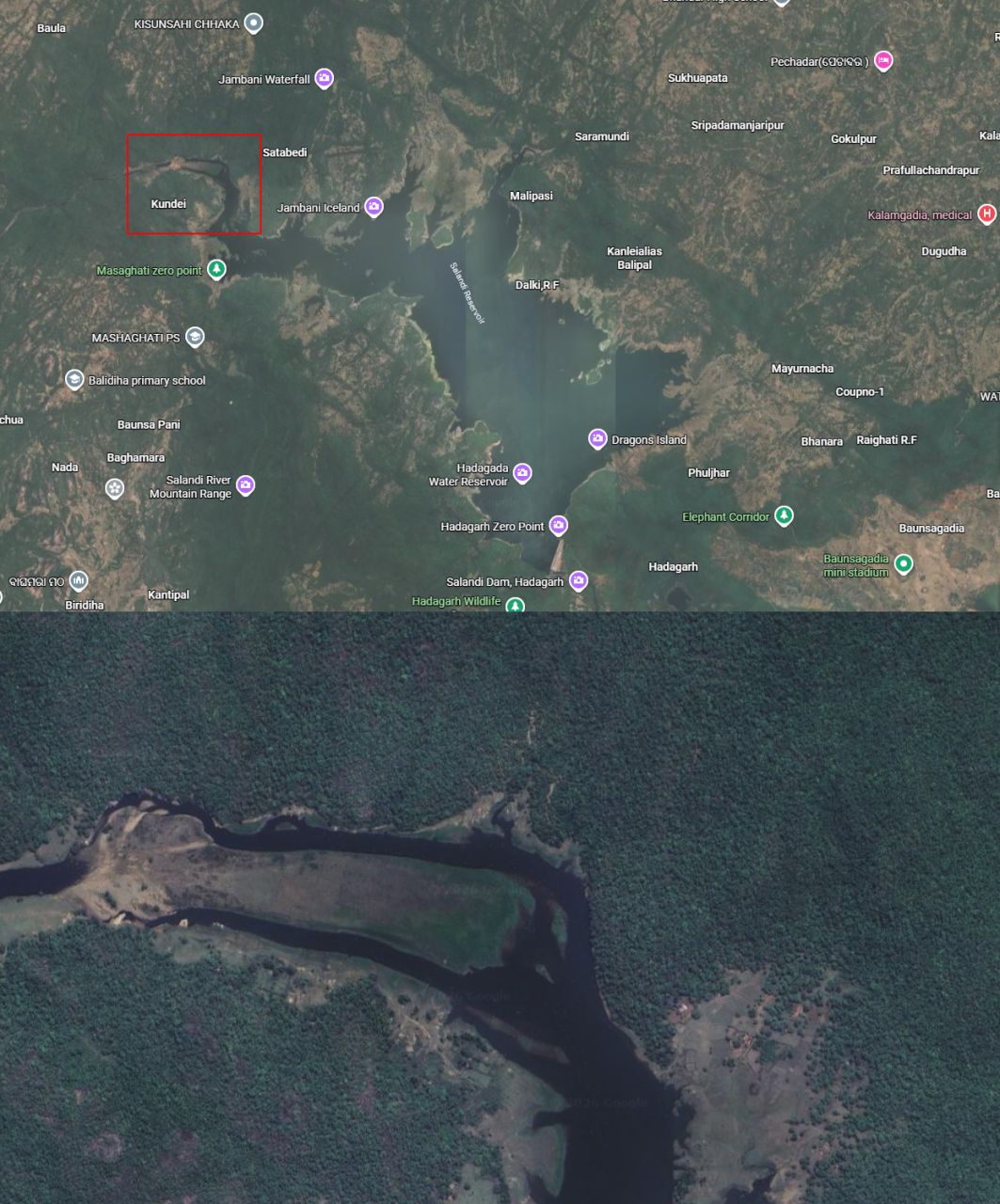
Baba was living near the point where the Salandi River split into two channels, and merged into the Salandi Reservoir.
In the evening, as the sun began to set, Vishwanath Baba wanted to engage in harinama sankirtana, as is the custom of sadhus from these areas. I had no video camera as this was when mobile phones were still primitive, but I was able to record the sound of the kirtan, which you can hear in the video at the bottom of this article.
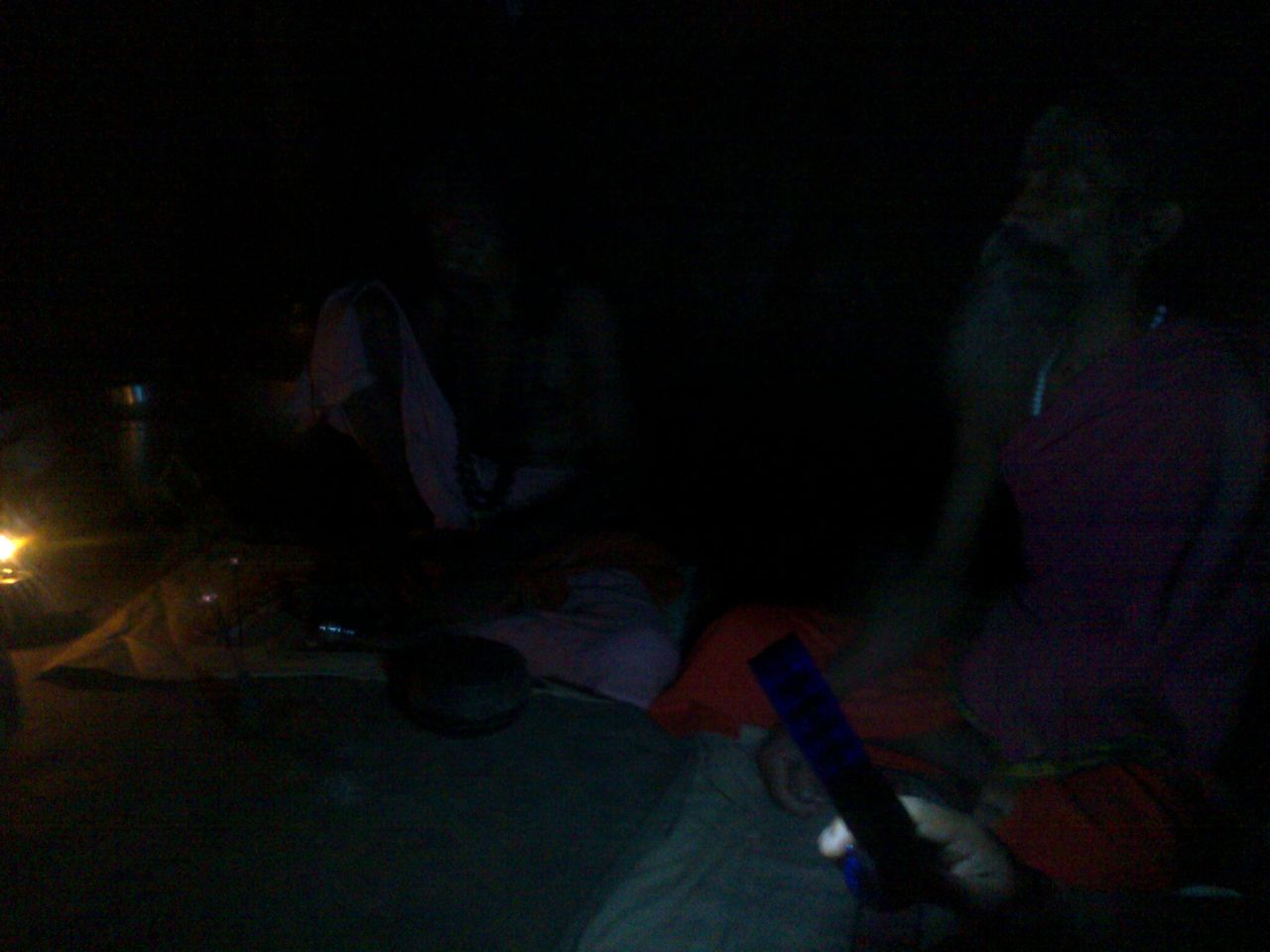
Performing harinama sankirtana in the evening in the dark.
Those days were the peak of my life. We lived surrounded by the most amazing sadhus, and served them with new adventures opening up spontaneously every day. When we were around the sadhus we had no plans, we just waited for them to instruct us what was the next mission to engage in.
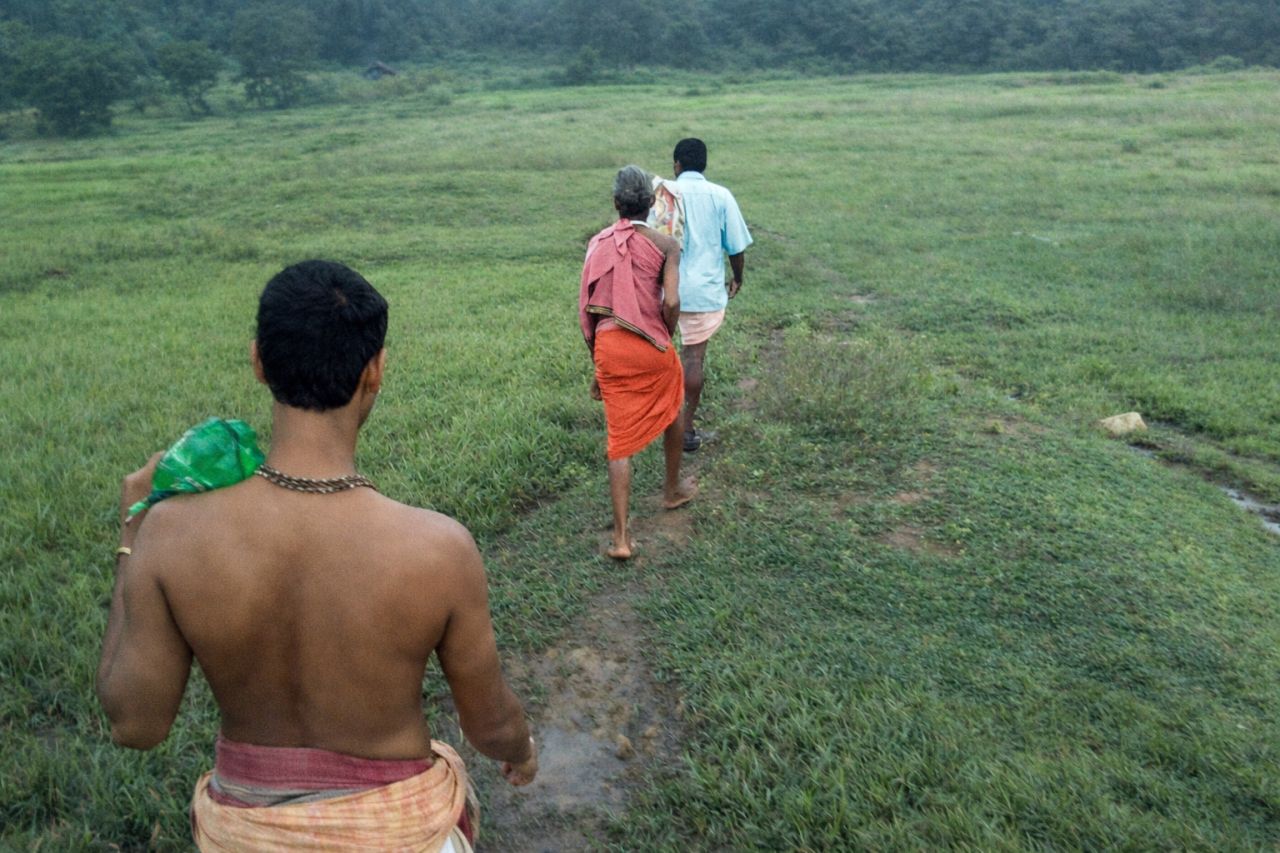
Everything would unfold on its own, and we were ready to go anywhere and do anything knowing it would please the sadhus. They had inner vision and could receive guidance from higher authorities, and our duty was to assist them in whatever small way we could.
One day we would be on a mission to perform a yajna on a mountain peak deep in the forest, the next day we may be sent to meet with another rare sadhu hidden in the forest. The sadhus always knew who was waiting to be met before we even got there. They had inner communication between each other, which us common people did not possess.
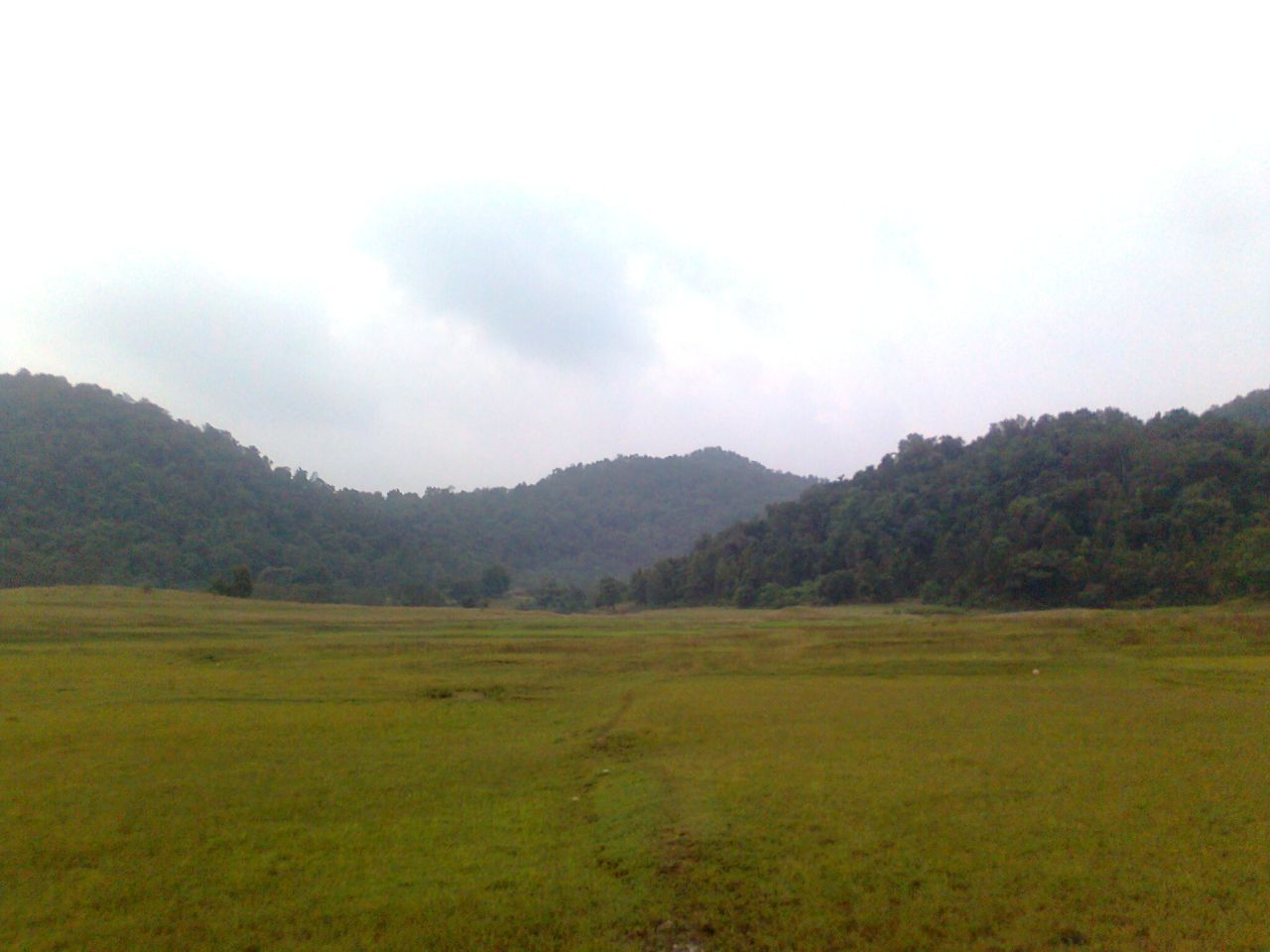
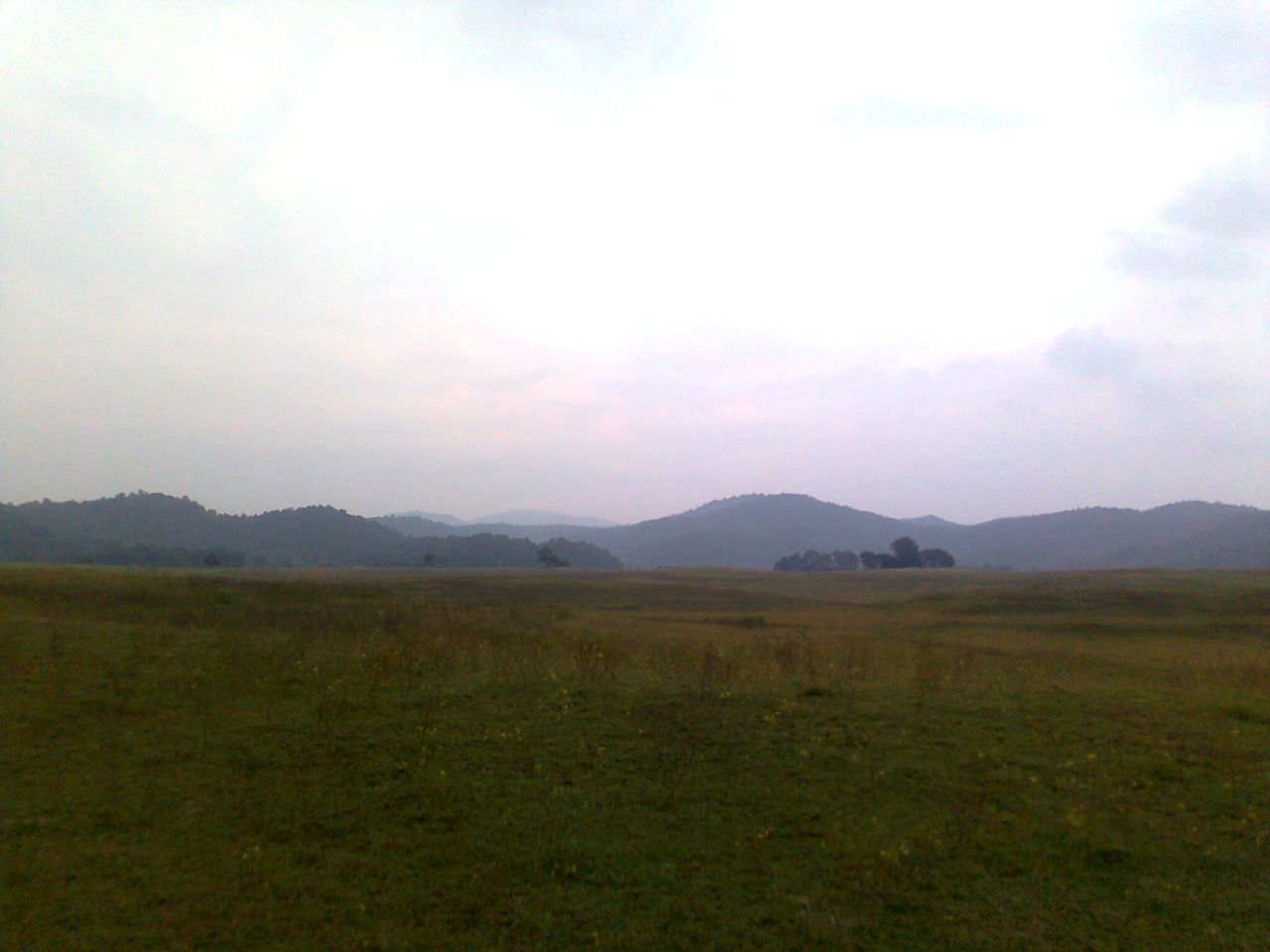
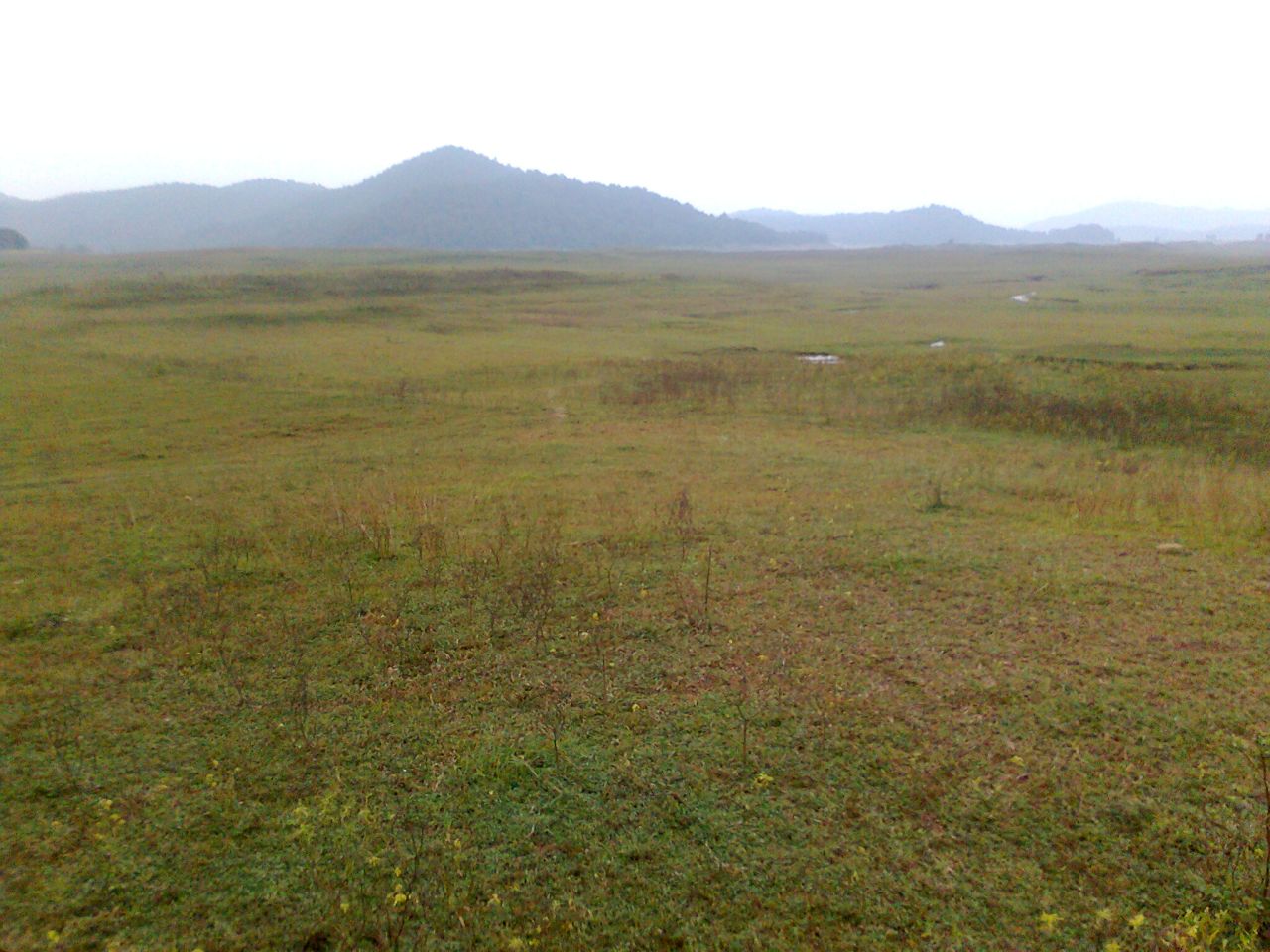
The floodplain of the Salandi Reservoir created a giant grass plain in the summer season. In the rainy season all of this would be under an ocean of water. Below are a few photos of the vast floodplain grasslands that created a beautiful scenery in the summer time.
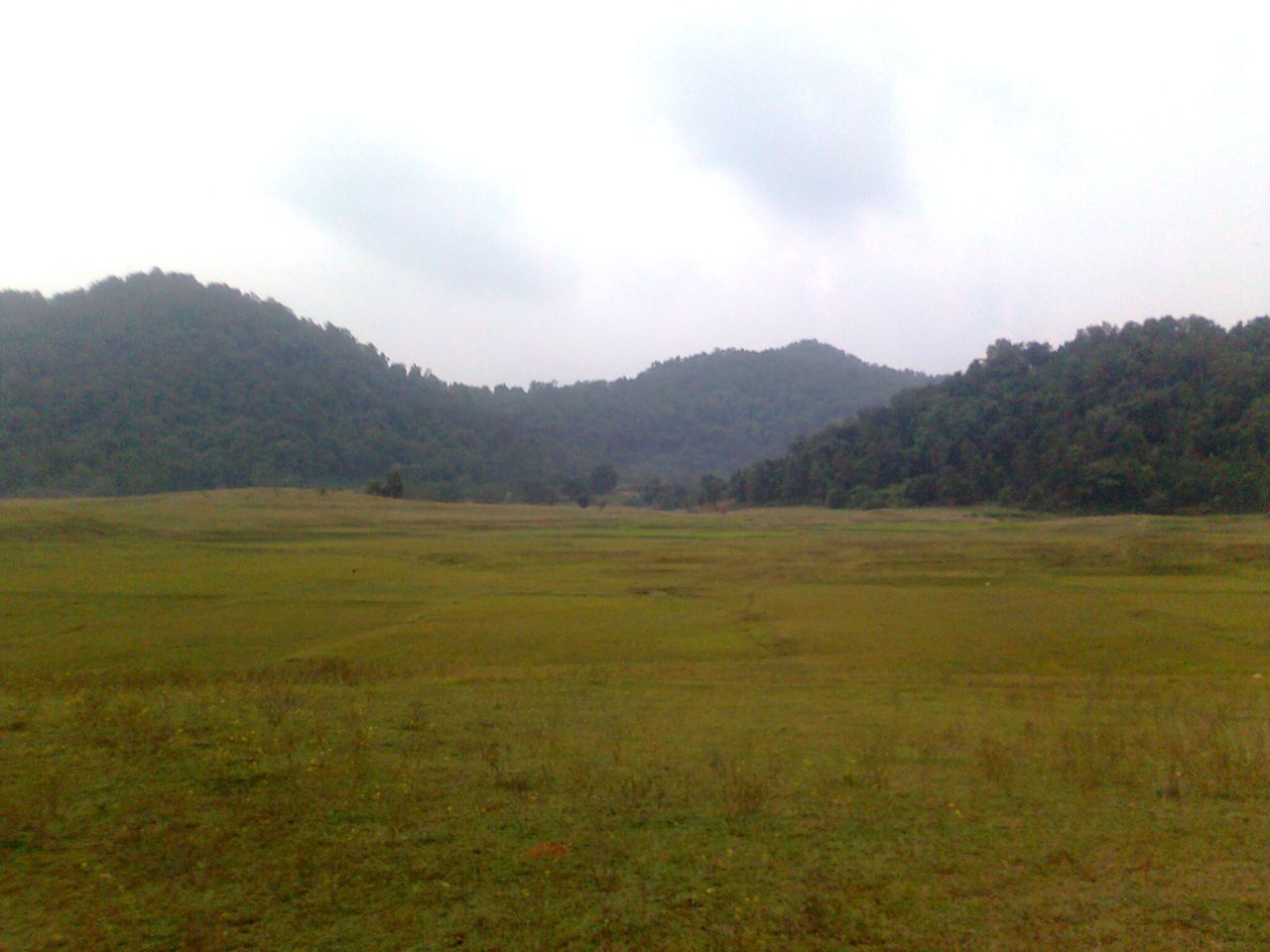
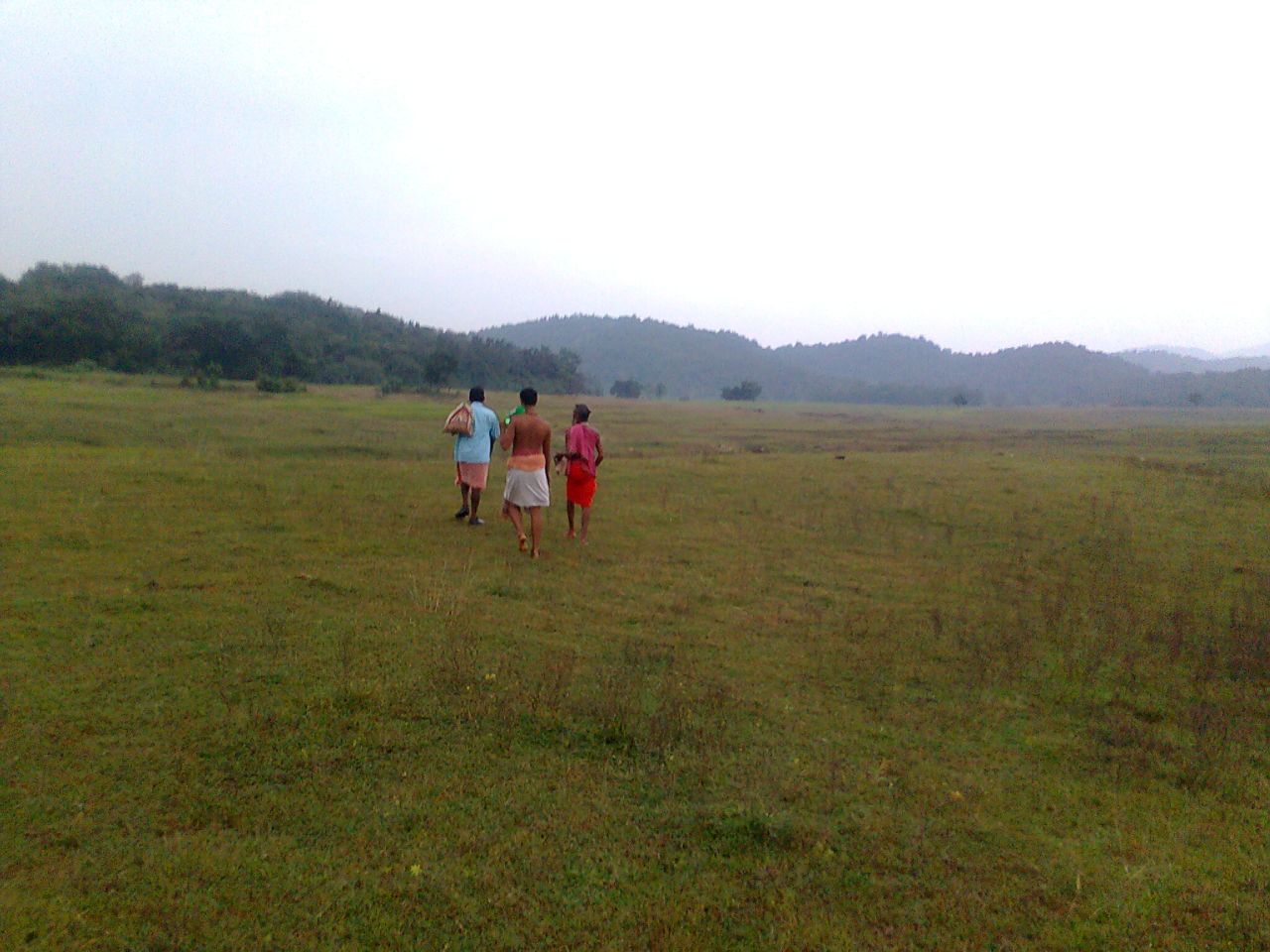
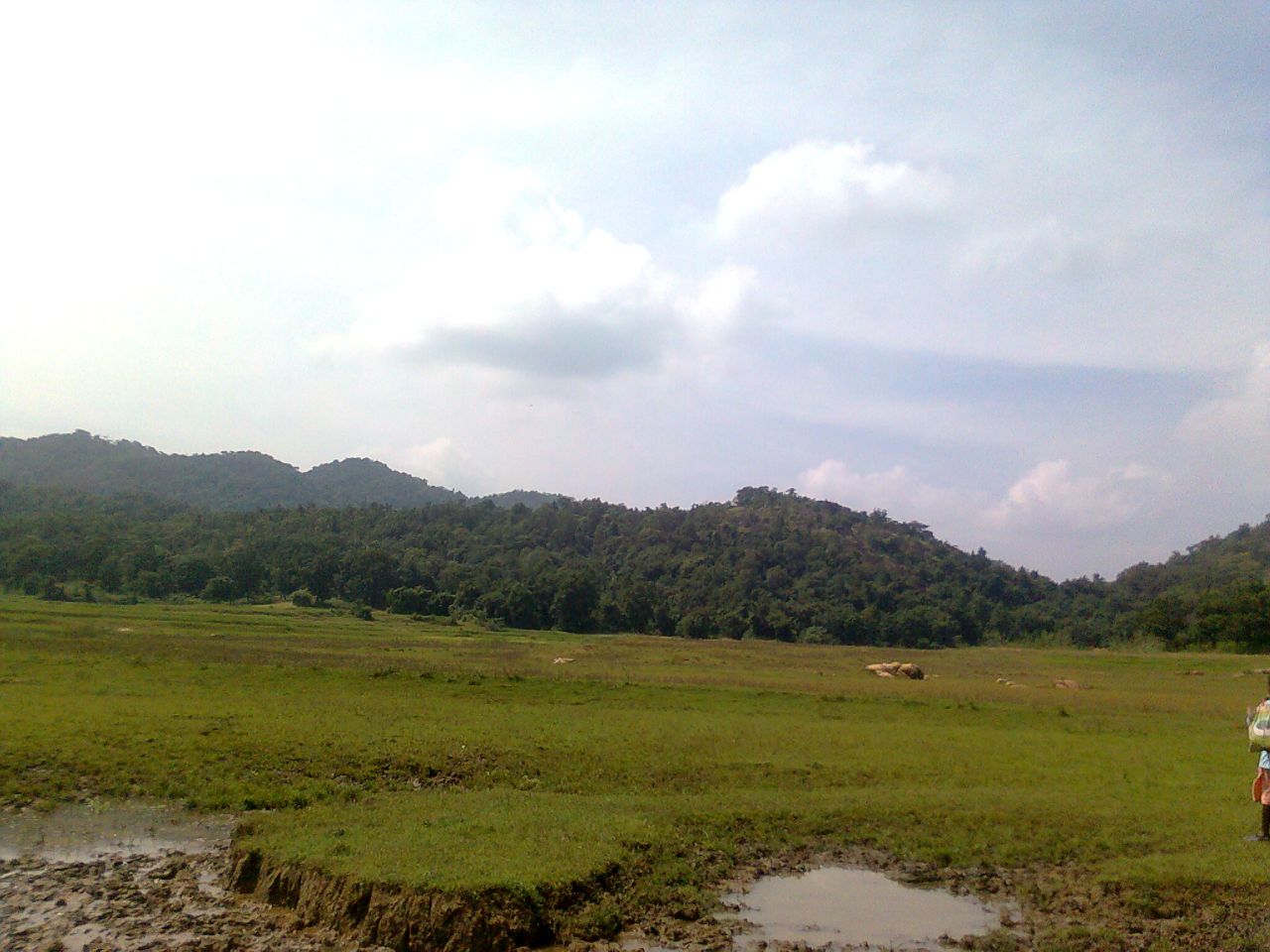
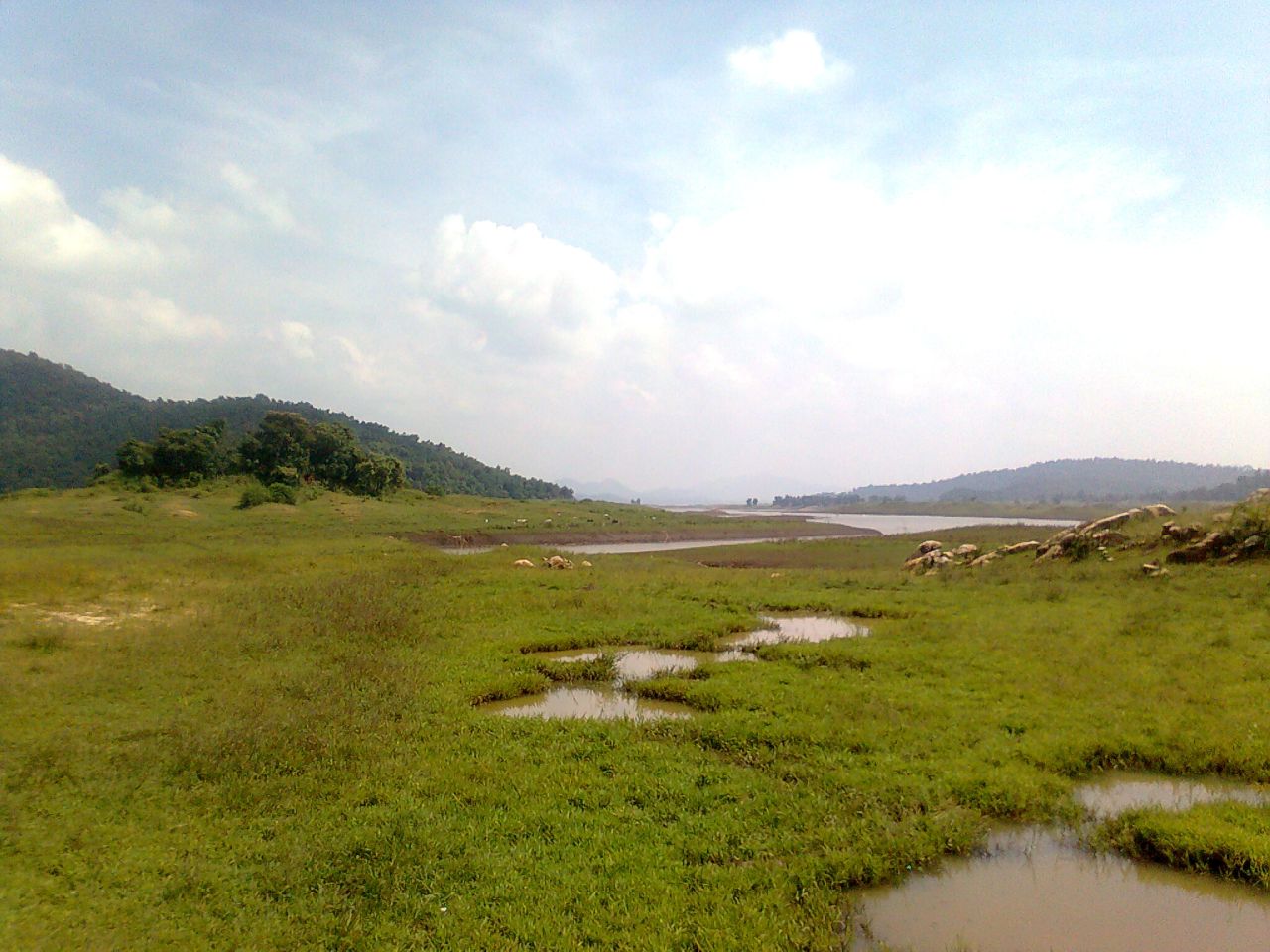
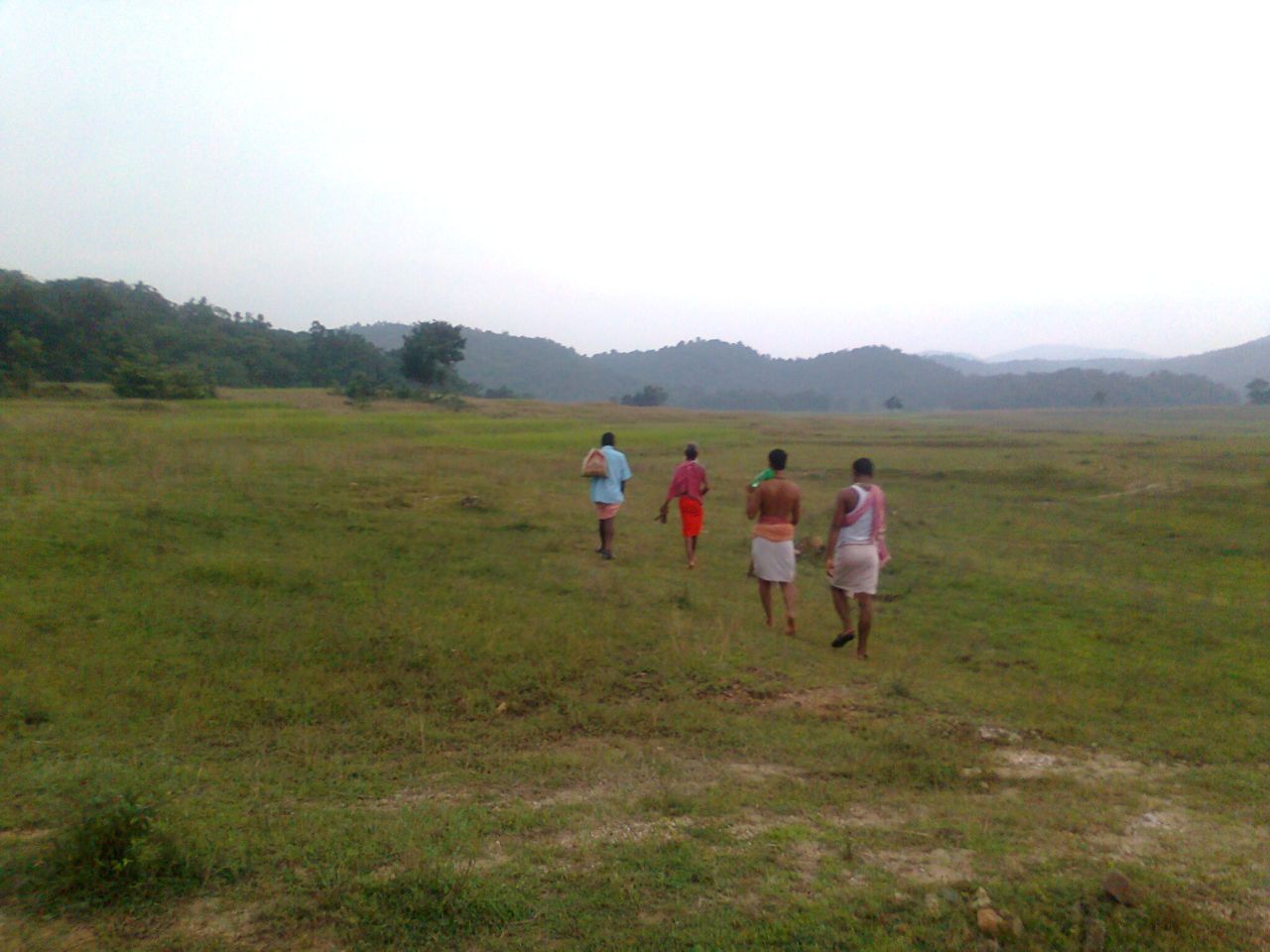
Walking through the floodplain with Dayalu Baba.
For drinking water Vishwanatha Baba used to collect water from this natural spring near to his hut.
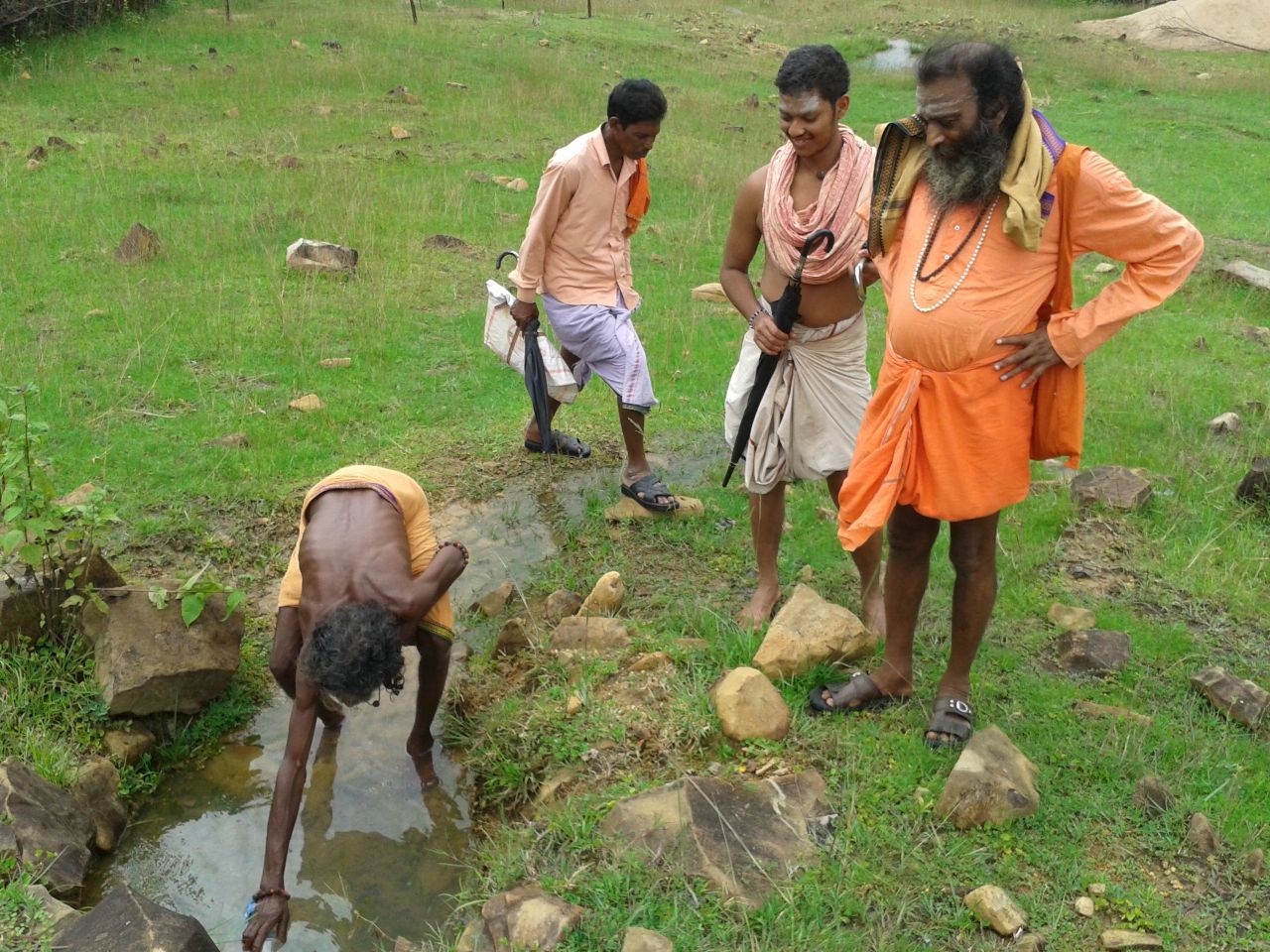
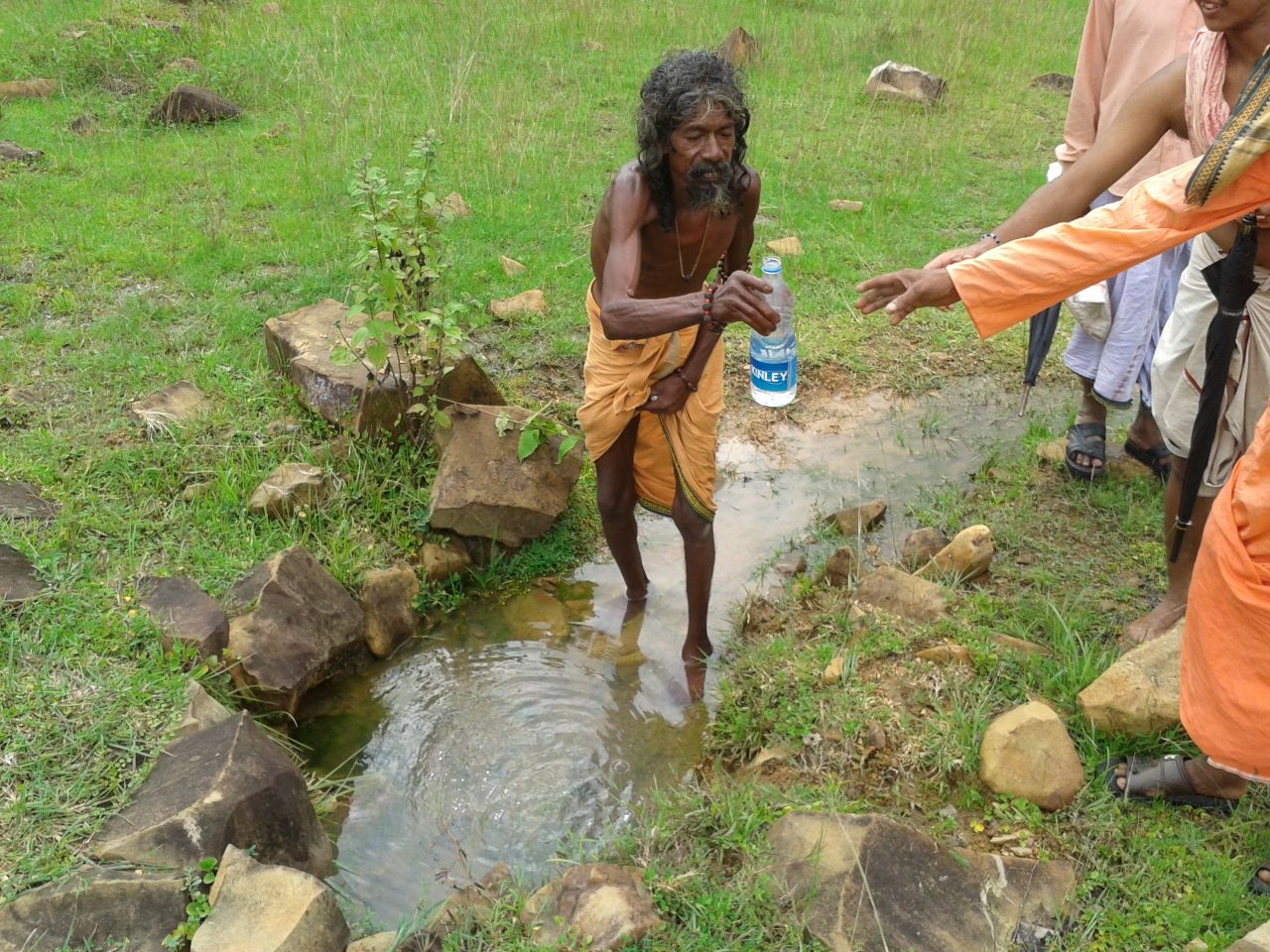
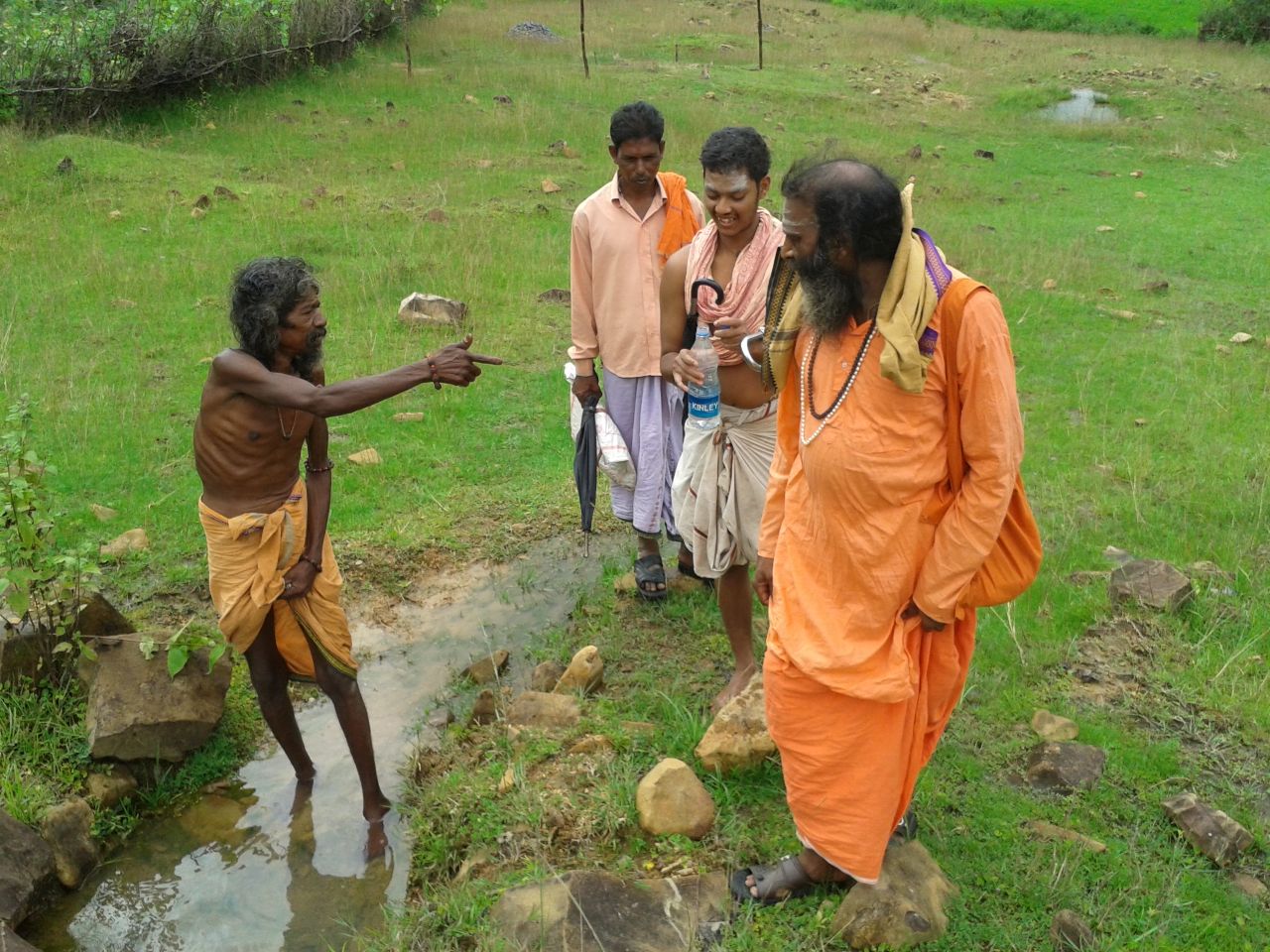
On this particular trip I had no extra clothes to wear, because we had not made any plan to come there and were suddenly instructed to do it. In the morning I took bath in the Salandi river and washed my only dhoti, and had no towel to dry off with. I went back to baba’s ashram and sat in my kaupinam while the wet dhoti dried in the sun. Vishwanath Baba saw us in this state and took his harinama chadar and told me to wear it as a dhoti so we would not be cold.
Normally I would not wear a harinama chadar in this manner, but when instructed by a sadhu I will listen. For Baba the primary importance was that the devotee should not be cold or uncomfortable, and I listened to him and sat wearing his harinama chaddar until my dhoti finished drying in the sun. I would also never think to wear a sadhu’s personal clothes, but when they are insisting you have to comply.
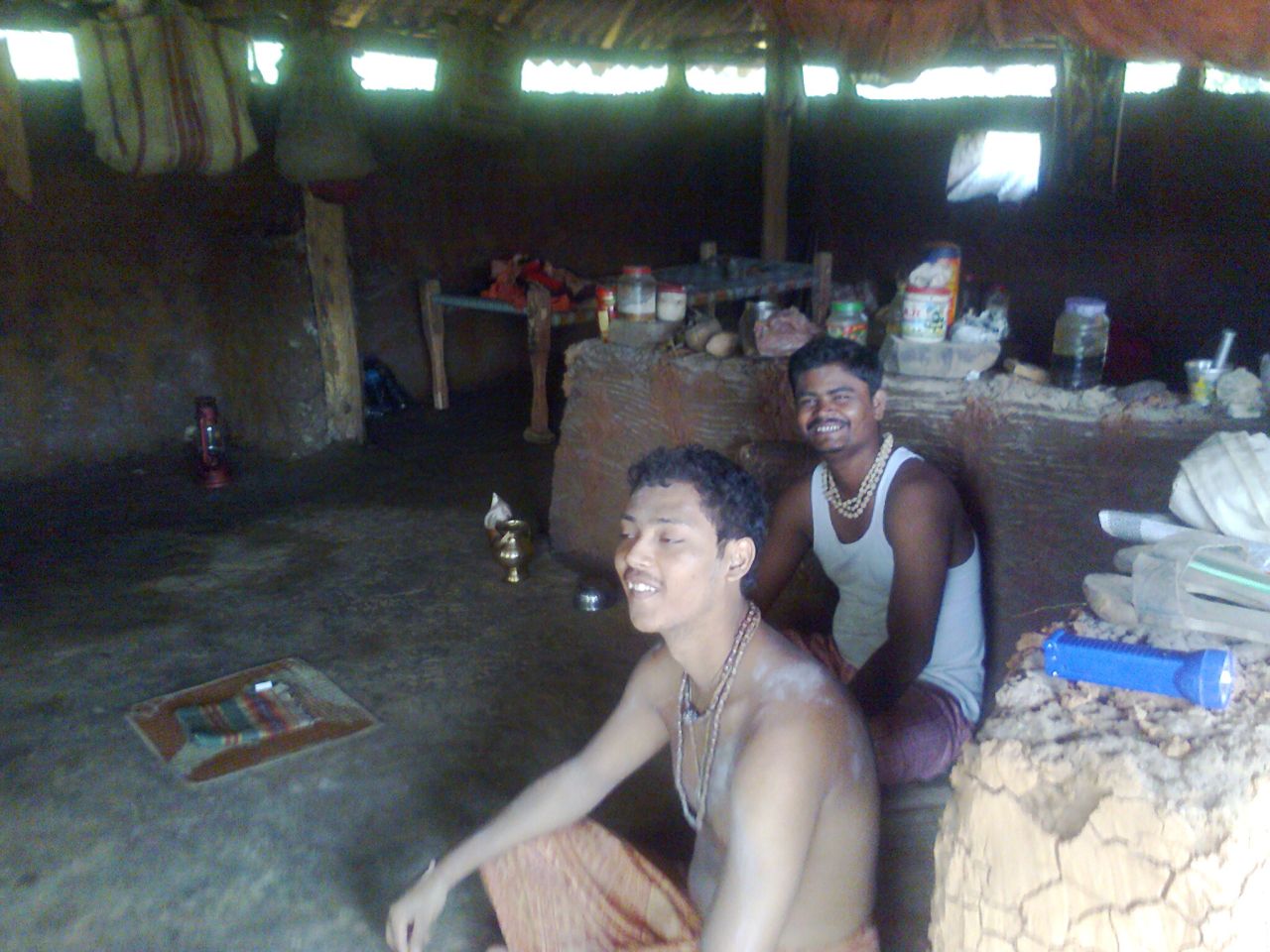
Bhagavat Das and Anil sitting in Vishwanath Baba’s hut.
Despite being over 80 years old at this time, in the morning Baba proceeded to cook for us on his simple mud stove.
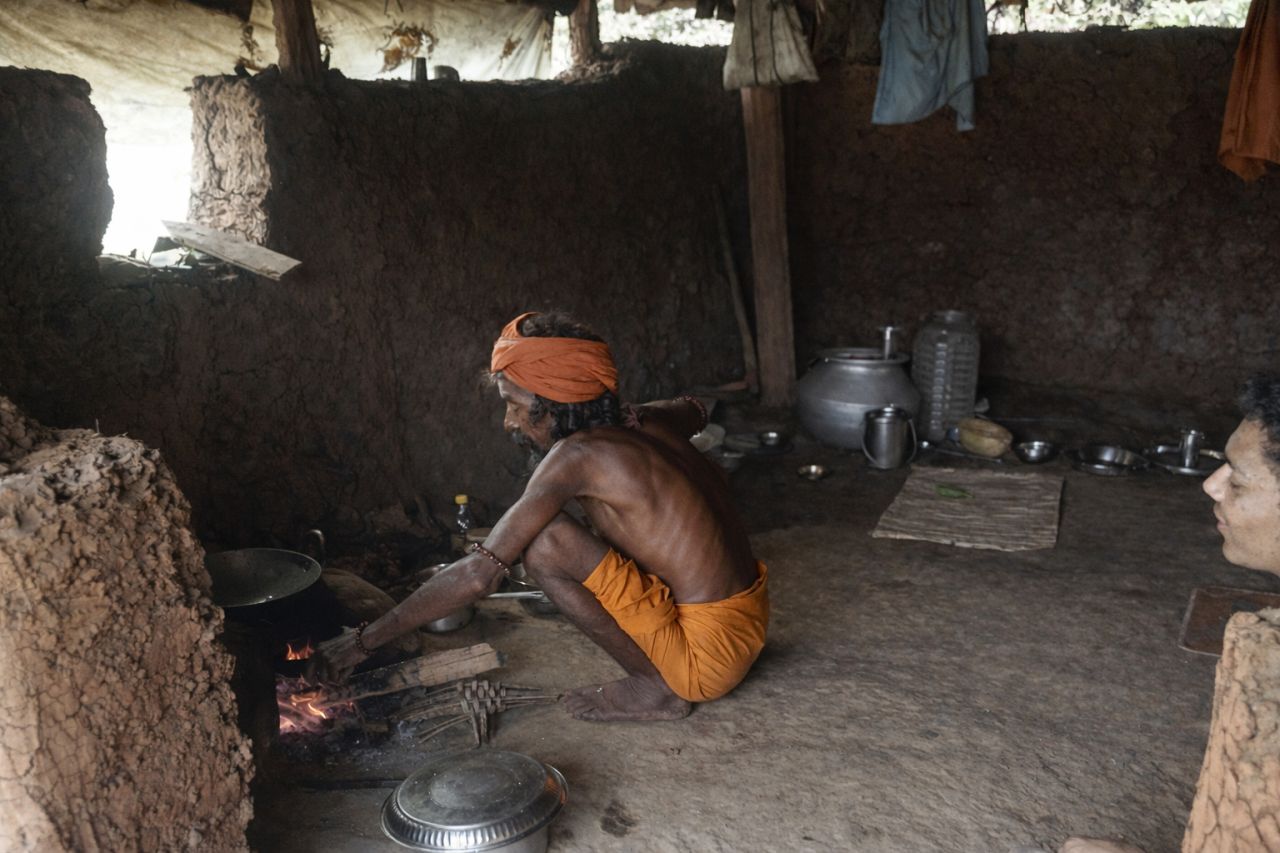
Vishwanath Baba cooking for us in the morning. At this time he was over 80 years old.
At some point we asked Baba a question about yoga asanas. Immediately he started showing us various difficult asanas he had practiced in his younger years. Even though he no longer practiced yoga asanas from many years, he was still able to demonstrate even the most difficult asanas.
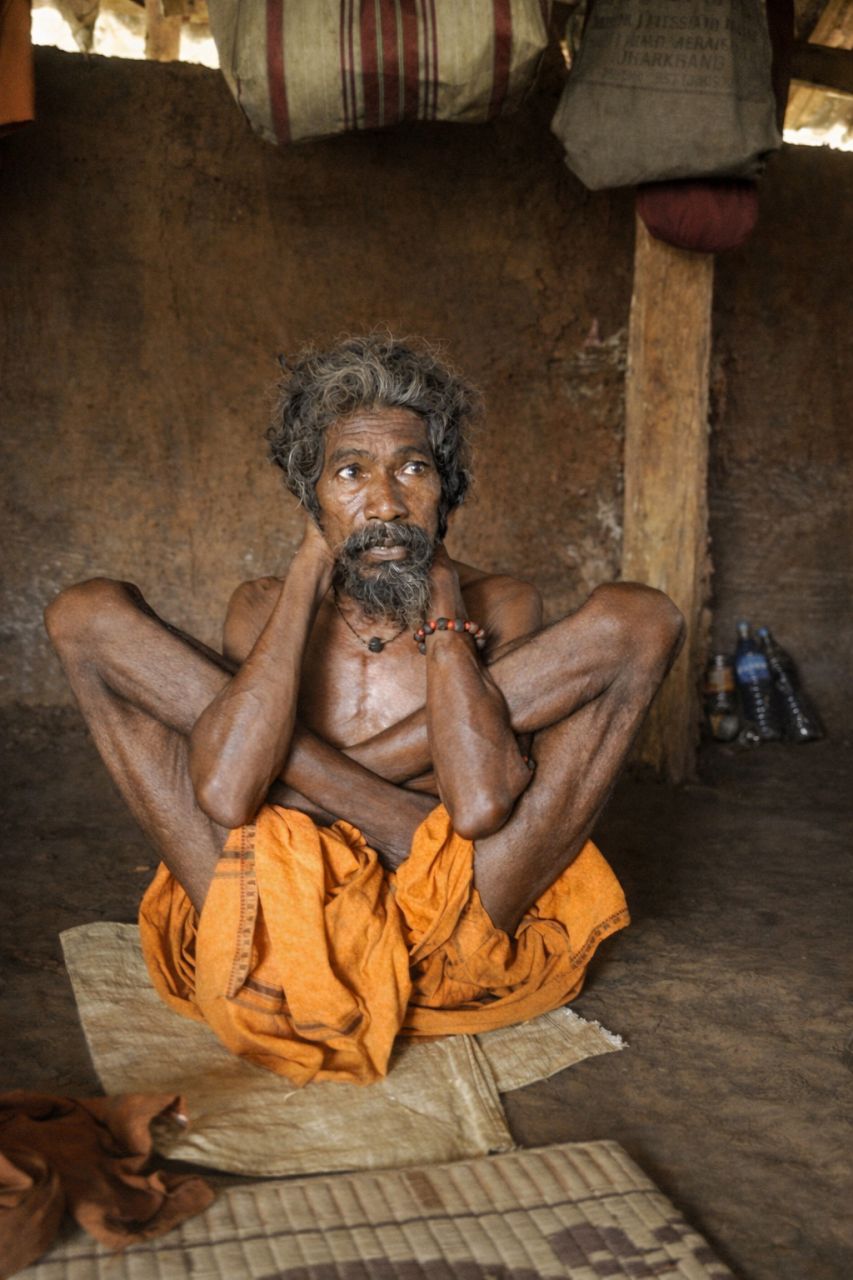
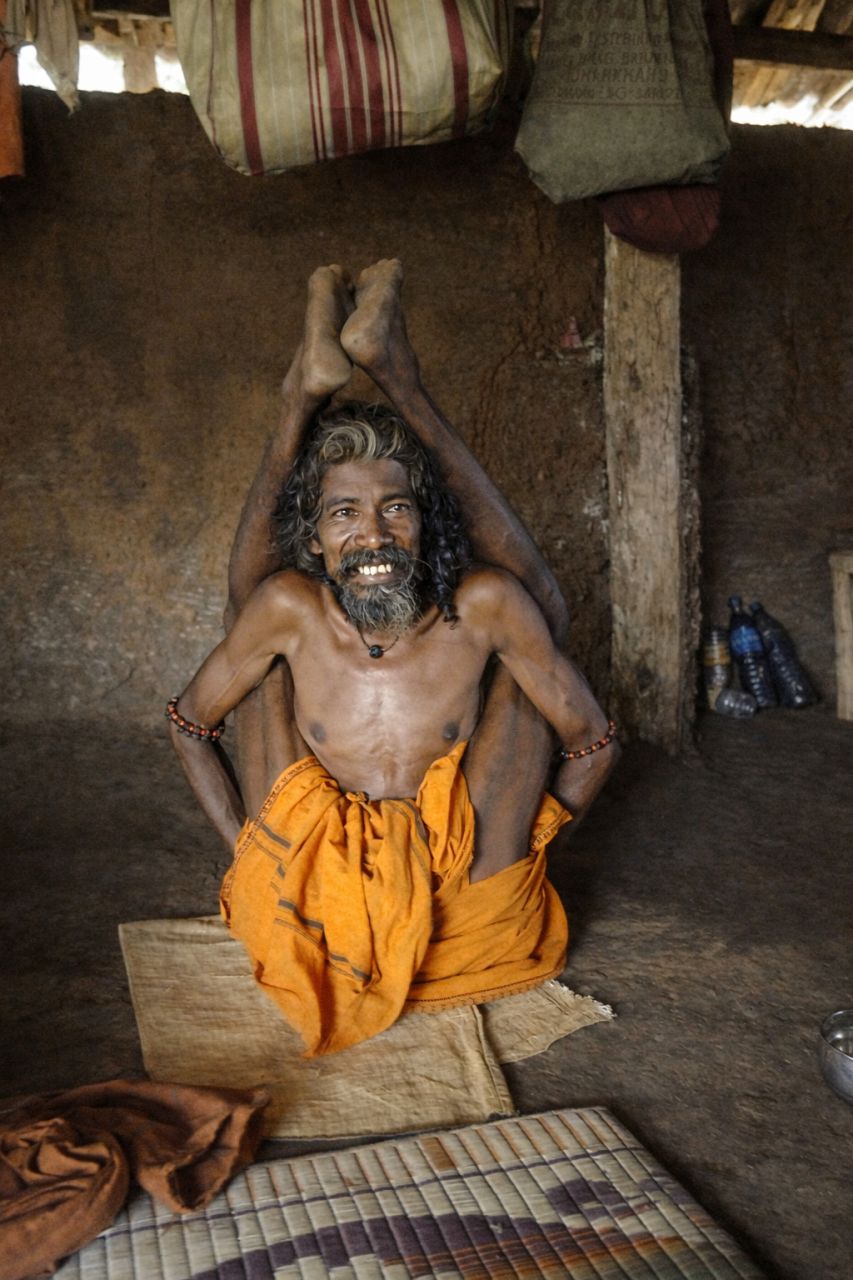
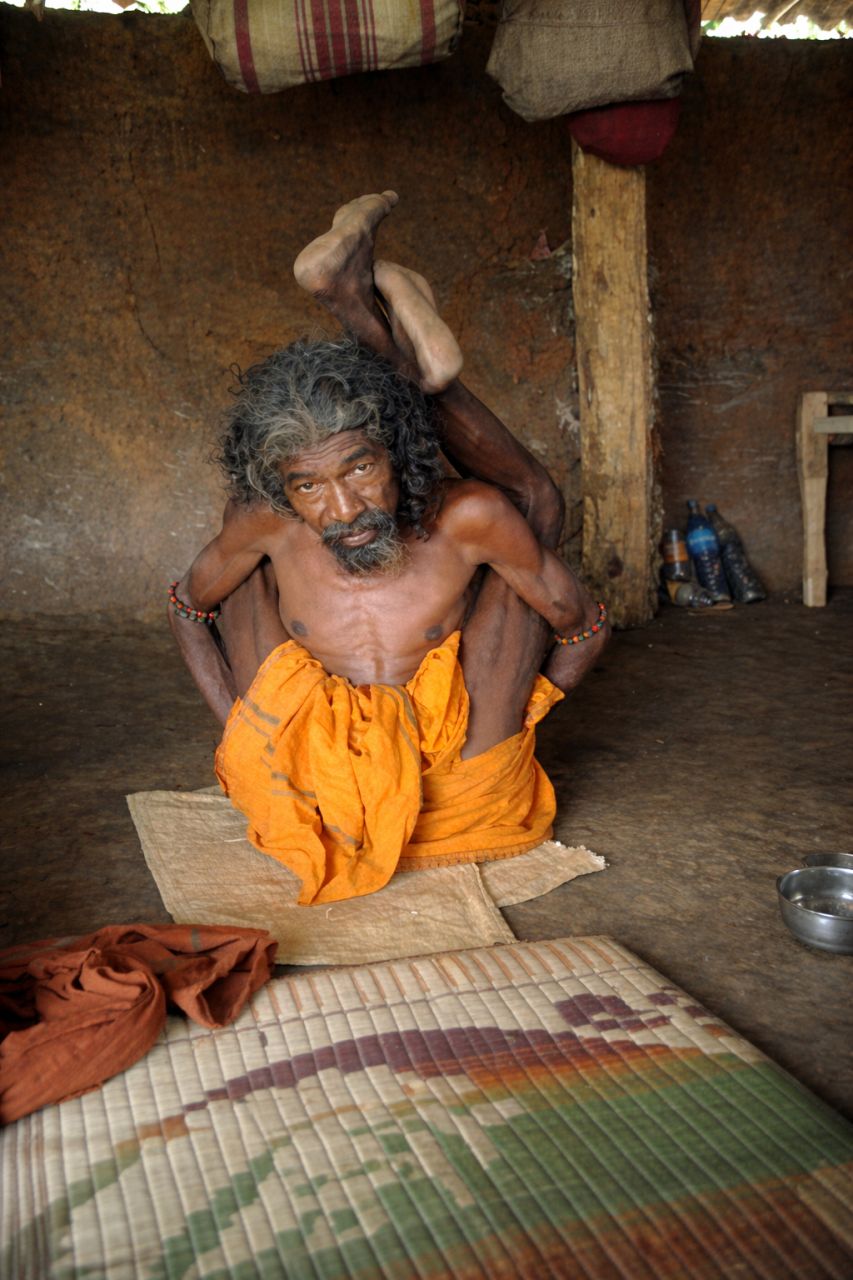
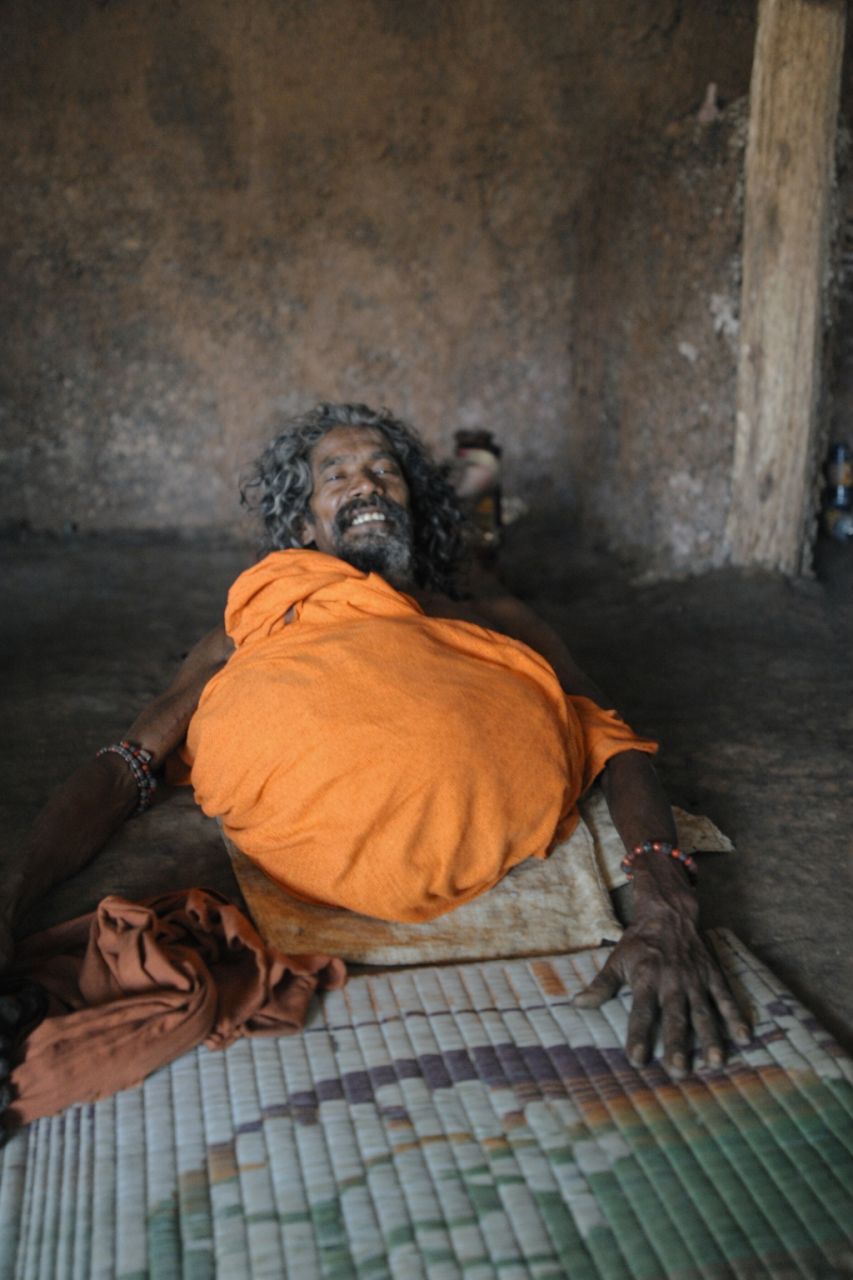
After returning to Chakratirtha Ashram the next year, Vishwanatha Baba continued his service for many years till he entered samadhi in 2023.
The following video is a recording of the evening kirtan from our first visit to Vishwanatha Baba’s hut in the Salandi Reserve Forest, on October 9th, 2012. Present for the kirtan were Vishwanatha Baba, Dayalu Baba, Damodar Baba, Bhagavat Das and myself. The first three kirtans were led by Damodar Baba, and the rest by Vishwanatha Baba. The audio is not that good, because it is from 2012 and we didn’t have a good recording device.
This is the pure kirtan of authentic sadhus living in the remote forest away from people, electricity and modern life. In the evening as the sun sets and everywhere becomes dark they light the kerosene lantern and sit around singing bhajans about Bhagavan.
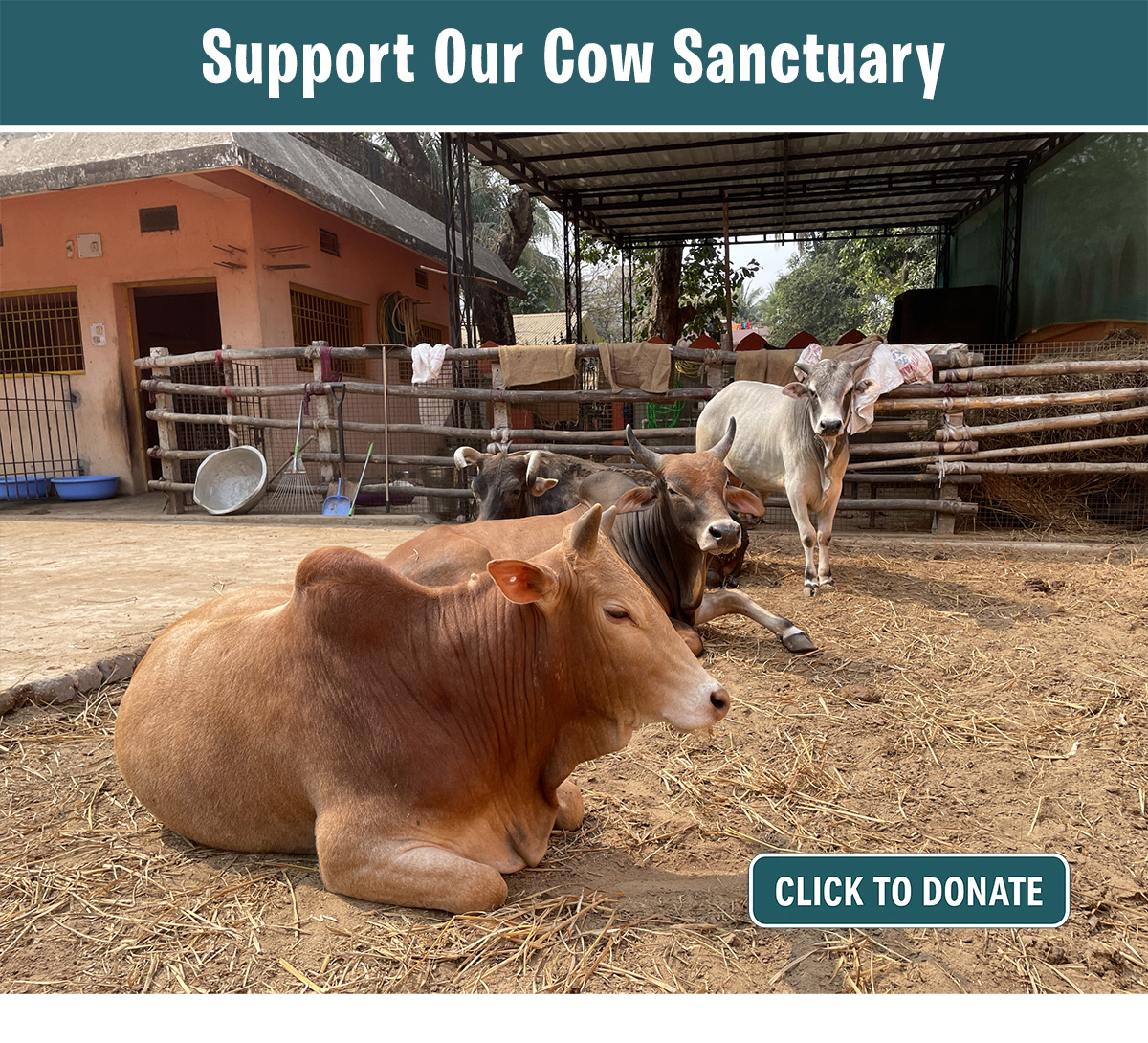
Every cow and calf at our sanctuary has a story of rescue, healing, and hope. Your generous support provides them with food, shelter, medical care, and a lifetime of protection. Together, we can give these sacred animals the love and safety they deserve.

The article is very well written, and raw enough (without using any difficult or confusing words). The photos were also very good, and special thanks for providing the footage of the Kirtan. I really like to hear, read, and see the life of such unknown sages, which nobody takes interest in. You and your team are doing a really marvellous task. Keep it up !
Enjoyed reading. I really appreciate your visit walking long hours to see this Sadhu.
Please send me your email address.
My love for Hinduism is deep. The only Spiritual Teachings that abhor the eating of animals, of any living creature.🕉️