Srila Prabhupada’s (ISKCON’s) four regulative principles, which all devotees must vow to follow at the time of initiation, are mentioned in the Manu Samhita as follows:
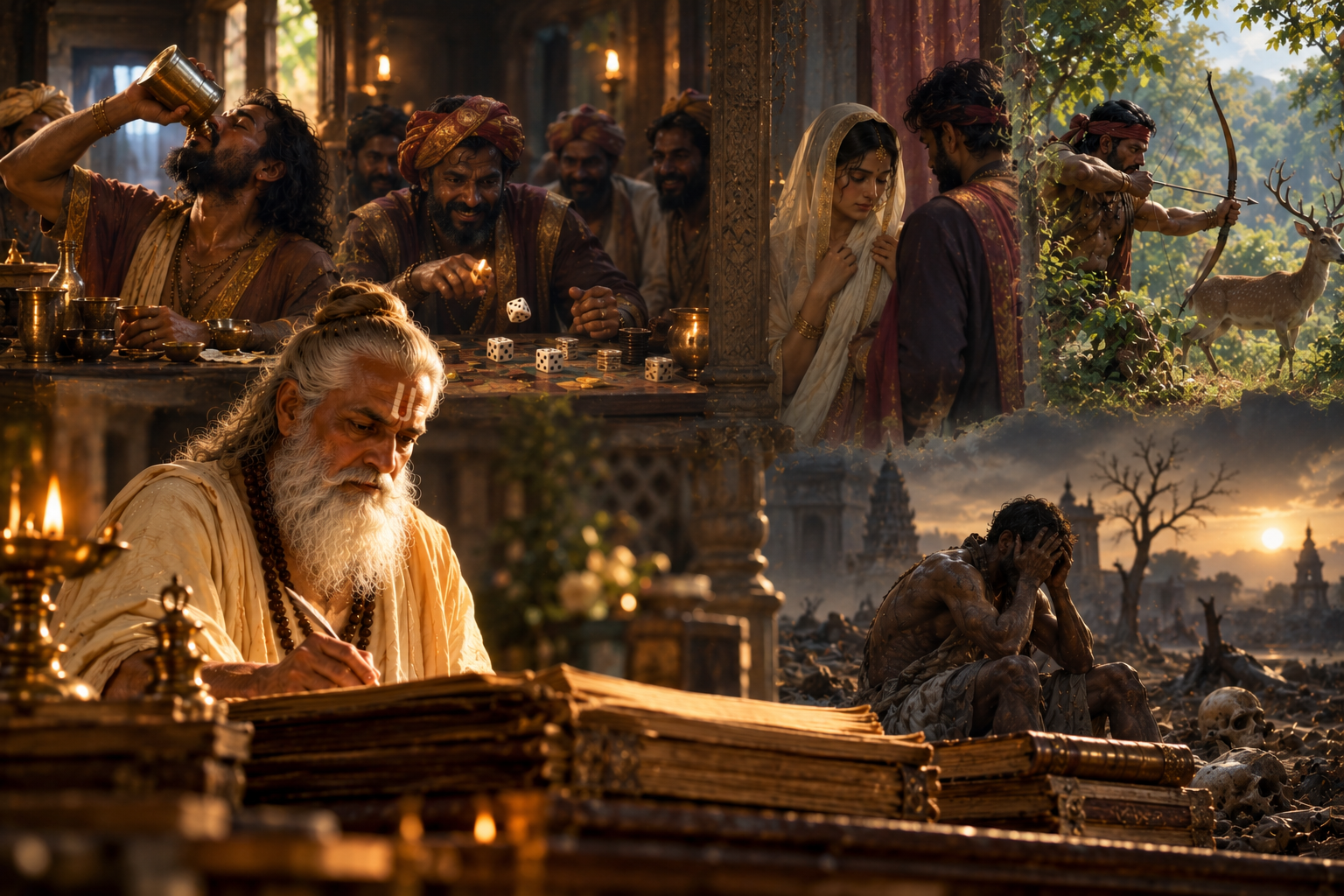
pānamakṣāḥ striyaścaiva mṛgayā ca yathākramam
etat kaṣṭatamaṃ vidyātcatuṣkaṃ kāmaje gaṇe
“Drinking, gambling, women, and hunting, in that order – these four should be understood as the most troublesome among the group of desires arising from lust.” – Manu Samhita 7.50
You can see they roughly correspond to intoxication, gambling, illicit sex and meat eating. After enumerating the list of vices, the conclusion is that among them these four are the worst.
In the prior verses of Manu Samhita it is established that these vices, totalling 10 in number, are born from lust (kama), whereas another set of 8 vices are born from anger (krodha):
daśa kāmasamutthāni tathā’ṣṭau krodhajāni ca
vyasanāni dur’ntāni prayatnena vivarjayet
“One should carefully avoid the ten vices arising from lust and the eight arising from anger, for these vices lead to disastrous consequences.” – Manu Samhita 7.45
kāmajeṣu prasakto hi vyasaneṣu mahīpatiḥ
viyujyate’rthadharmābhyāṃ krodhajeṣvātmanaiva tu
“A king who becomes addicted to vices arising from lust (kama) is deprived of wealth and dharma, whereas, in the case of vices arising from anger, he brings about his own ruin.” – Manu Samhita 7.46
This concept is also spoken of by Lord Krishna in the Bhagavad Gita, where he speaks of the three paths leading to hell:
tri-vidhaṁ narakasyedaṁ
dvāraṁ nāśanam ātmanaḥ
kāmaḥ krodhas tathā lobhas
tasmād etat trayaṁ tyajet
“There are three gates leading to hell – lust, anger, and greed. Every sane man should give these up, for they lead to the degradation of the soul.” – Bhagavad Gita 16.21
Manu concludes by saying these vices are worse than death:
vyasanasya ca mṛtyośca vyasanaṃ kaṣṭamucyate
vyasanyadho’dho vrajati svaryātyavyasanī mṛtaḥ
“Of vice and death, vice is said to be the worse. A man addicted to vice sinks lower and lower, while one free from vice, though he dies, ascends to heaven.” – Manu Samhita 7.53
Question from the Comments: What are the remaining vices, said to be 10 and 8 respectively, born from lust and anger?
mṛgayā’kṣo divāsvapnaḥ parivādaḥ striyo madaḥ
tauryatrikaṃ vṛthāṭyā ca kāmajo daśako gaṇaḥ
“Hunting, gambling, sleeping during the day, speaking ill of others, association with women, intoxication, singing, dancing and playing musical instruments, and aimless wandering — these constitute the group of ten vices arising from lust (kama).” – Manu Samhita 7.47
paiśunyaṃ sāhasaṃ droha īrṣyā’sūyā’rthadūṣaṇam
vāgdaṇḍajaṃ ca pāruṣyaṃ krodhajo’pi gaṇo’ṣṭakaḥ
“Backbiting, violence, betrayal, envy, faultfinding, misappropriation of wealth, harshness of speech, and severity of punishment — these are the eight kinds of faults arising from anger (krodha).” – Manu Samhita 7.48
Some are obvious, but some of them require interpretation, and commentators have varied greatly on what each particularly means.
[Note: A reader Ajit Krishna Das has commented with the following verse from Mahabharata which conveys an identical meaning:
striyo’kṣā mṛgayā pānametatkāmasamutthitam
vyasanaṃ catuṣṭayaṃ proktaṃ yai rājanbhraśyate śriyaḥ
“Indulgence in women, gambling, hunting, and intoxicating drink are the four vices born of lust (kama), by which a king is brought down from his prosperity and fortune.” – Mahabharata 3.14.7]

Every cow and calf at our sanctuary has a story of rescue, healing, and hope. Your generous support provides them with food, shelter, medical care, and a lifetime of protection. Together, we can give these sacred animals the love and safety they deserve.



0 Comments