
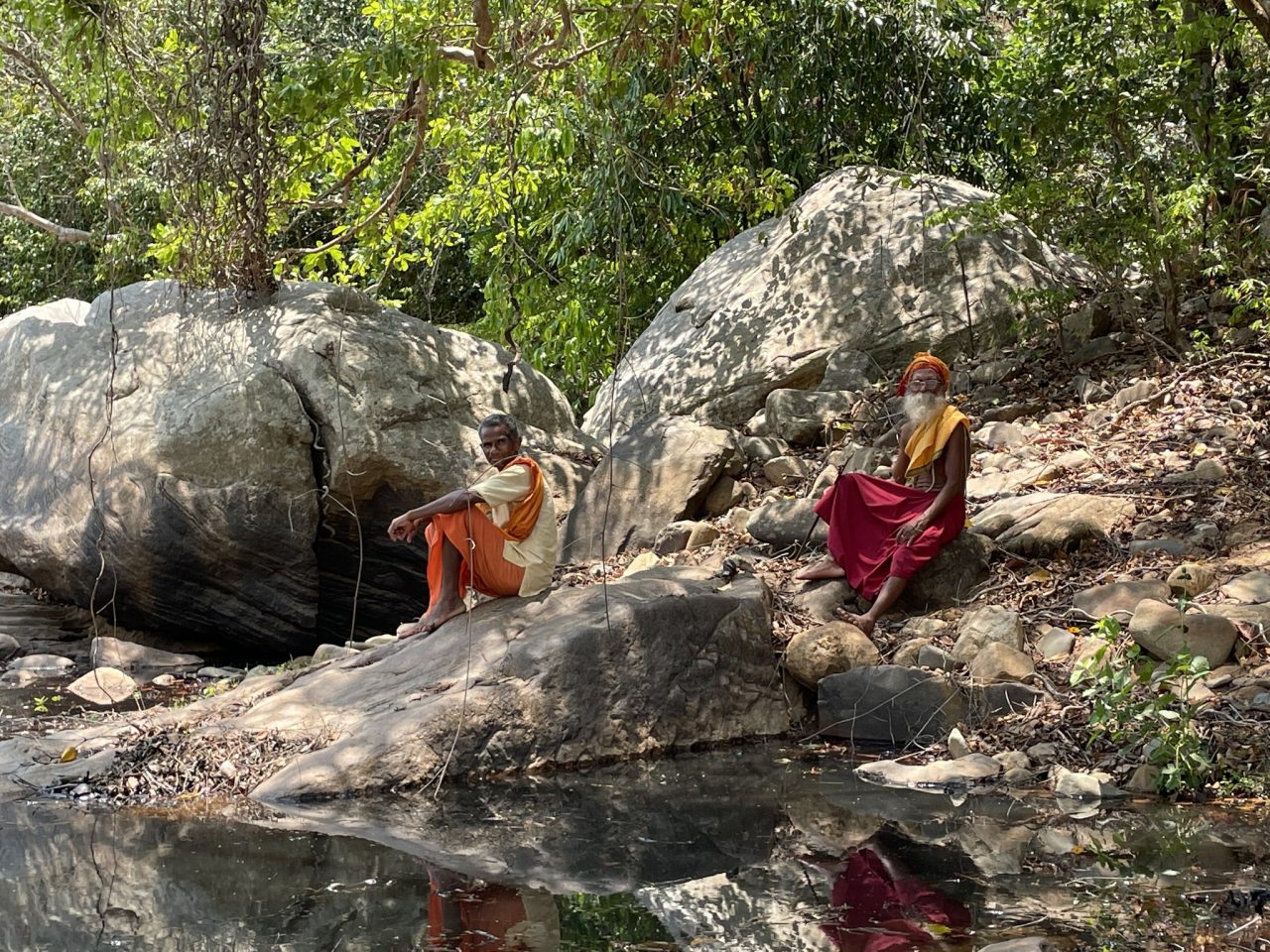
Question: Hare Krishna. What do these sadhus generally eat? I heard they eat a lot of wild roots. These must be very nutritious, because some of these sadhus live so long.
Answer:
Though in recent years most of the sadhus I know have shifted towards eating regular food like rice or roti, in their earlier years before India became more interconnected with roads, phones, and the internet, they used to live more isolated and sustained themselves off of many wild plants. They often told us stories of how they lived in those days before there were roads and before the public used to visit them. Even now, from time to time, I still see living traces of that older way of life in the foods they occasionally point out or eat. Here are a few examples that I can recall.
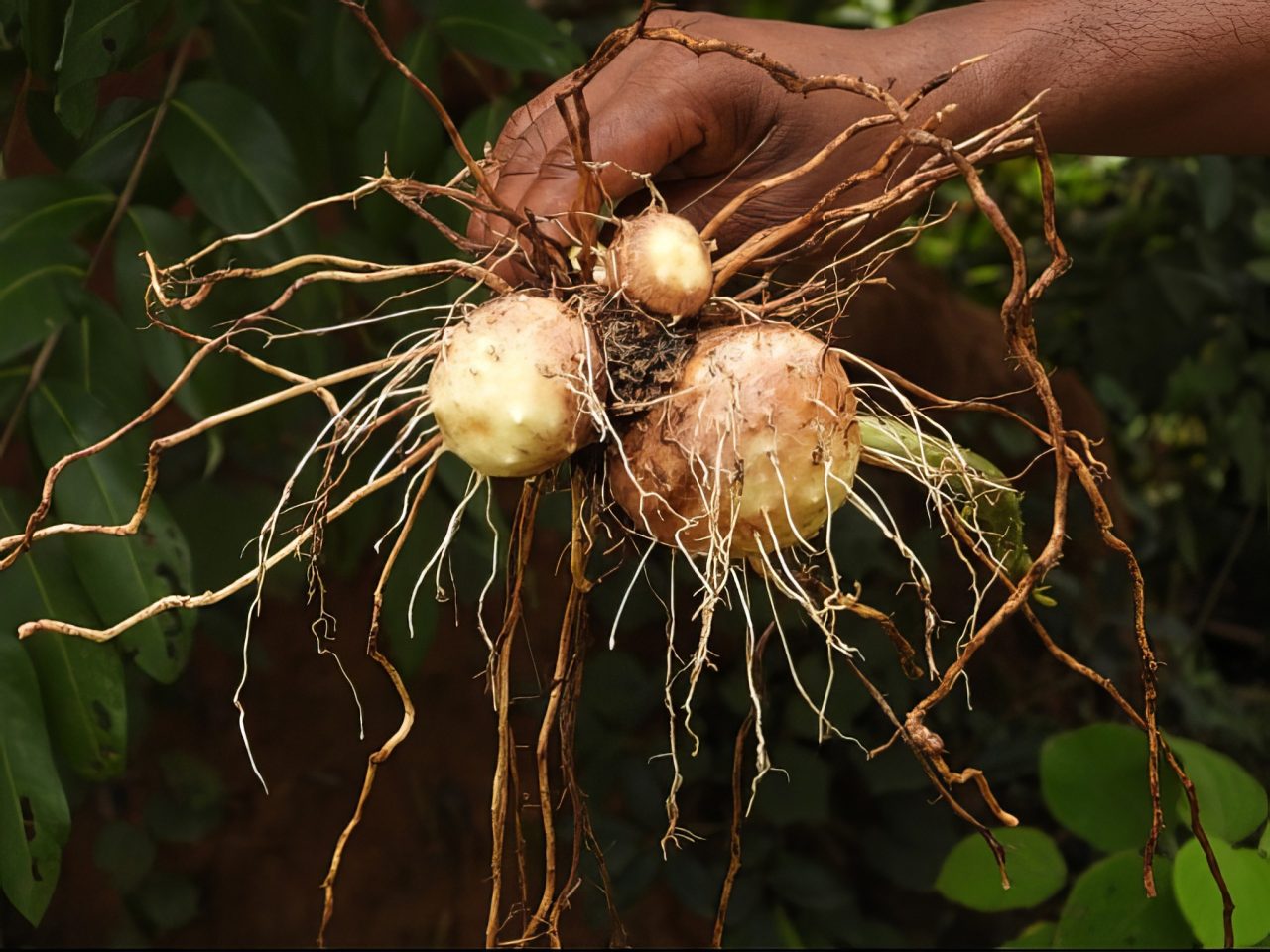
An example of kanta aloo, another type of root found in the forest.
Jangali Pita Aloo – Jungle Bitter Potato:
Once in the early days of visiting Chakratirtha Baba before much of the public had started coming to his ashram he showed me a root that was covered in spikes, round like a small potato. It looked like something you would expect to see in hell, covered in spiny spikes.
He told me, “This is jungle pita aloo (bitter potato). We used to live by foraging this from the forest. To eat it you have to first slice it and then soak it over night in a running river, and that will draw out all the bitterness. Afterwards you can cook it the next day and eat it.”
He gave me a piece of it in the morning and as expected it did not taste nice, and was still quite bitter.
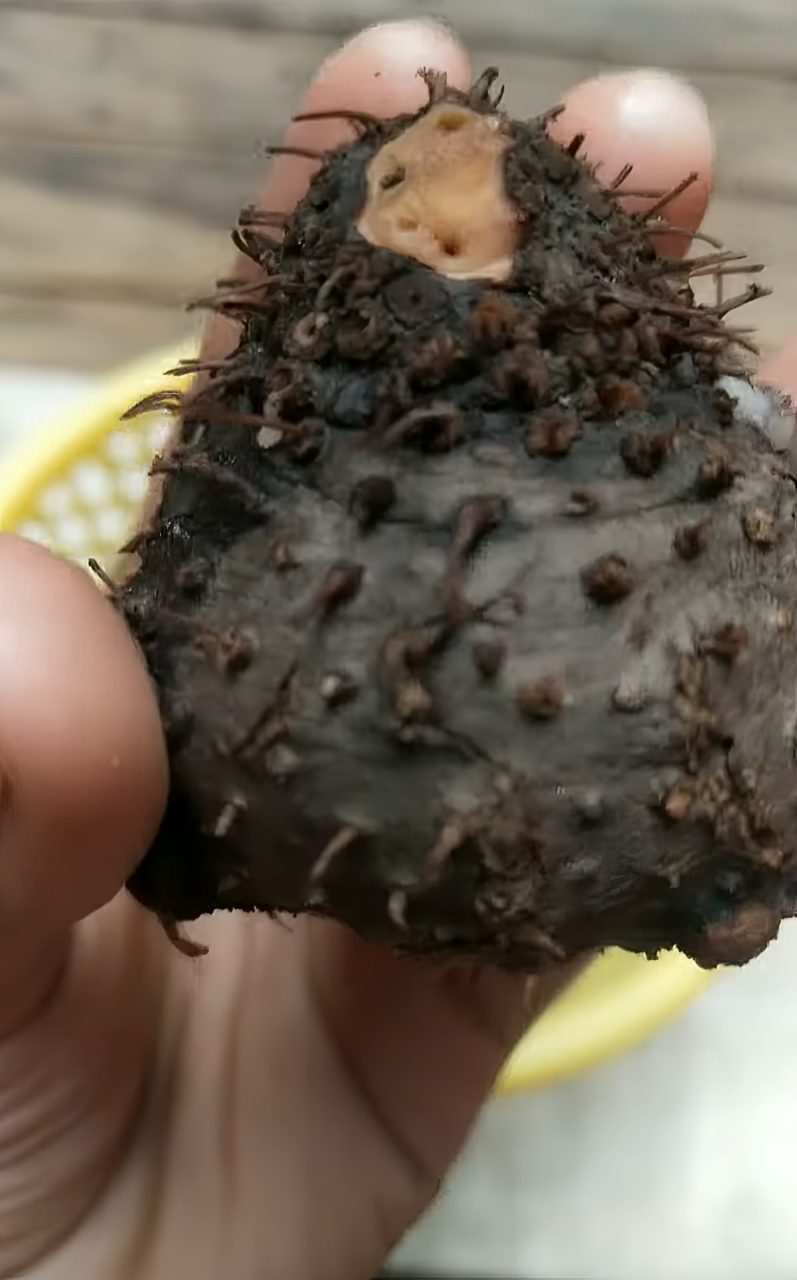
An example of another type of wild root found in the forest.
Jangali Saaga – Forest Spinach:
Often Dayalu Baba would take us deep into the forest for some spiritual work or yajna. We would carry raw rice and dal with us, and if we were staying for many hours or over night, he would know certain trees in the jungle where we would collect spinach from its leaves. He would cook that spinach on a fire, and it tasted pretty close to normal spinach with a slight sour hint. I forget the exact name of the tree, but they call it generally as “jangali saaga”.
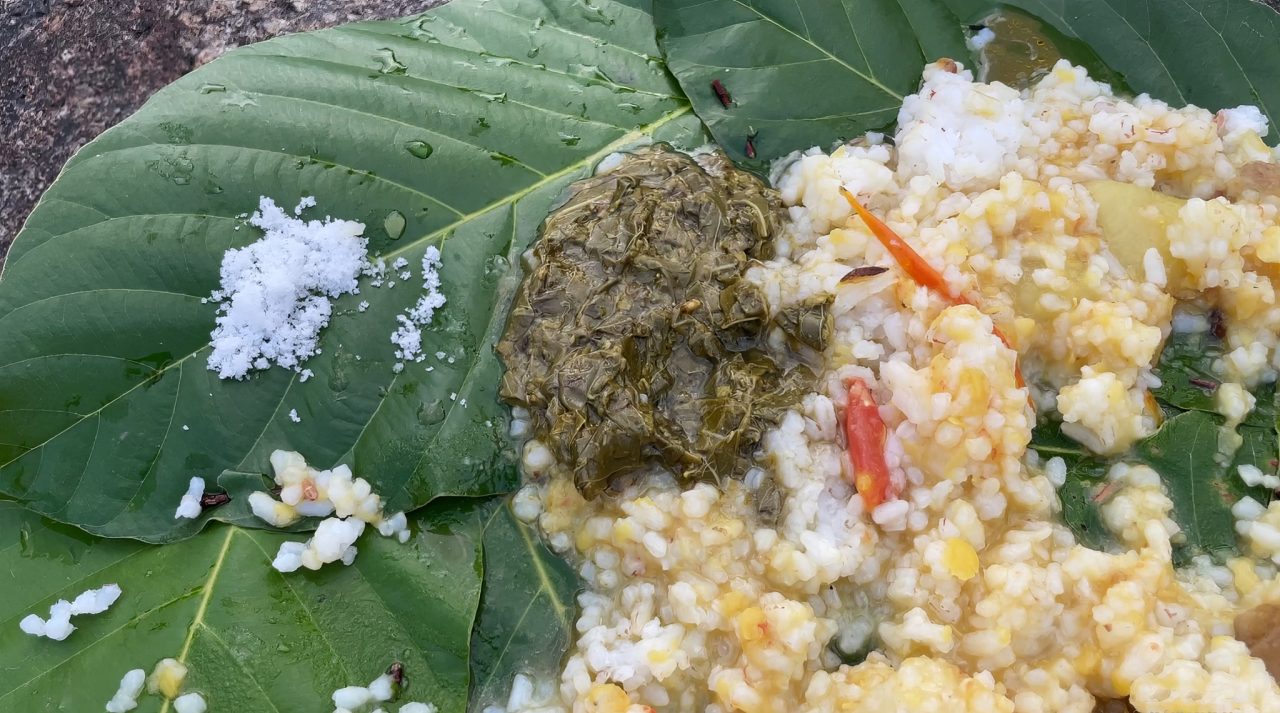
Jangali saaga (forest spinach) collected and prepared by Dayalu Baba while roaming the Salandi river.
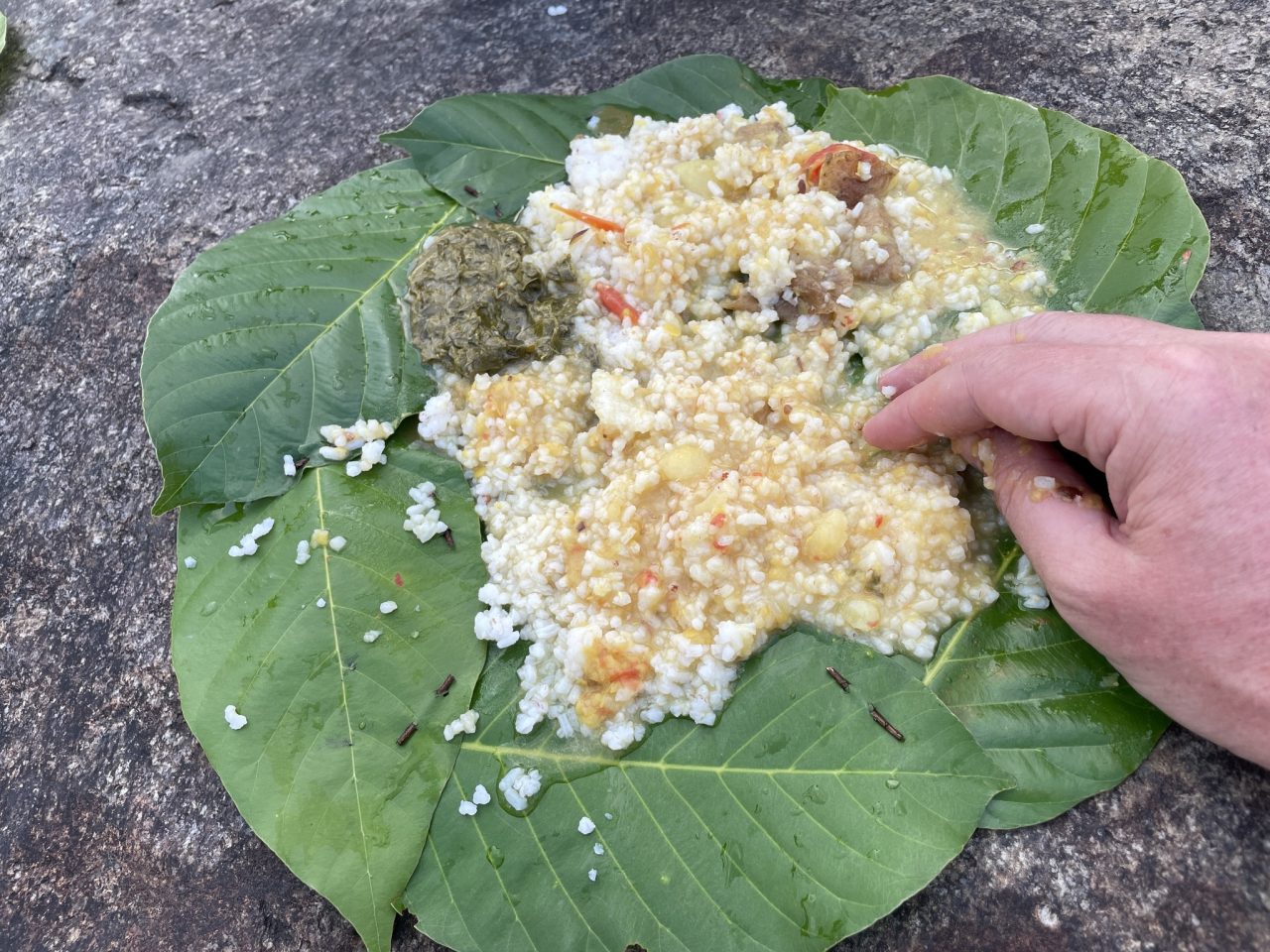
The leaf plate was also made by baba on the spot by collecting leaves and stitching them together with small wood twigs.
Dayalu Baba would be something like what we call in the west a survivalist. He knew everything how to survive in the forest. I have seen him make a hut to live in in 30 minutes, creating rope from tree bark.
Being an adivasi (forest tribal) it was all second nature to him. This type of knowledge is part of their upbringing.
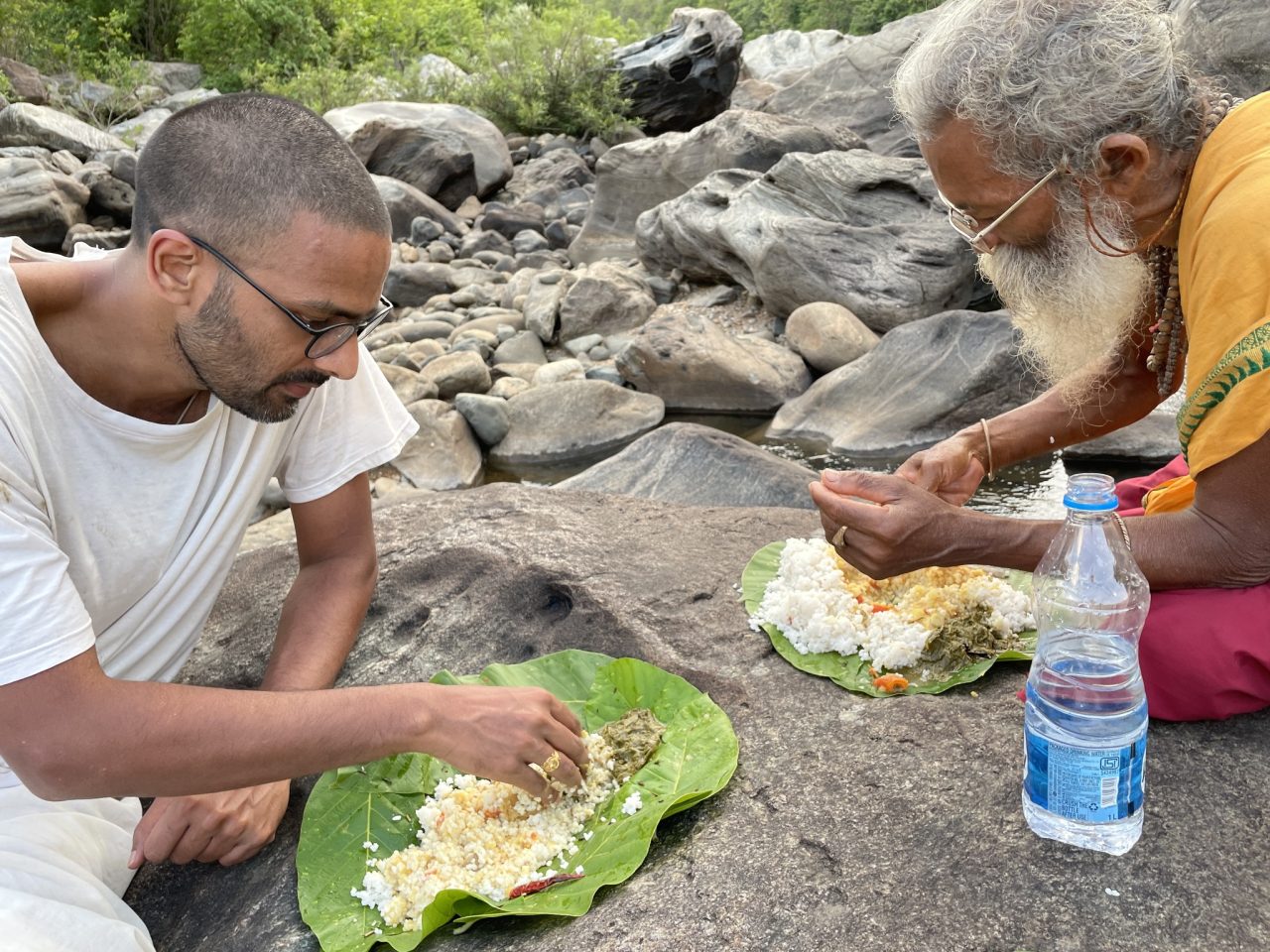
This jungle spinach was also eaten by Lord Chaitanya as he travelled through the Jharikhanda forest (which is the same area that these sadhus are staying).
pathe yāite bhaṭṭācārya śāka-mūla-phala
yāhāṅ yei pāyena tāhāṅ layena sakala
“Along the way, Balabhadra Bhattacarya collected all kinds of spinach, roots and fruit whenever possible.” – Chaitanya Charitamrita 2.17.57
dui-cāri dinera anna rākhena saṁhati
yāhāṅ śūnya vana, lokera nāhika vasati
tāhāṅ sei anna bhaṭṭācārya kare pāka
phala-mūle vyañjana kare, vanya nānā śāka
parama santoṣa prabhura vanya-bhojane
mahā-sukha pāna, ye dina rahena nirjane
“Balabhadra Bhattacarya used to keep a stock of food grain that would last from two to four days. Where there were no people, he would cook the grain and prepare vegetables, spinach, roots and fruits collected from the forest. The Lord was always very happy to eat these forest vegetables, and He was even happier when He had an opportunity to stay in a solitary place.” – Chaitanya Charitamrita 2.17.62-64
Other Roots:
Another experience I had was when I met a very austere sadhu name Tapaswi Baba who was living at the source of the Vaitarani river in Odisha. Most sadhus are not known by their proper name or their diksha name, but by a common name. Every sadhu gets a common name based on their characteristics, and this sadhu had earned the name “Tapaswi” from the severe austerities he performed.
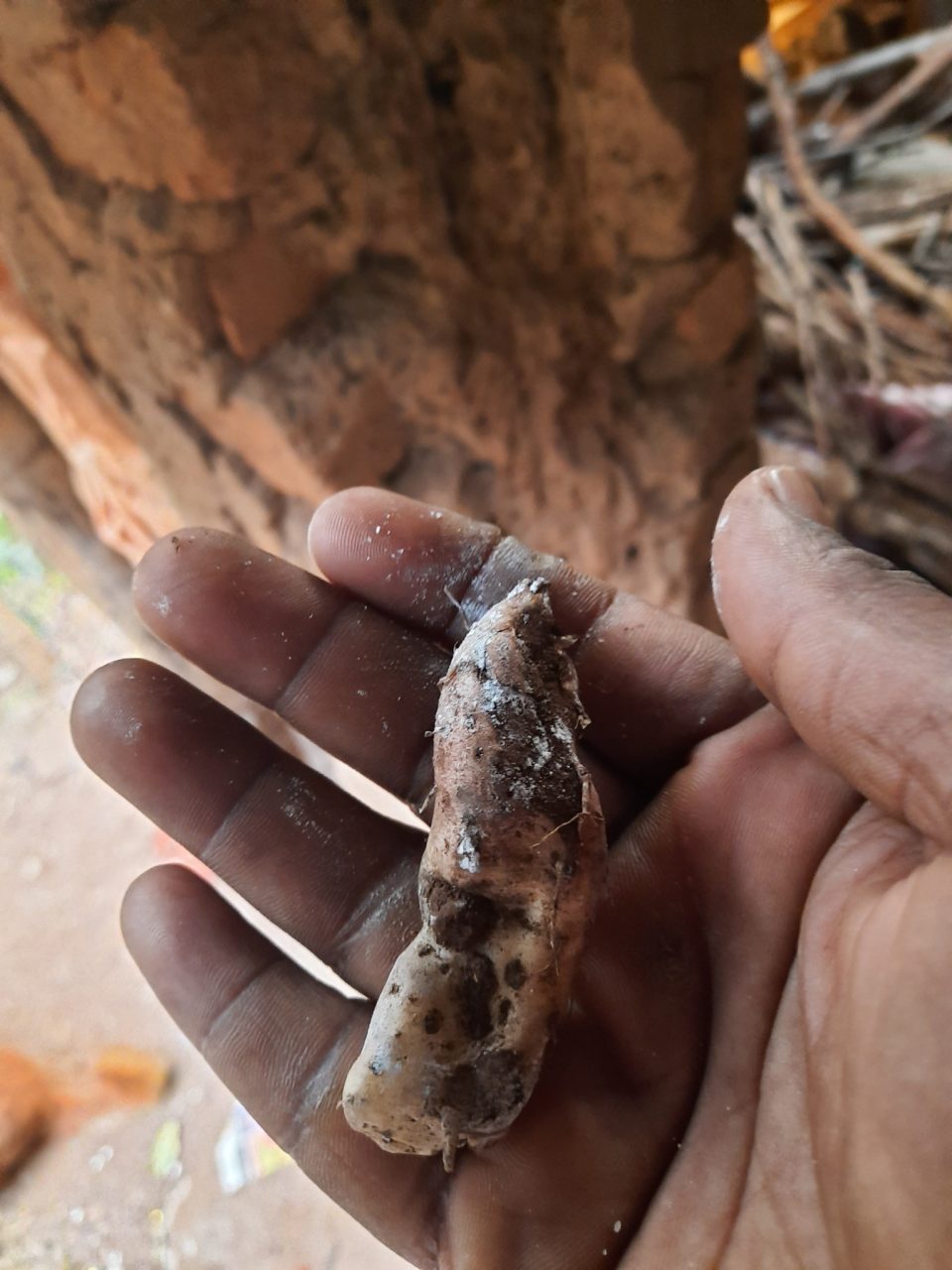
A small root shown to us by Tapaswi Baba who lived at Gonasika, the source of the Vaitarani river.
His name itself told us how austere he was. He didn’t eat any normal food, but only ate small roots he would find deep in the forest. The roots were thin and long like a part of one’s finger. He would put these in a fire and eat them after they were a little cooked.
Its rare today to find sadhus who still live by these practices, as now everywhere there are roads, and visitors bring things even to many of the places that used to be remote and isolated.
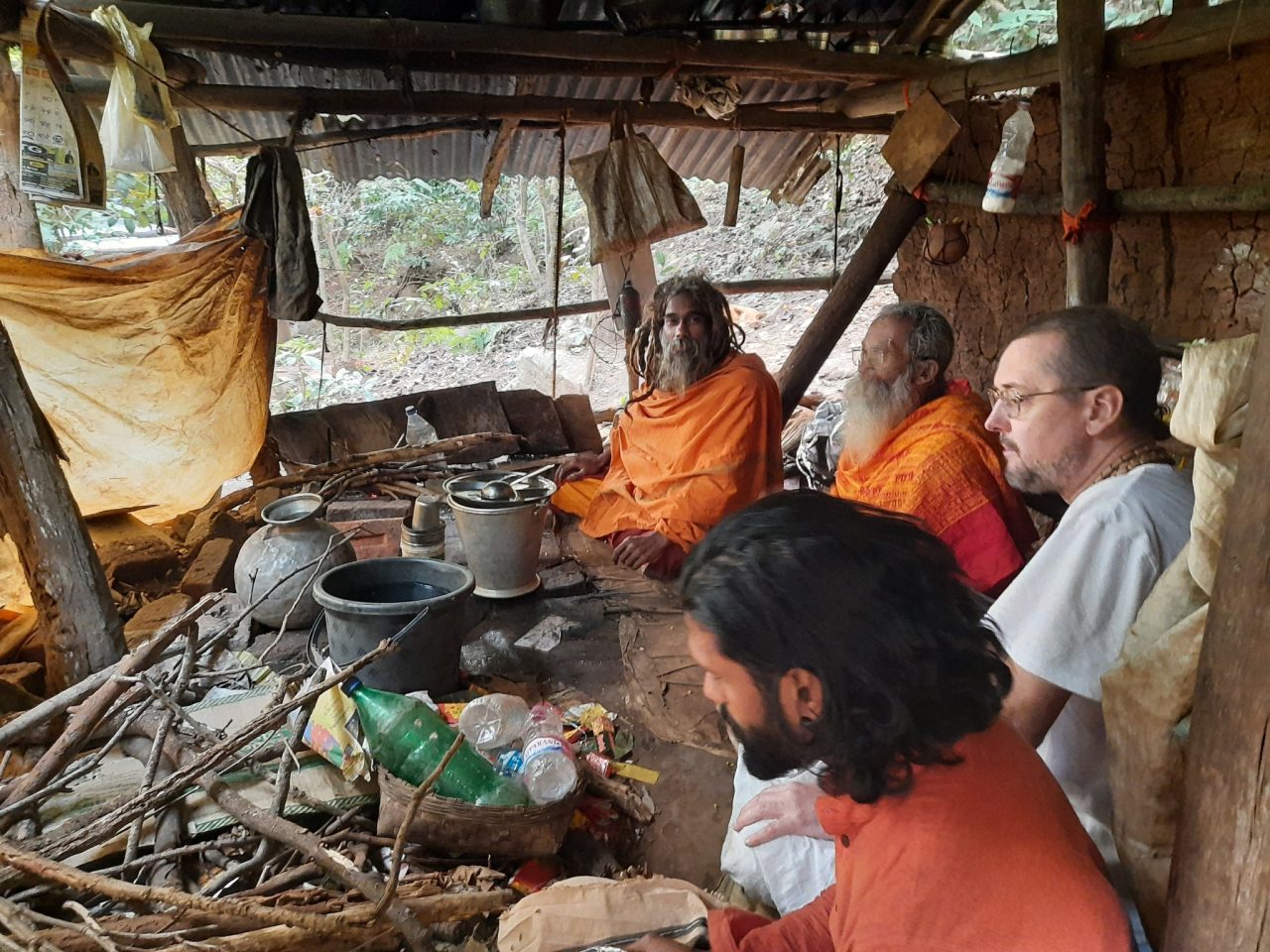
The small hut where Tapaswi Baba was staying at Gonasika. He lived on tiny roots that he dug up in the forest. He did not eat regular food.
Edible Cactus (Name Unknown):
Another wild edible plant Dayalu Baba introduced me to back in 2012, was a type of edible cactus. This was on the top of a granite boulder mountain near his ashram called Ratna Giri. The entire mountain is a giant block of granite, with very little dirt on the top. As such there is no water available, nor food.
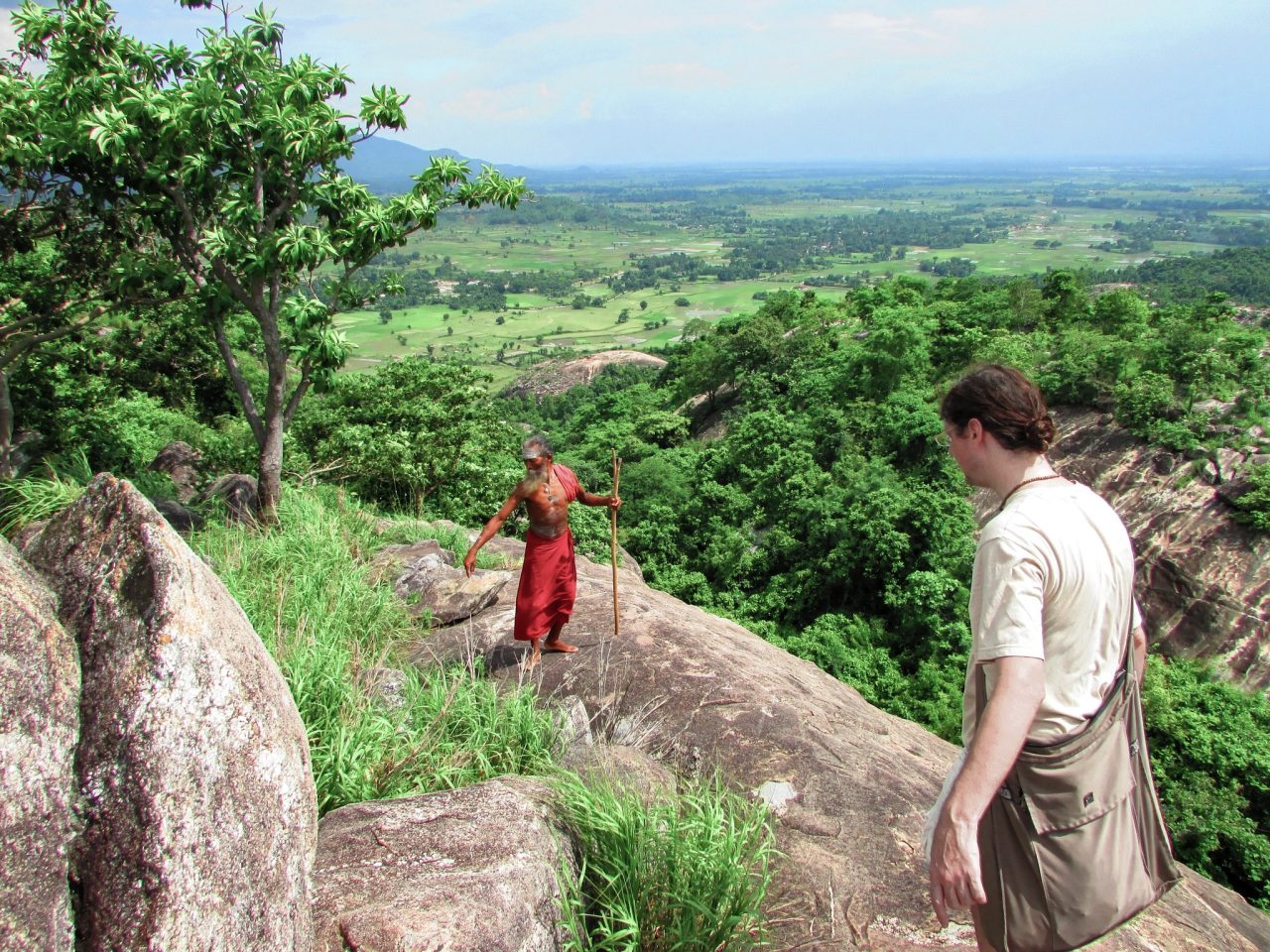
Dayalu Baba on top of Ratna Giri mountain where he showed me the edible cactus plants.
He would frequently roam on this mountain because it was a sacred spot for doing sadhana, and sometimes he would take me with him or tell me to stay on top of the mountain for some days. On top of the mountain it was so peaceful and you could hear sounds from many miles away. You could hear small things like chickens and dogs which were miles away. Its amazing how far you can hear, and what minor sounds you can pick up. It was so peaceful there that any small sound on the ground could be heard. Also in the night you could see the lights from cities miles and miles away, or you could look up at the stars and see countless stars that you can’t normally see in the city due to light pollution.
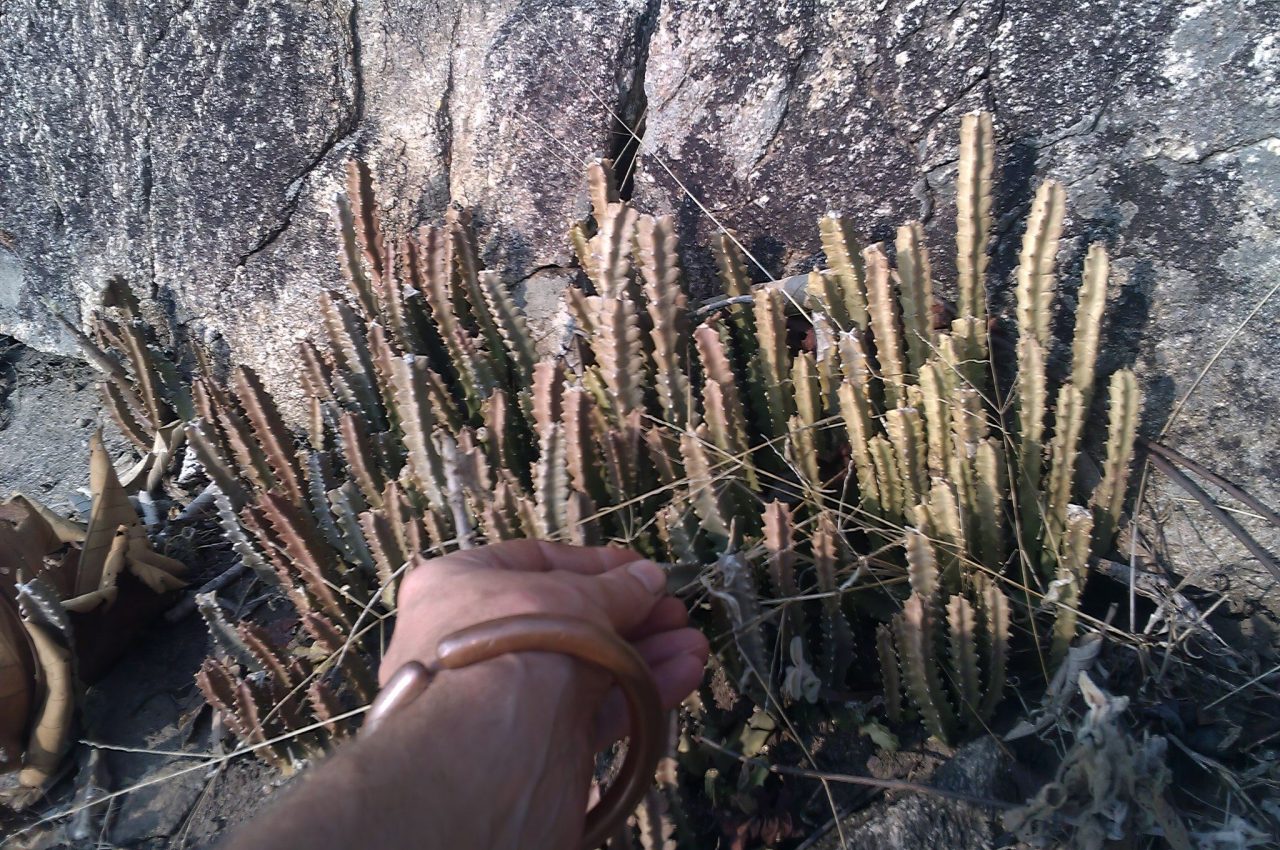
The edible cactus plant shown to me by Dayalu Baba.
On one of these trips on top of this mountain he pointed to some wild cactus looking plant growing in the cracks between the granite, and told me we can eat this for food and water. He pulled one of the stems off the bunch and then showed me how to sand it against the granite stone to remove the thorns and hard shell, leaving a pulpy center filled with water. Then he told me, “This is the food sadhus rely on when they are staying in remote places like this for sadhana”.
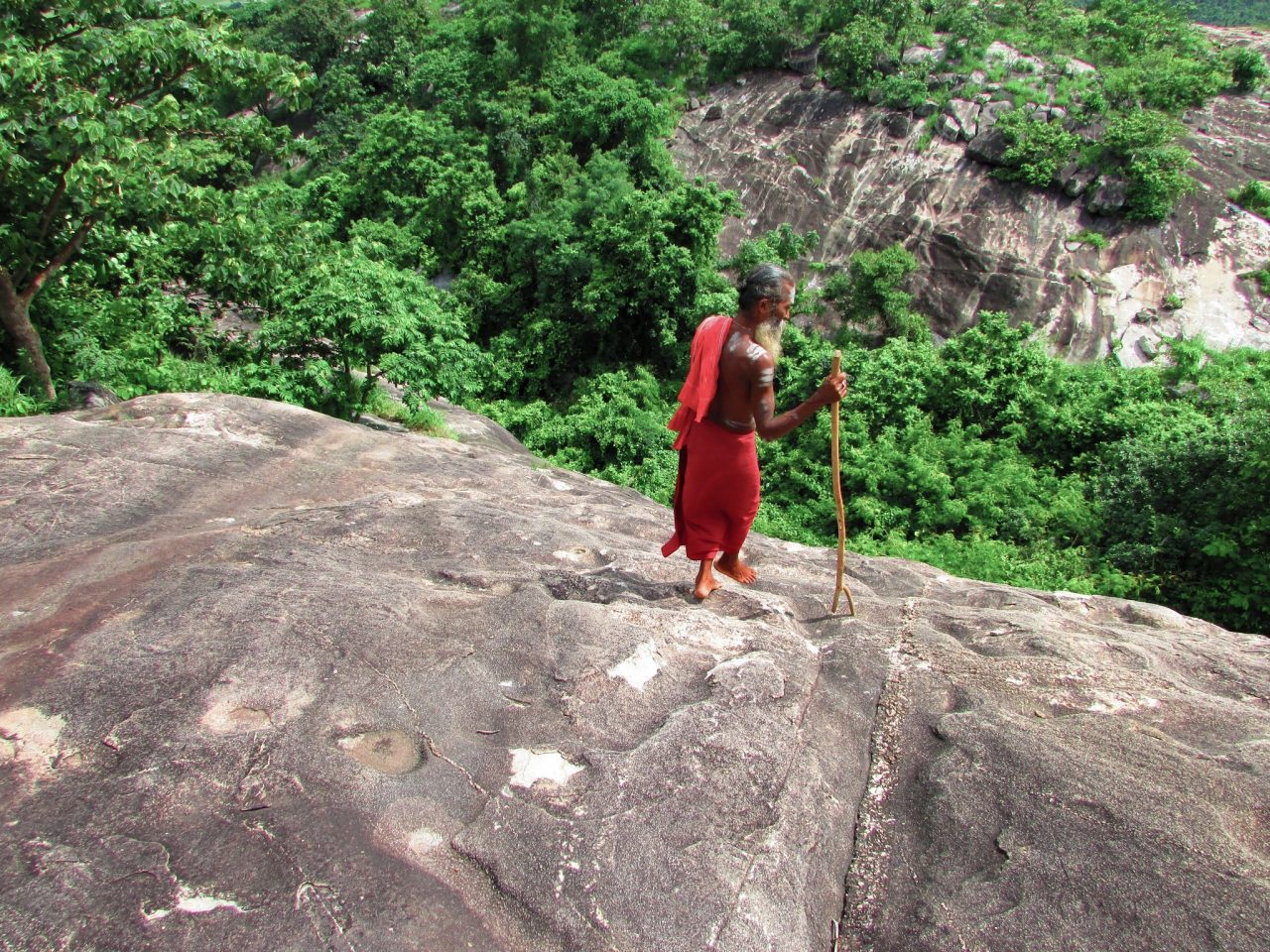
Dayalu Baba on top of Ratna Giri mountain.
In case anyone wonders, it did not taste “good”. And I never ate it again. When ever I had to stay on this mountain I would carry whole mung dal and sprout them in a cloth over night by hanging them in a tree. It was much easier for me to eat than the little cactuses.
Gadariya Kakadi – Goat Herder Cucumber:
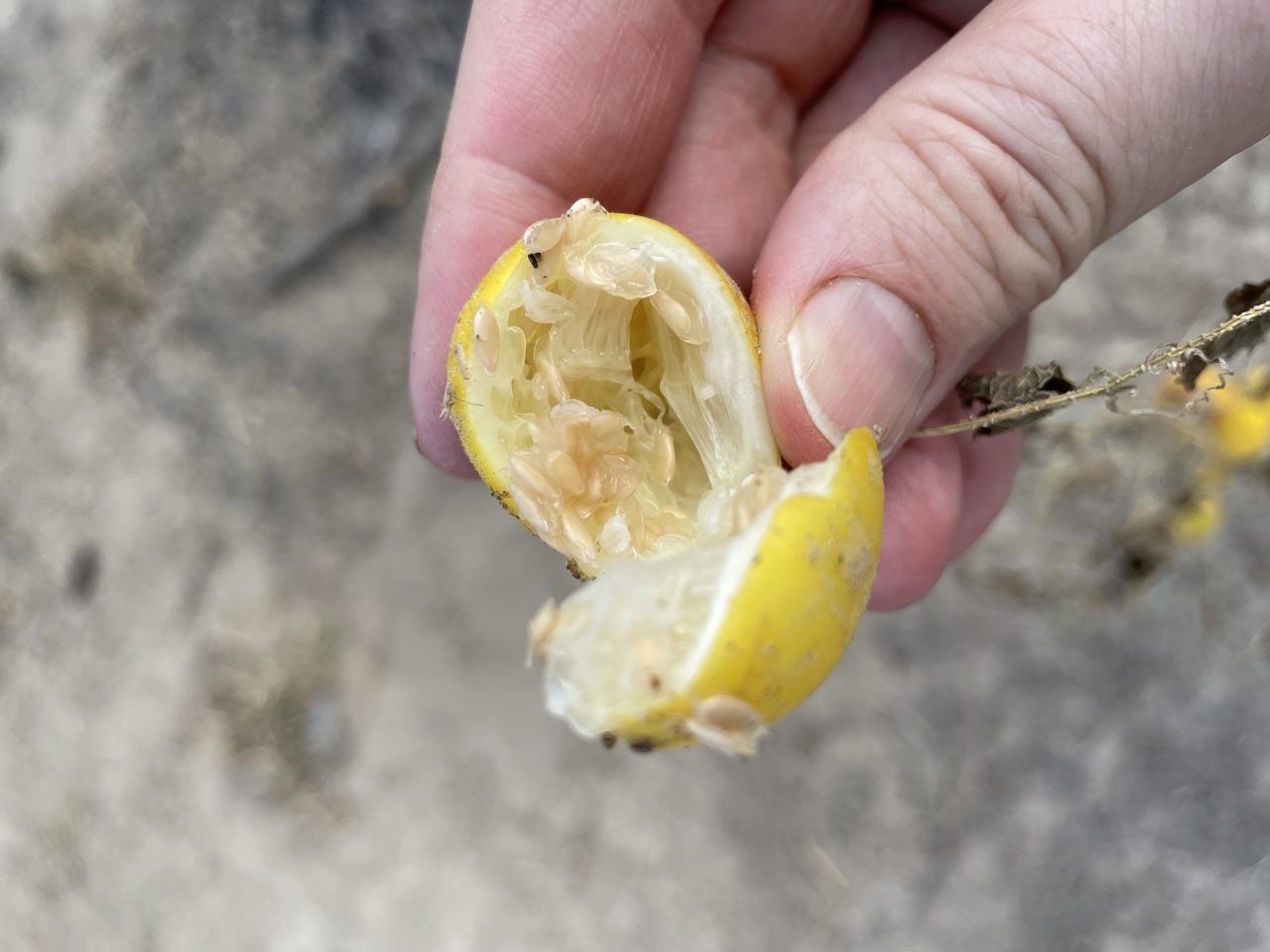
On one of my visits to Dayalu Baba’s ashram he showed me this wild vegetable, which I was not familiar with at the time. It is called gadariya kakadi (goat herder cucumber). It grows wild like a weed and can be eaten like we eat cucumber. I assume it gets its name because goat herders find it growing wild as they graze their goats and eat it as they roam with their animals. The taste was neither bad nor good, more like a very inferior cucumber.
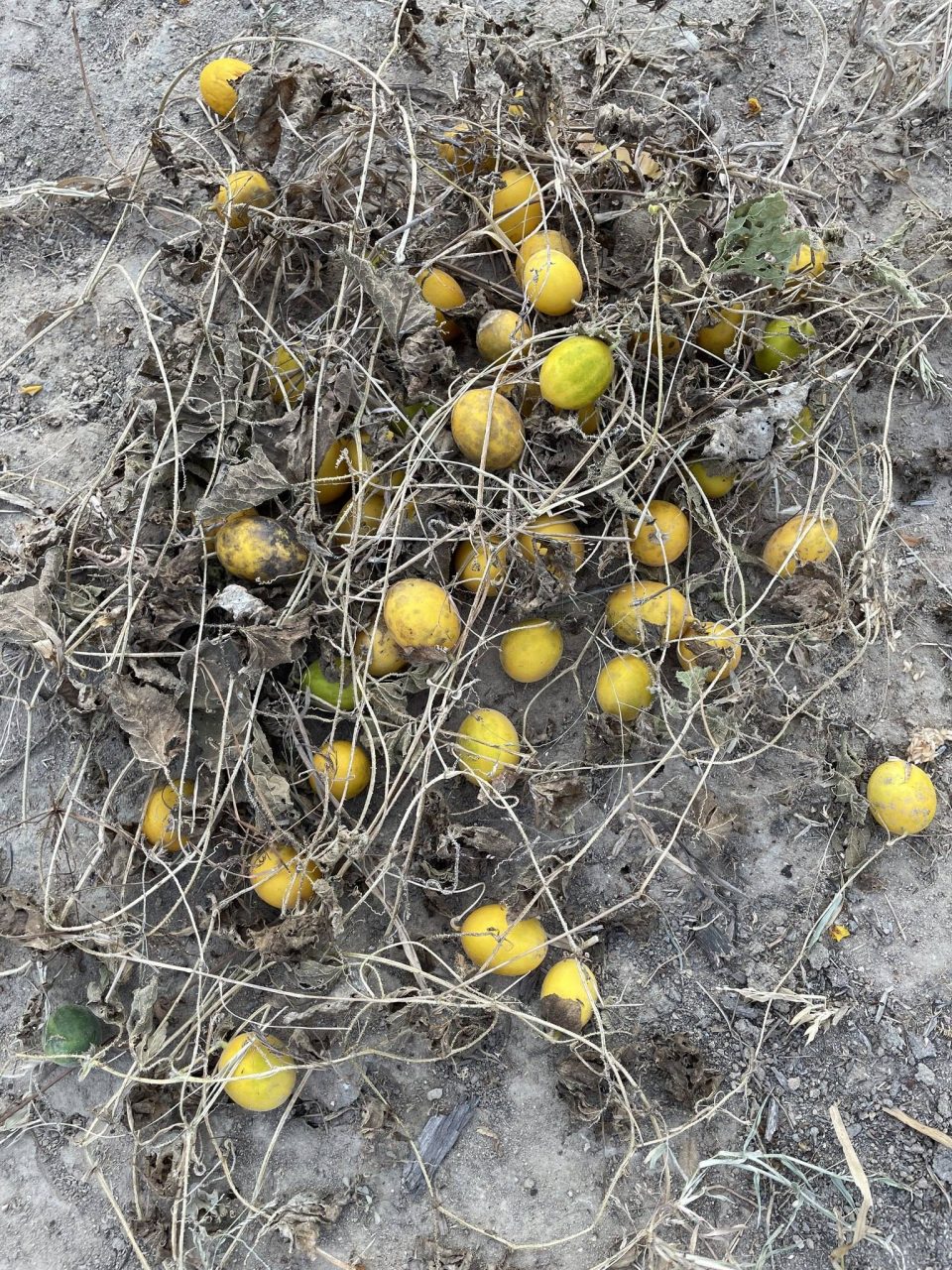
The “goatherder’s cucumber”, shown to me by Dayalu Baba.
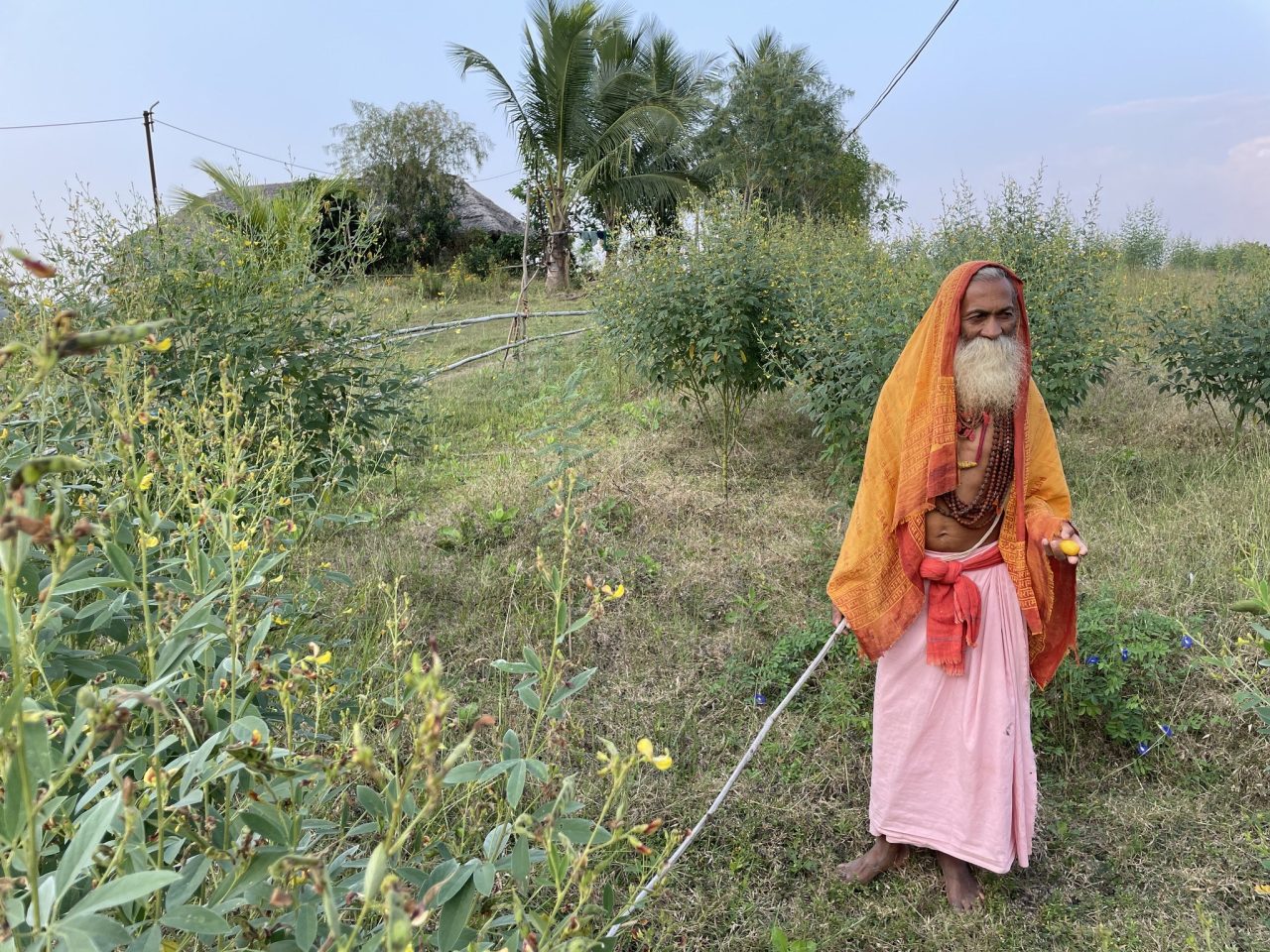
Dayalu Baba pointing out the wild growing “goatherder’s cucumber”.
Taka Bhendi – Sour Lady’s Finger (Roselle):
This was another vegetable I was first introduced to at Dayalu Baba’s ashram. I had seen this vegetable growing wild before but had never eaten it till then. It is called taka bhendi (“sour lady’s finger”), and it also grows wild like a weed.
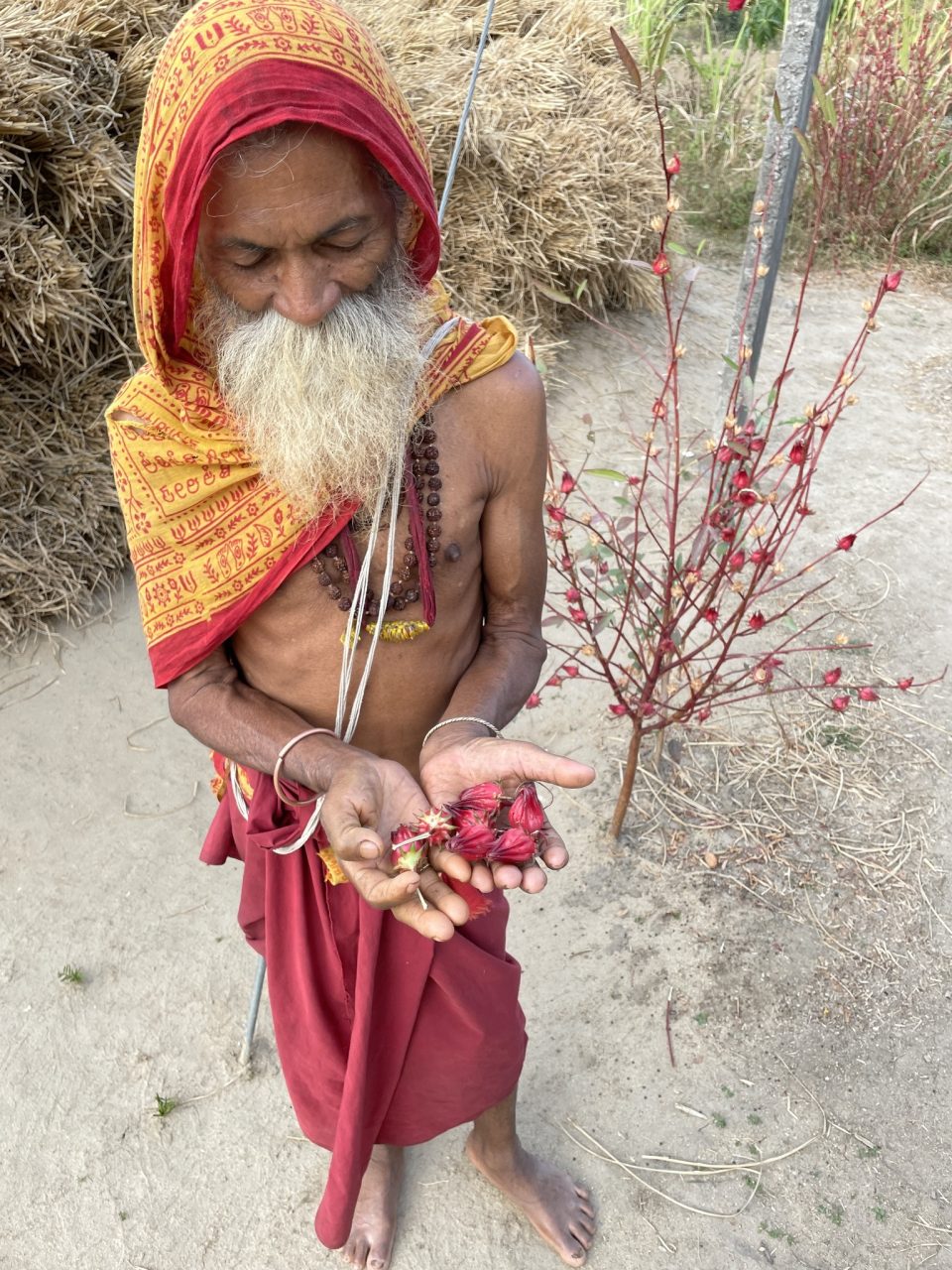
Dayalu Baba showing me taka bhendi, which grows wild like a weed.
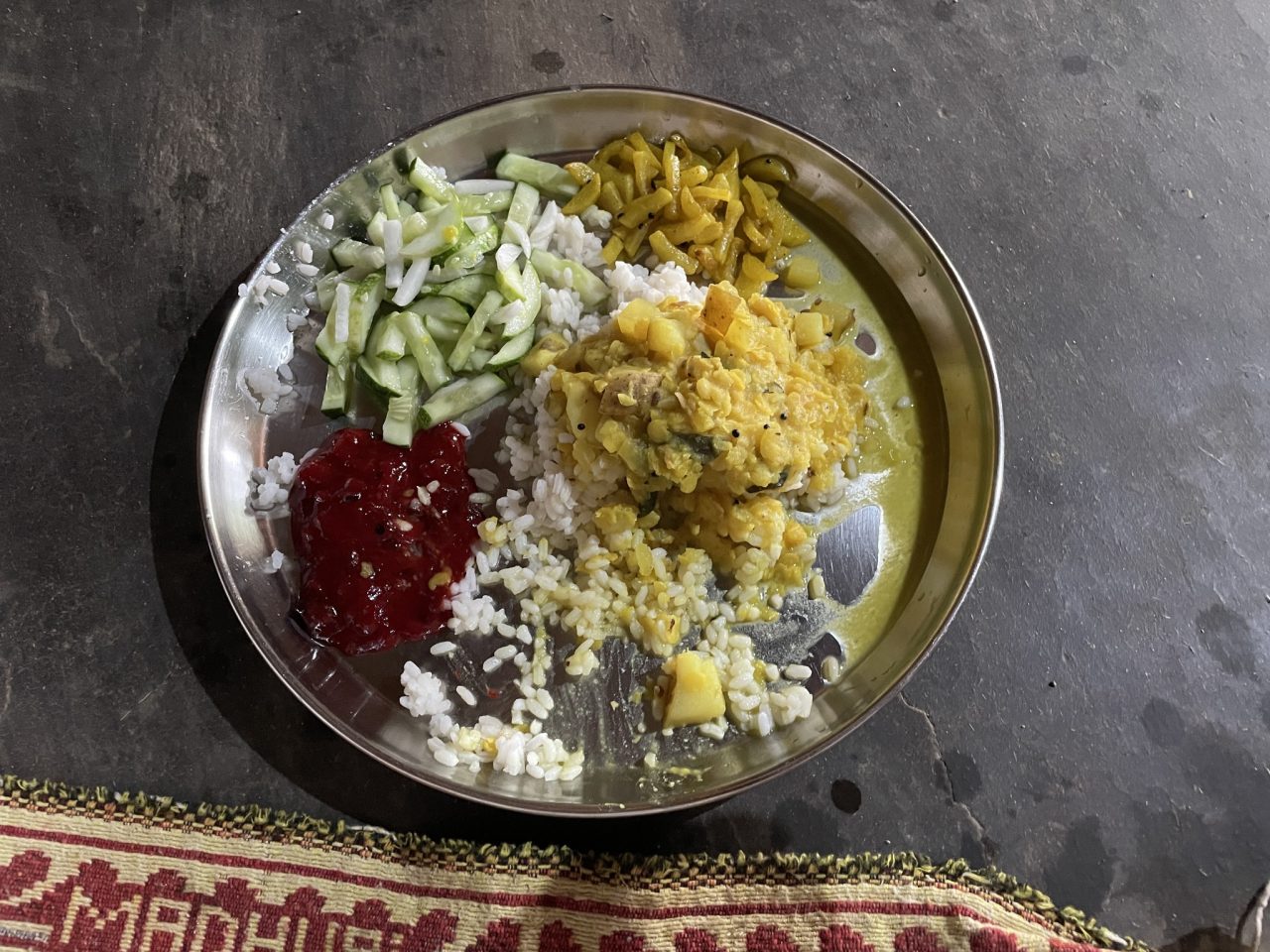
On that particular day Dayalu Baba used it to make a sweet and sour chutney. It was a bit different than the regular chutney (called khata) I am used to (usually either mango or tomato chutney, which are watery). This was very gooey and had no unique flavor as mango chutney has. Personally I didn’t really like it, but it was edible and not unpleasant.
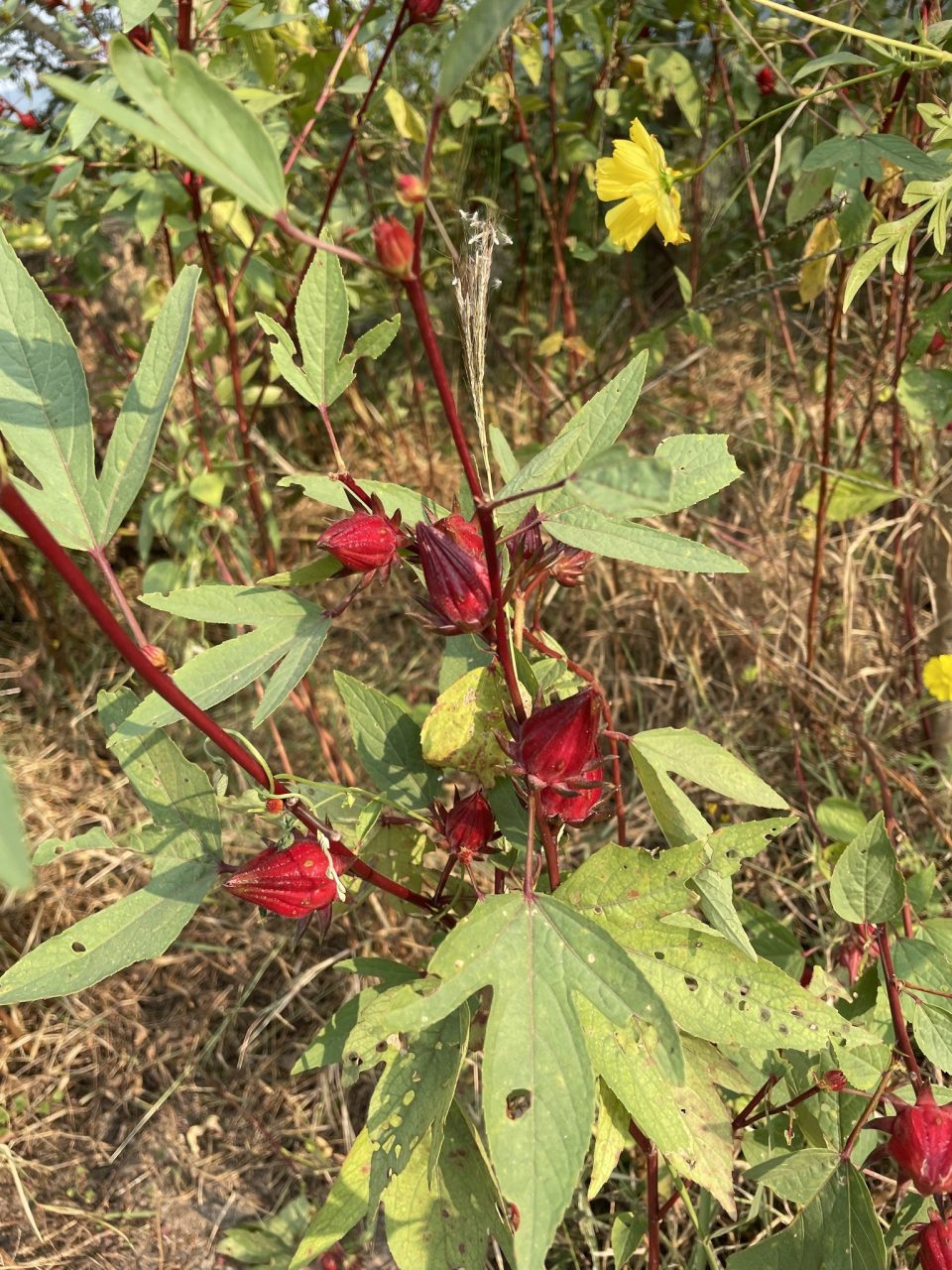
A close up of the taka bhendi plant.
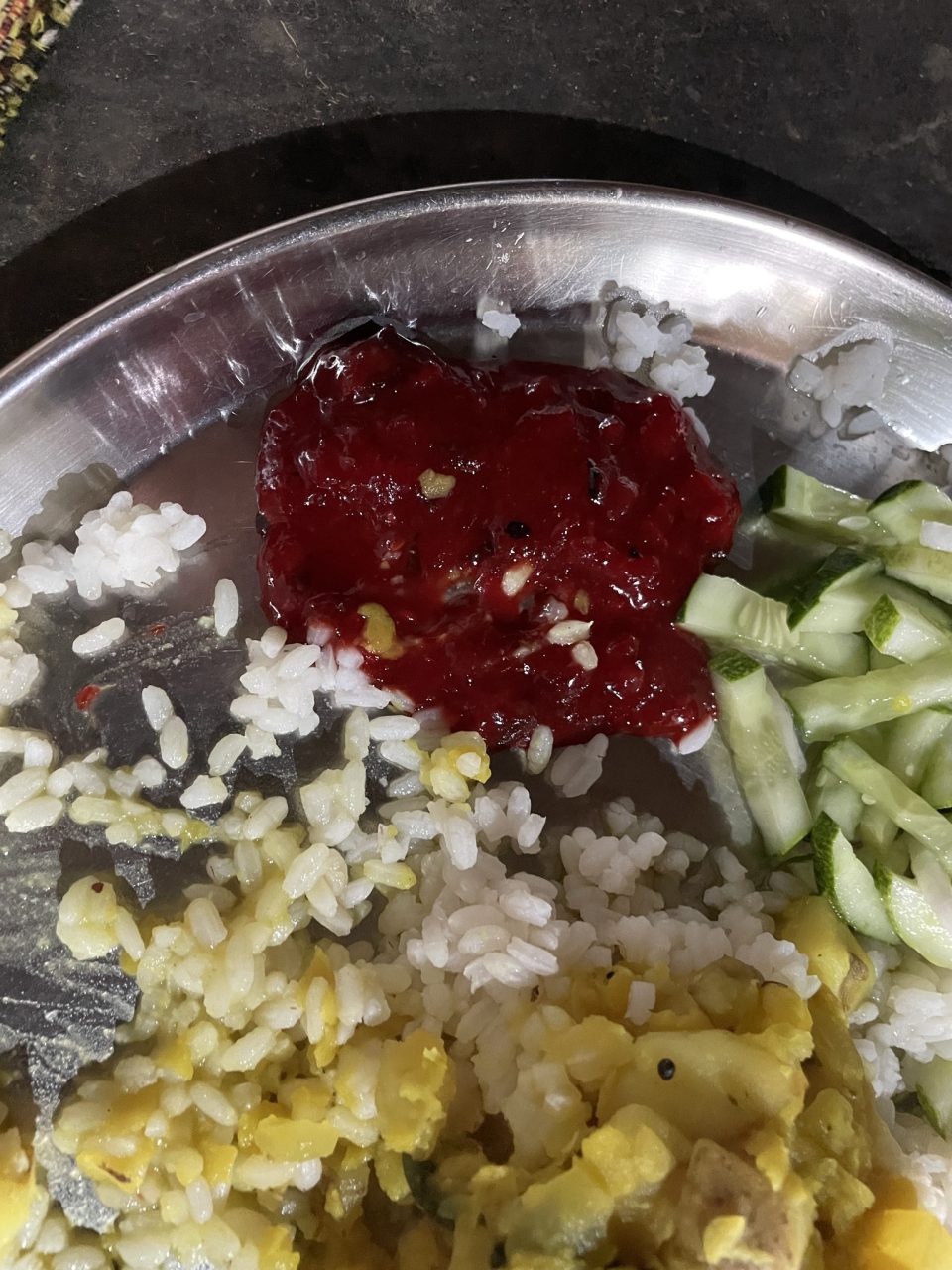
On this day Dayalu Baba cooked the taka bhendi plant into a sweet and sour chutney.
Many other plants Dayalu Baba had pointed out to me over the years, some for medicine, some for food, and some for ritual use. Often when walking in the jungle I would see him bend down to pick up something he had seen. When I would ask he would explain what the plant or seed was, and how it could be used in medicine.
Once when coming back at 2am in the night from completing a yajna we had performed in the forest Dayalu Baba saw a banyan tree and told me, “Today is purnima (full moon). Look at that parasitic root growing up in the branches of that banyan tree. It is very rare, and if you collect that root from a banyan tree on a full moon day, it is very powerful. It will bring great wealth. We should climb the tree and get that root because today is an auspicious day.”
Baba proceeded to climb up the banyan tree and bring back two pieces of the root, which he handed to me. He then said, “Keep this root where you keep your money, it has a special power and will make it grow.” Afterwards I placed one root inside the hundi of the Hanuman temple in Chennai and one inside the hundi of the Jagannath temple in Bhadrak, where they remain still after all these years.
Dayalu Baba knew every single plant and root in the jungle and what their medicinal use was. He would often point out random plants as we walked through the forest and tell me how they should be used. Unfortunately most of the plant knowledge he tried to pass on to me went in one ear and out the other as to me everything looked the same.

Every cow and calf at our sanctuary has a story of rescue, healing, and hope. Your generous support provides them with food, shelter, medical care, and a lifetime of protection. Together, we can give these sacred animals the love and safety they deserve.

Very interesting facts, what appears as jangli products are infact a treasure for serious sadakas. thanks for sharing.
Sir, Thank you for sharing such information. I want to add a little information: the Taka Bhendi plant is called Gongura in Telugu, and chutney made from the leaves is considered a delicacy. Flowers are also edible. There are 2-3 different varieties in the plants